---
title: "Research reflections: PESTS in the collection"
date: "2024-10-02T12:49:55+01:00"
modified: "2024-10-02T12:57:36+01:00"
url: "https://heritage.humanists.uk/article/research-reflections-pests-in-the-collection/"
post_id: 10204
---
# Research reflections: PESTS in the collection
**Beth Brown** was a research volunteer for *Humanist Heritage: Doers, Dreamers, Place Makers*, with a particular interest in holistic health and wellbeing, and the role that the arts and humanities have to play in protecting and restoring this. In exploring the newsletters of the Gay and Lesbian Humanist Association (GALHA, now [LGBT Humanists](https://heritage.humanists.uk/lgbt-humanists/)), dating back to the late 1970s, she was drawn to what the archives might have to say about how we can live well as a society, and how this has changed over time.
---
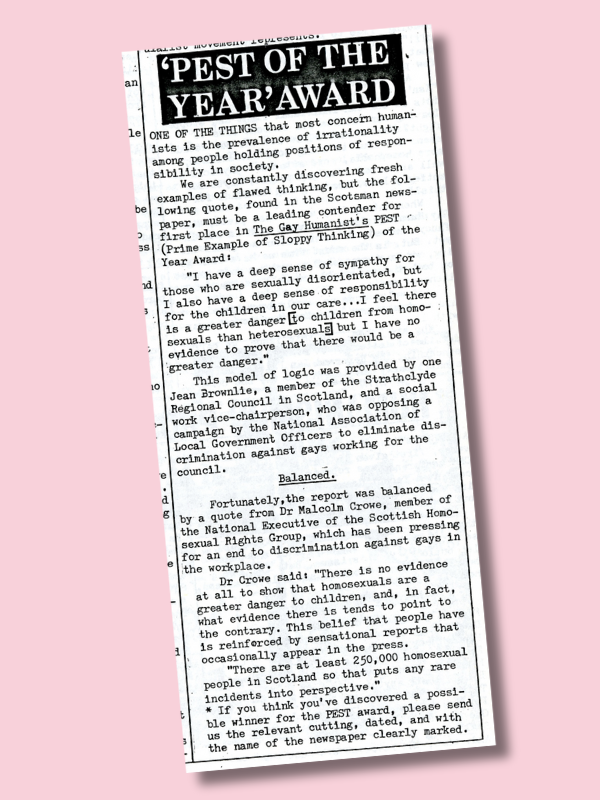Clipping from *The Gay Humanist*, Vol. 1, No. 1, March-May 1981
### Prime Examples of Sloppy Thinking
As the 2024 UK general election campaign noise built, so did a familiar sense of resignation, an obligation to cut through the cacophony of illogical reasoning and unsubstantiated claims. Virtually sifting through the GALHA newsletters for something entirely different, my attention was caught by a reassuring reminder of humanists past, fighting the good fight for rational thinking. Step forward the PEST, a fleeting feature that spotlighted Prime Examples of Sloppy Thinking, which I think is putting it rather kindly.
While short lived as a regular feature, across the years the newsletters reveal many instances of PESTs in all but name, punctuating the pages with humour or horror, depending on your take. Or maybe a blend of both, reflecting, after all, that wonderful human capacity to hold more than one emotion at once.
The GALHA editors highlighted PESTs as prevalent among those holding positions of power in society. As the general election delivers the UK its most non-religious parliament yet, can we dare to hope that we will encounter fewer PESTs of our own?
Gallery
-------
[ 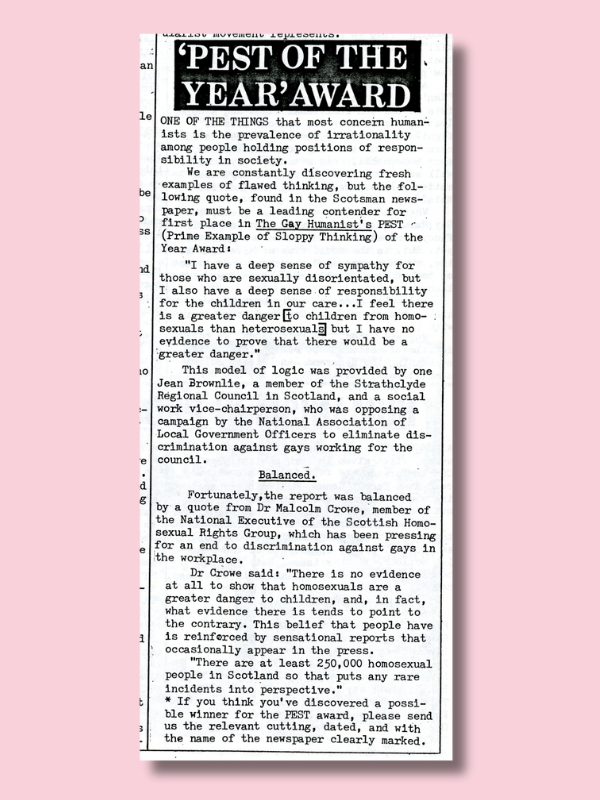 Click to zoom The first ‘PEST of the Year’ award, introduced in Vol. 1, No. 1, March-May 1981 ](https://heritage.humanists.uk/wp-content/uploads/sites/5/2024/10/Pest-of-the-Year-No.1.png "The first ")
[ 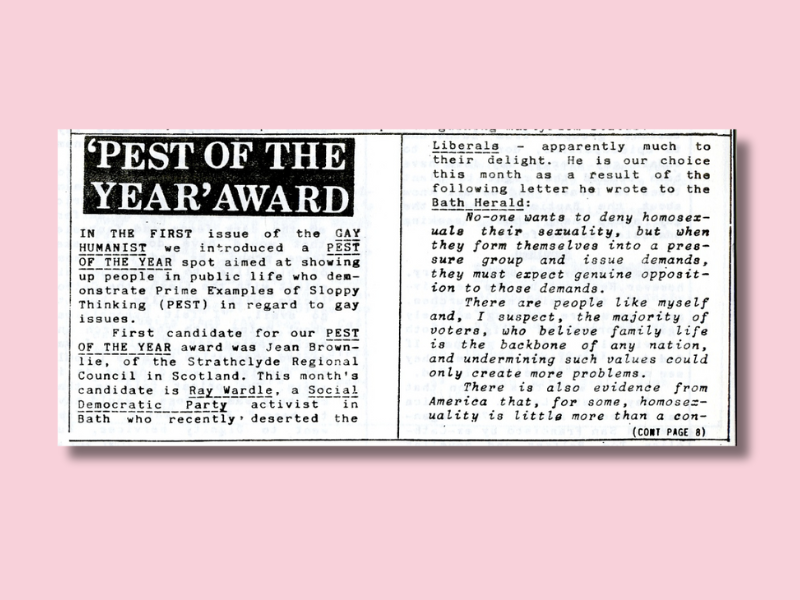 Click to zoom The second PEST, Vol. 1, No. 2, July-September 1981 ](https://heritage.humanists.uk/wp-content/uploads/sites/5/2024/10/PEST-No.2-01.png "The second PEST, Vol. 1, No. 2, July-September 1981")
[ 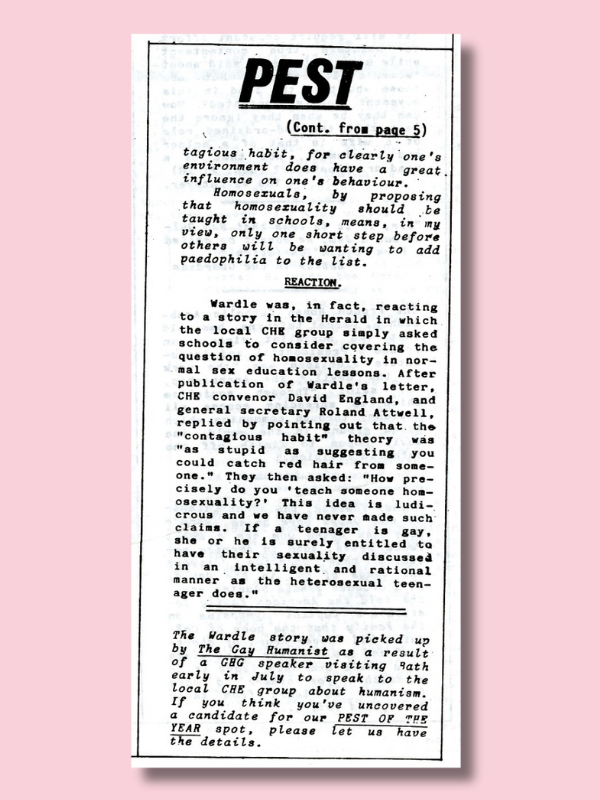 Click to zoom ](https://heritage.humanists.uk/wp-content/uploads/sites/5/2024/10/PEST-No.2-02.png)
[ 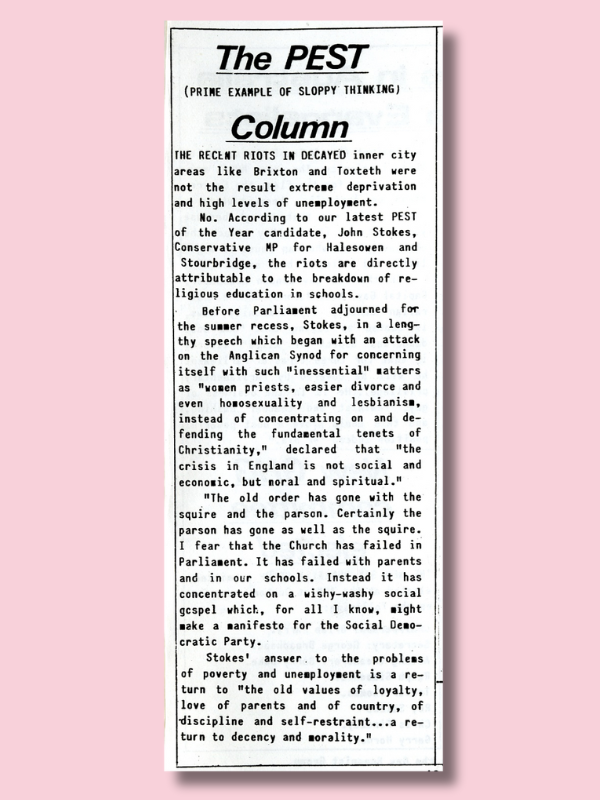 Click to zoom The third and final PEST, Vol. 1, No. 3, November 1981-January 1982 ](https://heritage.humanists.uk/wp-content/uploads/sites/5/2024/10/PEST-No.3.png "The third and final PEST, Vol. 1, No. 3, November 1981-January 1982")