Rational Humanism is an ethical outlook, which seeks to be in accord with a scientific survey of man’s world. It is a purposeful attitude towards life in the community, and a determination to make it better worth living.
Charles E. Hooper, ‘Rational Humanism’ in the Literary Guide, November 1931
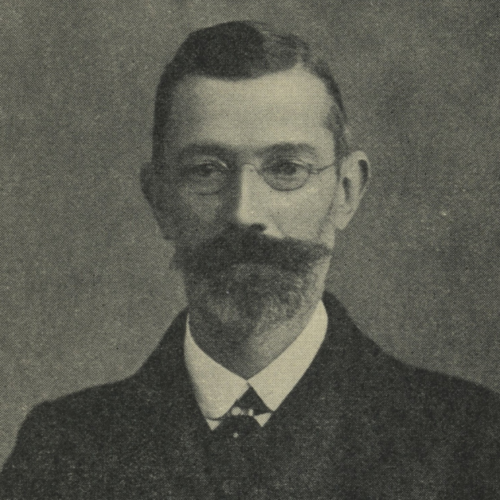
Charles Edward Hooper was a writer, thinker, and early secretary of the Rationalist Press Association. In 1900 he made what Nicolas Walter called ‘the first clear call in the freethought movement for the adoption of humanism’. In an article for the Ethical World he wrote
“Truth, Worth, Commonwealth.” That, then, is the motto and brief symbol of the philosophy of reform which I have been trying to preach. But how to describe the philosophy itself? It is Humanism. The technical significance which this term formerly possessed is practically forgotten. Latterly it has come into use in a sense somewhat vague, but, at the same time, nearly related to that which I propose to attach it. Humanism! What one word could be better adapted to mark the gospel which is a gospel at once of human knowledge, of human nature, and of human society?
‘Humanism’ in the Ethical World, 8 December 1900, quoted by Nicolas Walter in Humanism: Finding Meaning in the Word (1998)
A regular contributor to the Literary Guide (now New Humanist) and other rationalist publications, he was also the author of works including The Wider Outlook Beyond the War (1915), and Common Sense and the Rudiments of Philosophy (1920), illustrating his lifelong preoccupation with peace and practical philosophy. He described his philosophy as ‘rational humanism’, publishing an article by that name in the Literary Guide just months before his death.
The tribute and funeral address below, delivered by friend and fellow humanist Frederick James Gould, was published in the Literary Guide, August 1932.
We record with much regret the death of Mr. Charles E. Hooper on June 18. His remains were cremated at Golders Green five days later, when the following address was delivered by Mr. F. J. Gould. There were present many friends of the deceased, including Mrs. C. T. Gorham, Mr. F. Watts, Miss Freeman, Mrs. Tiedeman, Mr. H. V. Horton, Mr. C. Kay Robertson, and Mr. J. L. McCallum, M.A.
We assemble in this place to say a kind and solemn farewell to the remains of Charles Edward Hooper. At the age of sixty-eight he lies, as it were, in the quietude of a Garden of Remembrance, encircled by very many friends who bless his name and his record. He was brought up in the Society of Friends, and kept his heart, to the end, in harmony with the Quaker ideal of World Peace. But before he was thirty he had passed to Unitarian Theism, and then to the broad faith that he has himself named Rational Humanism. It is a faith, an affirmation, a gospel-cry that salutes the Human Genius and its self-reliant courage. His noble ethical hymn opens with such a gospel-cry:—
Spirit of Man, ascend thy throne!
Men, cities, nations, wait for thee;
Wan captives cry, dull toilers groan—
Hearken! Arise, and set them free!
Before all pride of rank and race,
Beyond all pomps that flourish now,
Beneath all shams, all commonplace,
Above all empires, Man, art thou!
We rightly call him poet. Yet by training and temperament he had a notable business capacity and a very practical appreciation of order, method, diligence.
We rightly call him poet. Yet by training and temperament he had a notable business capacity and a very practical appreciation of order, method, diligence. When his thoughts widened beyond the olden creeds he used that capacity—let us even say he dedicated that business capacity—for the service of Humanist propaganda. Our friend, Charles A. Watts, sends a memorial message to us here, telling how Hooper, when economic conditions gave him a measure of freedom, eagerly helped the Literary Guide in its early period and brightened its pages with his sincerity and calm judgment during more than thirty years; how he helped to launch the Rationalist Press Association in 1899; how, in the the Secretary’s office, 1899 to 1913, he immensely aided the enterprise by his courteous personality on the one hand and his painstaking accountancy and book-keeping on the other. With ample knowledge of the man in daily business interchange for so many years, Watts renders this tribute: “He was a gentleman in the finest and fullest sense of the word. He had hardly a human failing, and he instinctively recognized the good in all with whom he came in contact. His invaluable work for the R. P. A. was achieved while he valiantly struggled with a delicate constitution. All who were privileged to know him will reverence his memory.”
He was a gentleman in the finest and fullest sense of the word. He had hardly a human failing, and he instinctively recognized the good in all with whom he came in contact.
In the propaganda of the Association he readily supported what may be called the destructive factor—the attack on the “the outworn rite, the old abuse” of Hebrew-Christian doctrine. But his very deep sympathy ran with the Association’s declared aim at “a system of philosophy and ethics verifiable by experience and independent of all arbitrary assumptions of authority.” When, at times, the Rationalist pioneers fell into eager debate as to policy, and as to the chief goal of their enthusiasm, Hooper never hesitated to stress three purposes—the purpose of Personal Right Living; the purpose of Progressive Social Betterment; the purpose of International Co-operation and Unity. The impulse of these ideals was central in his nature. He had a delight in speculations on life, universe, mind, matter, knowledge, truth. But to him, in the midst of philosophic broodings, the golden vision of an Ethical World was ever present. In his work on The Fallacies of Fatalism he was not content to discuss Free Will and Determinism in cold abstraction. He strode forward in fervent salutation of movements—the South Place Ethical Society; the Cremation Society; the Proportional Representation Society; British Institute of Philosophical Studies; the “Save the Children” Fund; the League of Nations Union; the International Arbitration League. The story of his life of devotion would be much broken if we did not give clear recognition to his unfailing loyalty to the Society of Nations, its Court of Justice, its Labour Office, its influence on youth. He wrote earnest articles in the Arbitrator, and ardently assisted efforts to enlist the interest of young people in the cause of World Unity. It was in this same spirit that he gave a period of his energy to the secretarial work of the Moral Education League. All these endeavours he regarded as parts of what he termed Natural Religion. His own words ring with sincerity: “It is faith in the great ideal of human life, as exemplified in some we have known and loved, in some way we have heard or read about, in the best we have ever imagined, in that happier future of the human race towards which we aspire, that can save us in spite of our own disappointments and our own backslidings. But this is faith that saves because it normally produces ‘works’—because all persons with minds intact are always free to do better in the future than they have done in the past.”
When, at times, the Rationalist pioneers fell into eager debate as to policy, and as to the chief goal of their enthusiasm, Hooper never hesitated to stress three purposes—the purpose of Personal Right Living; the purpose of Progressive Social Betterment; the purpose of International Co-operation and Unity.
His own faith was unfaltering. It produced works in consistent service of Love, Order, and Progress. We who sometimes walked with him in a green countryside, or sat with him in the chamber of serious converse, knew his twofold virtue—of serenity amid a tumultuous world, and of honest and heartfelt affection for whatever, in spite of the tumult, made for harmony. Of this Rationalist the Christian poet might think when he says:—
There are in this loud stunning tide
Of human care and crime,
With whom the melodies abide
Of the everlasting chime,
Who carry music in their heart
Through dusky lane and wrangling mart,
Plying their daily toil with busier feet
Because their secret souls a holier strain repeat.
His life was in tune with a worthy ancestry. His life was in tune with the new time and the new evolution, the new City of Man.
Main image: Charles E. Hooper in a photograph reproduced in The Pioneers of Johnson’s Court by F. J. Gould (1929)

We are living in critical days. It is not enough to desire peace or to talk peace. We must make […]

By Mia Nathan Constantly having to combat irrational and dangerous thinking is strenuous and sometimes tedious, but not necessarily boring. […]
Founded in 1905 by the prolific but largely unremembered writer Richard Dimsdale Stocker, the Brighton and Hove Ethical Society – […]

There are in Britain today a great many thoughtful people who have ideals and aspirations that owe nothing to religious […]