We must face the fact that, though the free intelligence and the spirit of community are at once the goal and an essential means, they may be not only ineffectual but actually harmful, unless they are combined with a full measure of that hot indignation against tyranny, that devoted service in the struggle for the new order…
Olaf Stapledon, Philosophy and Living (1939)
Olaf Stapledon was a philosopher, adult educator, pacifist, and the author of Last and First Men (1930) and Star Maker (1937), two works of science fiction that took the human story to timescales no novelist had attempted. An agnostic who rejected Christianity and any personal god, he spent his life asking what ethics could mean for a species that was one brief episode in the history of a universe indifferent to it, and his answer was that it could mean a great deal.
Faith? In the strict sense of the word I have no faith, and need none. I have something better, namely certainty, a certainty about the intrinsic virtue of personality, or perhaps I had better say, of personality-in-community. This makes life worth living, and is my constant star for guidance in action.
Olaf Stapledon, ‘The Great Certainty‘ from In Search of Faith: A Symposium, ed. Ernest W Martin (1944)
Stapledon was born in Wallasey on 10 May 1886 and spent his early childhood in Port Said, where his father worked in shipping. He read history at Balliol, tried teaching and the family business, and settled on adult education, lecturing for the Workers’ Educational Association in Liverpool from 1912. A conscientious objector in the First World War, he served as an ambulance driver with the Friends’ Ambulance Unit in France and Belgium and was awarded the Croix de Guerre. He married Agnes Miller in 1919, took a doctorate in philosophy at Liverpool in 1925, and published A Modern Theory of Ethics in 1929.
Finding that philosophy reached few readers, he turned to fiction. Last and First Men traces 18 successive human species across two billion years, from the present day to the last survivors on Neptune. Star Maker widens the frame to the whole cosmos and to the search for whatever made it. The ‘Star Maker’ the narrator finally glimpses is not a loving god but an artist, indifferent to the sufferings of its creations, and the book’s response to this is not despair but a kind of steadied admiration for everything that lives and thinks. Odd John (1935) and Sirius (1944) applied the same imagination to a superhuman child and to a dog with a human mind, each an outsider in a world not built for them.
Stapledon was active in the peace movement through the 1930s and 1940s and was a public advocate of world government. In 1949 he was the only British delegate to the Cultural and Scientific Conference for World Peace in New York, an event boycotted by most Western intellectuals as Soviet-sponsored, and was criticised for going. He died suddenly at his home in Caldy, on the Wirral, on 6 September 1950.
Stapledon’s influence on later writers was large and freely acknowledged: Arthur C. Clarke wrote of Last and First Men that ‘No book before or since ever had such an impact on my imagination’, and Stapledon’s ideas — group minds, engineered species, the artificial world around a star now called a Dyson sphere — became the common property of the genre. His own outlook, which he sometimes called ‘spiritual’ while denying it any supernatural content, was an attempt to hold together two things humanists have often struggled to reconcile: an unblinking view of the human place in the universe, and a conviction that human community, curiosity, and love are what matter most.
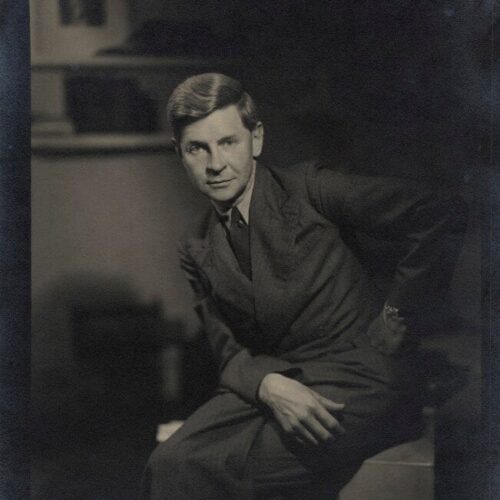
Main image: William Olaf Stapledon by Howard Coster, bromide print, 1938 NPG x2297 © National Portrait Gallery, London
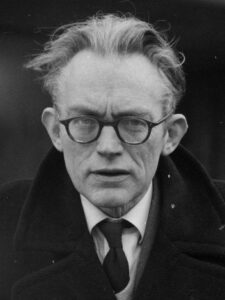
Labour leader, journalist, and author who was a member and Distinguished Supporter of the British Humanist Association and an Honorary Associate of the Rationalist Press Association.
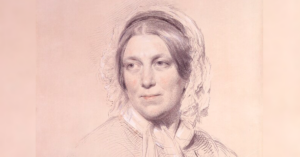
What an emancipation it is, — to have escaped from the little enclosure of dogma, and to stand, — far […]
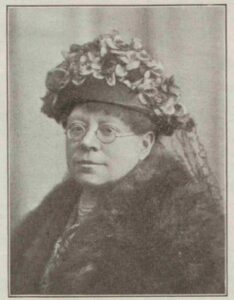
We hold that only by making happiness for those around us, and by endeavoring, individually, to make the world a […]
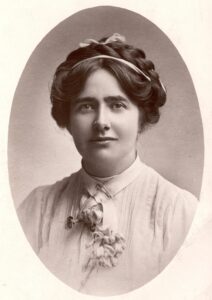
I am a feminist, a rebel, and a suffragist – a believer, therefore, in sex-equality and militant action. I desire […]