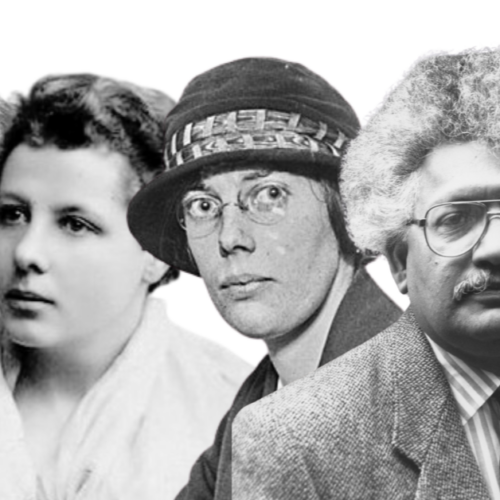
The adoption of the term Secularism is justified by its including a large number of persons who are not Atheists, and uniting them for action which has Secularism for its object, and not Atheism. On this ground, and because, by the adoption of a new term, a vast amount of impediment from prejudice is got rid of, the use of the name Secularism is found advantageous.
Harriet Martineau, letter to William Lloyd Garrison in the Boston Liberator, November 1853
Today, a secularist is someone who believes in the separation of church and state, and that laws and public institutions should be neutral with regards to religion and belief. Secularists seek to ensure that persons and organisations are neither privileged nor disadvantaged by virtue of their religion or lack of it. Almost all humanists are secularists, but religious believers may also take a secularist position which calls for freedom of belief.
Writing about secularism, Andrew Copson suggests:
A good provisional modern definition is that adopted by the contemporary French scholar of secularism Jean Baubérot. He sees secularism as made up of three parts:
Separation of religious institutions from the institutions of the state and no domination of the political sphere by religious institutions
Freedom of thought, conscience, and religion for all, with everyone free to change their beliefs and manifest their beliefs within the limits of public order and the rights of others
No state discrimination against anyone on grounds of their religion or non-religious world view, with everyone receiving equal treatment on these grounds.
Humanists and non-religious people have long campaigned for secularism and for causes that support a more secular state, including in the areas of education, government, and human rights. You can discover some of these below.
The term ‘secularist’ was originally coined by George Jacob Holyoake in 1851 as a positive alternative to ‘atheist’, ‘infidel’, and other terms typically used derogatorily. Holyoake’s original definition was more or less synonymous with that of humanism today, emphasising positive action in the one life we could be sure of, but is not commonly used today.
Both this original definition of secularist and its modern meaning derive from the Latin saeculāris, meaning worldly, or ‘of the world’.
Though the meaning of the word came to shift, followers of Holyoake’s definition applied their secularism across many of the same areas as secularists today, including working for inclusive, non-denominational education, freedom of the press, and the abolition of blasphemy laws.
Understanding secularism by Andrew Copson | OUP Blog
Exploring the deep roots of Scottish secularism by Nathan Alexander | Source

We desire to attract men and women holding all shades of opinion, but having in common a conviction that morality […]
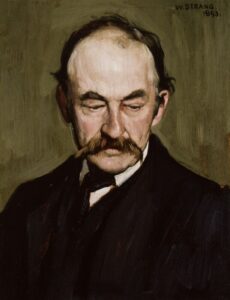
Thomas Hardy was an English novelist and poet, renowned for his apparently bleak outlook, but finely tuned to life and […]
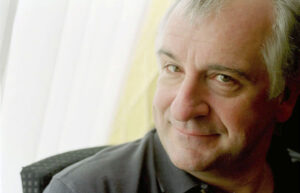
Isn’t it enough to see that a garden is beautiful without having to believe that there are fairies at the […]
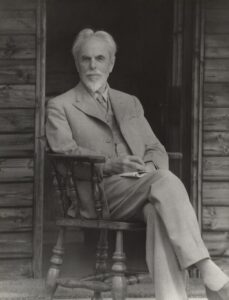
But however little it conforms or tenders allegiance, no life worth having can be isolated from the lives of others. […]