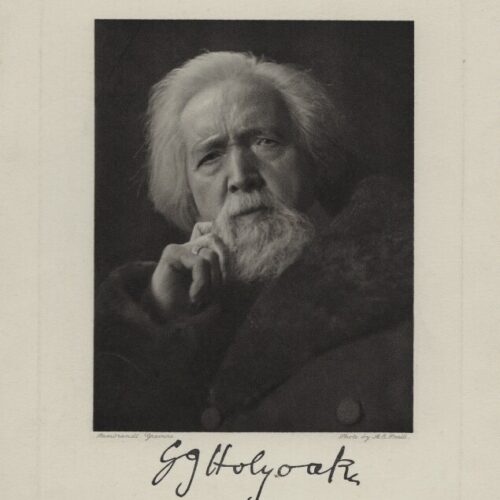
‘We trust the day has come when Christians will be willing to concede equality to those who may differ from themselves.’
The Liberty of Bequest Committee, Agnostic Annual, 1893
The Liberty of Bequest Committee was a campaign group founded in London in 1890 to change the law that allowed money left in wills for freethought causes to be taken away from them. Chaired by George Jacob Holyoake and run from the offices of the publisher Charles Albert Watts at 17 Johnson’s Court, off Fleet Street, it drafted a bill to make such bequests lawful and saw it introduced in Parliament in 1893, where it was blocked and never debated. Its aim was achieved by another route: through the companies that freethinkers set up to receive legacies, and the 1917 House of Lords case, Bowman v Secular Society Ltd, that confirmed those legacies were valid.
Throughout the nineteenth century, English judges treated Christianity as ‘part and parcel of the law of the land’. From this it followed that the courts would not enforce any arrangement whose purpose was to attack it. In Briggs v Hartley (1850), a bequest for a prize essay presenting natural theology as a complete system of religion was held void; in Cowan v Milbourn (1867), a Liverpool hall owner who had let rooms to secularist lecturers was allowed to tear up the agreement, because lectures against Christianity were an unlawful purpose.
For freethinkers, the consequence was severe. A wealthy supporter could give money to the cause while alive, but anything left in a will for ‘opinion adverse to Christianity’, as the Committee later put it, could be challenged by disappointed relatives and diverted to them. Holyoake reckoned that more than three-quarters of a million pounds had been lost to freethought in his lifetime for want of liberty of bequest. Without endowments, freethought societies, halls and newspapers lived hand to mouth.
The campaign grew out of Watts’s publishing business. Around 1888, three years after founding Watts’s Literary Guide (today’s New Humanist), Watts appealed for at least £1,000 for a Propagandist Press Fund with two aims: to spread freethought literature, and ‘to secure, by agitation, liberty of bequest for Freethought purposes’. Part of the money raised went to the new Liberty of Bequest Committee, which held its first meeting in September 1890 at Anderton’s Hotel. Holyoake presided, ‘buoyantly hopeful’; G. W. Foote, President of the National Secular Society, was ‘anxious to be of service’.
The Norwegian journalist H. L. Braekstad became its honorary secretary, George Anderson its treasurer, and Watts its director. Its first task was to establish exactly what the law was, and then to draft a bill to change it, which it did in consultation with Charles Bradlaugh shortly before his death in January 1891. It published its own small journal, The Liberty of Bequest Intelligencer, corresponded with secular, radical and Liberal associations, and during the general election of 1892 had candidates across the United Kingdom questioned on the issue. By the end of that year Watts’s Literary Guide believed that more than 200 MPs were pledged to support the bill.
The Committee’s bill was modest and carefully drafted. It would have made it lawful to create and endow a trust ‘for inquiry into the foundations and tendency of religious and ethical beliefs’ and for spreading the results of that inquiry, and would have treated such trusts as charities, with their use reviewed every thirty years.
Finding a sponsor was hard. The Committee complained in 1891 of ‘a sense of despondency, a feeling of apathy’, and noted that H. H. Asquith, the future Prime Minister, advised against introducing a bill at all, believing Parliament could not be persuaded to be seen to facilitate attacks on Christianity. In 1893 Philip Manfield, Liberal MP for Northampton, introduced the bill. It was repeatedly blocked by the Irish Unionist William Johnston and never reached a second reading. A rival, far broader bill to repeal other laws against freethinkers then complicated matters, and the busy sessions of 1894 to 1897 left no room for either.
The Committee went on printing its appeal and its bill in the Agnostic Annual until 1901, but its active life was short. Looking back in 1941, The Literary Guide recalled that it had come to an end within a few years for lack of money, ‘but the agitation continued with unabated vigour’.
If the law would not let freethinkers leave money to a cause, perhaps it would let them leave money to a company. Foote, who had attended most of the Committee’s meetings, devised the solution: the Secular Society Limited, incorporated in 1898, whose memorandum of association set out lawful objects such as promoting ‘the principle that human conduct should be based upon natural knowledge, and not upon supernatural belief’, and expressly empowered it to receive bequests. Watts, who discussed the details with Foote and still kept his corrected proof of the memorandum in 1941, followed in 1899 with the Rationalist Press Association Limited.
By November 1899 The Literary Guide was telling readers that there were now ‘two legal Freethought organizations to which money may be safely bequeathed’. Whether a court would agree had not yet been tested.
The test came from the will of Charles Bowman, a long-standing supporter of the movement, who in 1905 left his residuary estate, after his wife’s death, in trust for the Secular Society Limited. Bowman died in 1908 and his widow in 1914. His heirs-at-law then claimed the estate, worth between £8,000 and £10,000, on the ground that the Society’s objects were illegal and contrary to public policy, so that the gift was void.
In April 1915 Mr Justice Joyce upheld the gift, while taking care to say that he had not ‘the smallest sympathy’ with the Society. In July the Court of Appeal, Lord Cozens-Hardy, Master of the Rolls, with Lords Justices Pickford and Warrington, dismissed the heirs’ appeal unanimously, holding that Briggs v Hartley and Cowan v Milbourn were no longer good law. Foote, who had been in court for the first hearing, died that October. When the heirs appealed again, the Rationalist Press Association pledged ‘every assistance in its power’, and advanced £300 towards the Secular Society’s legal costs.
The House of Lords heard the appeal in January and February 1917 and gave judgment on 14 May. Hypatia Bradlaugh Bonner and Watts were squeezed into a tiny public pen, forbidden to take notes, and strained to hear. As the Lord Chancellor, Lord Finlay, read his judgment, it seemed the Society had lost: he held that Christianity was part of the law of the land, that the courts could not help promote objects contrary to it, and that any change must come from Parliament. But he was alone. Lord Dunedin, Lord Parker of Waddington, Lord Sumner and Lord Buckmaster found for the Society, four to one.
Lord Parker held that the Society’s objects, though anti-Christian, were not illegal, and warned against a principle that would stop the courts upholding trusts for faiths that ‘denied the truth of Christianity’. Lord Buckmaster pointed out that if promoting doctrines hostile to Christianity were unlawful, many religious and ethical bodies would be illegal associations. Lord Sumner, in what Bonner called a judgment of ‘delightfully rebellious temper’, dismissed the old maxim altogether.
‘Christianity is part of the law of the land’ … ‘is not law at all; it is just rhetoric’.
Lord Sumner, as reported by Hypatia Bradlaugh Bonner, The Literary Guide, June 1917
The judgment, reported as Bowman v Secular Society Ltd [1917] AC 406, also settled the law of blasphemy in the more tolerant form set out by Lord Coleridge in the blasphemy trial of Foote and William Ramsay in 1883: that a temperate attack on religion, in which the decencies of controversy are maintained, is not blasphemy. Writing in the Michigan Law Review the following year, the jurist R. W. Lee concluded that if Christianity had ever been part of the law of England, ‘it is so no longer’.
Bonner hailed the result as ‘an important victory in the long war for religious liberty in this country’: in future, she wrote, ‘no testator need feel any hesitation, no Rationalist Society need feel any uncertainty’. From 1917 the RPA printed a form of bequest in every issue of The Literary Guide, noting that the decision made such legacies unchallengeable. By 1946 it had received more than £157,000 in legacies, and in 1941 The Literary Guide credited the case with the ‘comparatively prosperous position’ of the whole movement.
In June 1917 The Literary Guide also conceded that Asquith had been right a quarter of a century earlier: Parliament would never have passed the Committee’s bill, and it was the slow change in public opinion that had made the judges’ decision possible. The Committee’s other aim, that trusts for freethought should count as charities, remained unmet; that story, which runs through the twentieth century to the British Humanist Association (today’s Humanists UK) gaining charitable status in 1983, is told separately. The blasphemy laws Bonner wanted repealed survived in England and Wales until 2008.
The Secular Society Limited still exists, and publishes The Freethinker. The Rationalist Press Association, which helped fund the Committee and the final appeal, merged with Humanists UK in 2025.
Watts’s Literary Guide, October and November 1890; June and November 1891; December 1892. Agnostic Annual, 1893, 1896 and 1898 (the Committee’s notices and the text of its bill). The Literary Guide, November 1899 (‘Freethought bequests’); September 1915 (report of the Court of Appeal judgment); September 1916; June 1917 (Hypatia Bradlaugh Bonner, ‘“The Law of England and Christianity”: A Great Victory for Freethought’, and editorial notes); September 1941 and March 1946 (recollections of the Committee and the case); July 1946 (obituary of Charles Albert Watts).
Bowman v Secular Society Ltd [1917] AC 406 (House of Lords); Re Bowman [1915] 2 Ch 447 (Court of Appeal). R. W. Lee, ‘Law of Blasphemy’, Michigan Law Review 16 (1918), 149. Secular Society Ltd, ‘About’, The Freethinker (freethinker.co.uk).
The New Humanist archive, including Watts’s Literary Guide and the Agnostic Annual, is available via Exact Editions. Subscribe at newhumanist.org.uk/subscribe.
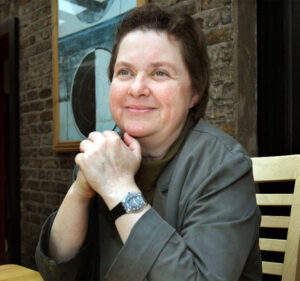
The hard anger she felt at the cruelty she encountered was always rooted in a deep tenderness for vulnerable humanity. […]
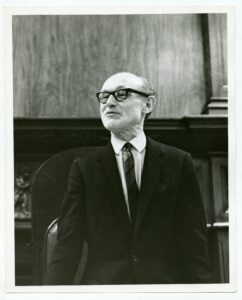
The time has arrived for us humans to stop leaning on ideas for a creator god; we should get down […]
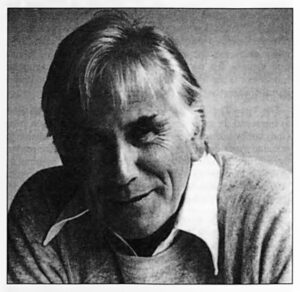
At this nervous moment… when we have uncertainties about almost everything, it’s particularly necessary that we pool our determination, so […]
Toast by Marjorie Bowen at the Fortieth Annual Dinner and Reunion of the Rationalist Press Association, at the Trocadero Restaurant, […]