‘When citadels are showing faint signs of crumbling it is quite a good thing to give them a little push.’
Barbara Wootton, in her first address as President of the RPA, The Humanist, August 1971
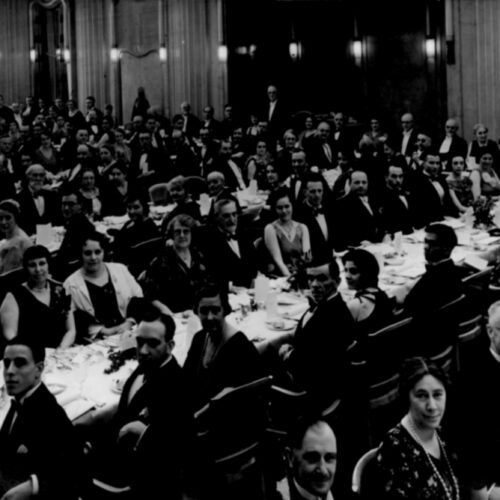
The Rationalist Press Association was founded in 1899 by the publisher Charles Albert Watts, and for its first quarter-century it was led by the chairmen of its Board of Directors. In 1926 the Board created a new office of President, a figurehead to chair the Association’s annual dinners and conferences, speak for it in public, and lend it the standing of a distinguished name. Over the next century twelve people held the post, among them a Nobel laureate, four members of the House of Lords, and some of the best-known scientists and broadcasters of their day.
Several also led the organisation now known as Humanists UK. Graham Wallas and Harry Snell were both Presidents of the Ethical Union, Hermann Bondi was President of the British Humanist Association, and when the Association, renamed the Rationalist Association in the early 2000s, merged with Humanists UK in 2025, its last President, Laurie Taylor, saw the two traditions brought under one roof. See also: Presidents of Humanists UK.
Graham Wallas (1858–1932), political psychologist and educationist.
A founder of the London School of Economics and author of Human Nature in Politics (1908) and The Art of Thought (1926), Wallas had been a rationalist since his student days at Oxford, when he thrilled to the essays of W. K. Clifford. He was already a past President of the Ethical Union when the RPA’s directors made him their first President. He urged the Association to study how people actually come to believe things, and in 1929 led its deputation to the Home Secretary in support of a bill to reform the blasphemy laws.
‘Reason was a matter of the whole man—mind and body and passion alike.’
Graham Wallas, RPA annual dinner, reported in The Literary Guide, July 1921
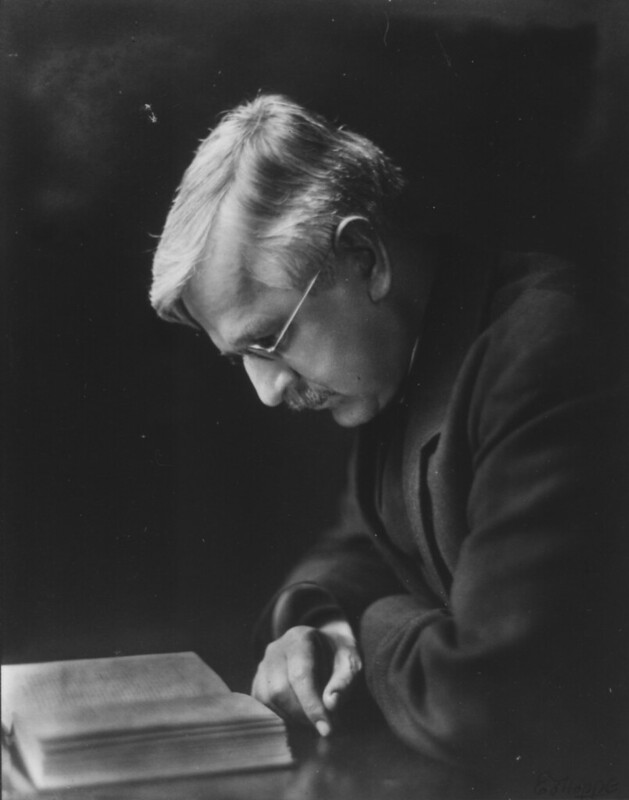
Harold Joseph Laski (1893–1950), political theorist.
Laski succeeded his friend and LSE colleague Wallas, having taught at Oxford, McGill, Harvard and Yale before joining the London School of Economics. Profiling him in 1931, The Literary Guide praised his vigour as a speaker and his support for humane causes. He went on to chair the Labour Party, and wrote of Wallas that ‘few men of our time have been so amply Rationalist’.
Henry (Harry) Snell, 1st Baron Snell (1865–1944), politician and secularist.
A former farm labourer who educated himself through evening classes and freethought lectures, Snell became a Labour MP and later a peer. He had already served the Ethical Union as organiser, Secretary, Chair of its Council and, from 1931, President, making him the second person to lead both organisations.
Charles Marsh Beadnell (1872–1947), naval surgeon and writer.
A senior medical officer in the Royal Navy, Beadnell moved, as his Literary Guide obituary put it, from devout Christianity to atheism through the study of science. He wrote and lectured widely for the RPA, led it through the Second World War, and was working until the day before his death in 1947.
Cyril Dean Darlington (1903–1981), geneticist.
A Fellow of the Royal Society and one of the leading cytologists of his generation, Darlington held the presidency only briefly, resigning in 1949. His later writings on heredity, race and society have been widely criticised.
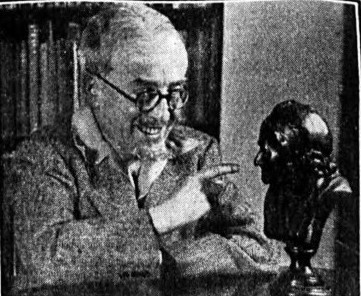
A. E. Heath (1887–1961), philosopher.
Founder of the philosophy department at University College, Swansea, Heath presided over the RPA’s jubilee in 1949 and chaired its dinners with a wit that his monthly Literary Guide column, ‘Heathiana’, made famous. His presidential lecture argued that scientific method belonged in the study of society as much as of nature.
‘Rationalists hold that the writ of reason runs everywhere.’
A. E. Heath, ‘Values and Veracity’, The Literary Guide, June 1946
Bertrand Russell, 3rd Earl Russell (1872–1970), philosopher and campaigner.
The most famous philosopher of his age and a Nobel laureate, Russell served as President for fifteen years, through the years when he led the campaign for nuclear disarmament and was jailed, at 89, for civil disobedience. Some members wrote in to object to a President who led civil disobedience, but he remained in office until his death. On his death in 1970 The Humanist wrote that more could be learned about rationalism from his example than from any definition.
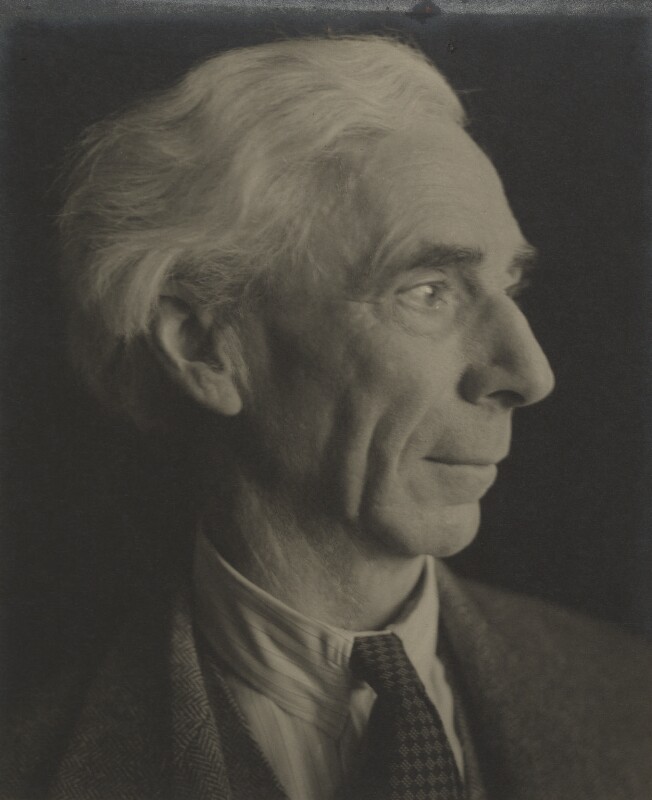
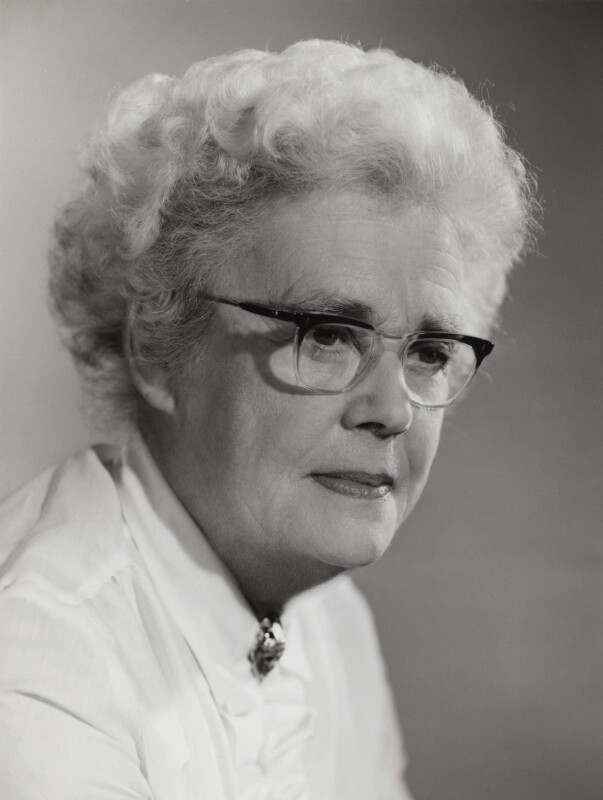
Barbara Wootton, Baroness Wootton of Abinger (1897–1988), social scientist and magistrate.
One of the first women life peers, Wootton succeeded Russell, whose writing she had read before every serious piece of her own. In her first presidential address she urged rationalists to give religious dogma’s crumbling citadels ‘a little push’, to build an ethic without supernatural sanction, and to insist that anyone who makes an ‘informed’ statement produce the evidence.
Ritchie Calder, Baron Ritchie-Calder (1906–1982), science journalist.
Probably the best-known science writer in Britain before, during and after the Second World War, Calder had served as an RPA director before becoming President in 1973. He held the post until his death in 1982.
Hermann Bondi (1919–2005), mathematician and cosmologist.
Co-author of the steady state theory of the universe, chief scientific adviser to the government, and an adviser on the Thames Barrier, Bondi was also President of the British Humanist Association. He led the RPA for more than two decades, through its centenary in 1999, until his death in 2005.
Jonathan Miller (1934–2019), doctor, director and broadcaster.
Trained in medicine, Miller found fame in Beyond the Fringe and went on to direct opera and theatre around the world. As President he lent the renamed Rationalist Association his wit and his lifelong, unfussy atheism, which he set out on television in Atheism: A Rough History of Disbelief (2004).
Laurie Taylor (born 1936), sociologist and broadcaster.
A long-standing contributor to New Humanist, for which he conducted interviews with figures from Christopher Hitchens to Terry Eagleton, and the presenter of BBC Radio 4’s Thinking Allowed, Taylor had been an RA Vice-President and Chair before becoming President in 2014. He was the Association’s last President before it merged with Humanists UK in 2025, after which he became a Vice President of Humanists UK, a title he shares with the philosopher A. C. Grayling and all the living former Presidents of Humanists UK.
F.J. Gould was an influential educationist, writer, and humanist, whose tireless work towards secularising education helped to lay the groundwork […]
Fellowship is heaven, and lack of fellowship is hell. William Morris, A Dream of John Ball (1888) Painter, textile designer, artist, […]

Derek Lennard was a longtime member and former chair of LGBT Humanists—then known as the Gay and Lesbian Humanist Group […]
…the only efficient, the only decent prayer, is Action. John Galsworthy, ‘Philosophy of Life’ in Glimpses and Reflections (1937) Best […]