I settled my religious muddles by deciding that I had better be an atheist.
Diana Wynne Jones in Something About the Author: Autobiography Series, volume 7 (1989)
Diana Wynne Jones was one of the most inventive British writers for children of the 20th century, the author of the Chrestomanci books, Howl’s Moving Castle, Fire and Hemlock, and some 40 other novels. She decided she was an atheist at the age of ten and never changed her mind. Her books are full of gods, demons, and magic, and none of them is worth trusting; what her characters can rely on is their own wits and the people who love them.
Jones was born in London on 16 August 1934, the eldest of three sisters (the middle one, Isobel Armstrong, became a distinguished literary critic). Evacuated to Wales in 1939, she was moved repeatedly through the war before her parents settled in 1943 at Thaxted in Essex, where they ran an educational conference centre and left their daughters largely to bring themselves up. Jones later wrote about this childhood with some bitterness, and it is the source of the absent, negligent, or actively malign parents who recur through her fiction. She said that in writing for children, she hoped to give them the benefit of some of her own experience:
I like to explore the private terrors and troubles which beset children, because they can thereby be shown they are not unique in misery. Children create about a third of their misery themselves. The other two-thirds is caused by adults—inconsiderate, mysterious, and often downright frightening adults. I put adults like this in my stories, in some firmly contemporary situation beset with very real problems, and explore the implications by means of magic and old myths. What I am after is an exciting—and exacting—wisdom, in which contemporary life and potent myth are intricately involved and superimposed. I would like children to discover that potent old truths are as much part of everyone’s daily life as are—say—the days of the week.
Diana Wynne Jones in Something About the Author, volume 9 (1976)
Though fascinated by myth, religion did not take. Jones described how, sent to church and confirmed, she stared at the crucifix and found that nothing happened, and at about ten ‘settled my religious muddles by deciding that I had better be an atheist’. She was educated at the Friends’ School in Saffron Walden and at St Anne’s College, Oxford, where she attended lectures by both C. S. Lewis and J. R. R. Tolkien. She married the medievalist John Burrow in 1956 and had three sons. In 1976, the family moved to Bristol, where she lived for the rest of her life.
Her first children’s novel appeared in 1973, and from Charmed Life (1977), which won the Guardian Award, she published steadily for more than thirty years. Her worlds are multiple and porous, her plots turn on the discovery that some adult or institution has been lying, and her gods, when they appear, are as fallible and self-interested as anyone else. Howl’s Moving Castle (1986) became a Studio Ghibli film in 2004. The Tough Guide to Fantasyland (1996) skewered the clichés of the genre she had spent her life renewing. She died in Bristol on 26 March 2011.
Jones was admired by, and influenced, a generation of fantasy writers, including Humanists UK patron Philip Pullman, and received the World Fantasy Award for Life Achievement in 2007. Her particular contribution was to write fantasy that trained children in scepticism: to distrust authority and to ask who benefits from a story.
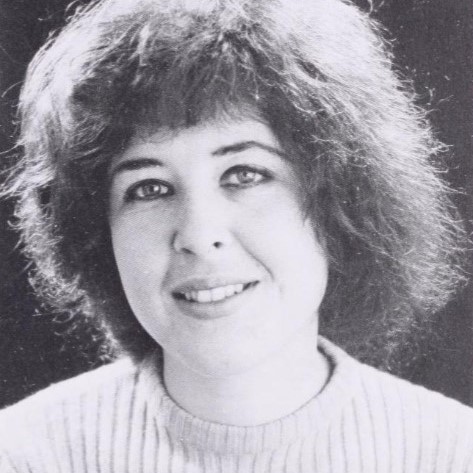
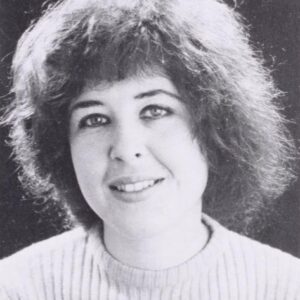
Main image: Portrait of Diana Wynne Jones in Something About the Author, vol. 9 (1976)
I like life with its mysteries. I don’t need my imponderables filled in for me. Michael Manley quoted by Rachel […]
Humanism is an attitude to life that has solidly practical implications… it implies a commitment to helping run the community […]
We hold that only by making happiness for those around us, and by endeavoring, individually, to make the world a […]
I settled my religious muddles by deciding that I had better be an atheist. Diana Wynne Jones in Something About […]