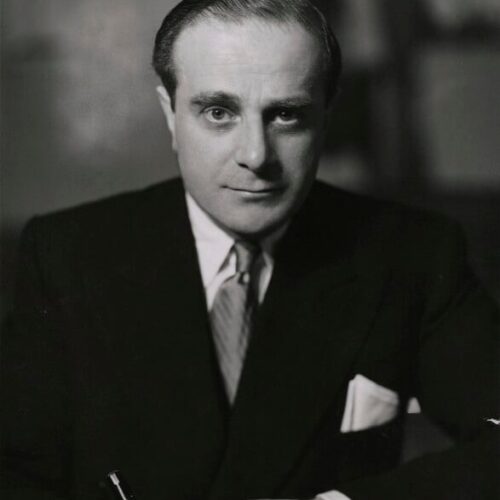
All through his life he fought fearlessly for the causes in which he deeply believed and he fulfilled himself in the struggle. He was a Humanist in the best sense of the word. He believed that the Good Society was one in which people were free to be happy in their own way. To work for such an end was, in a sense, his only religion.
Hector Hawton on Eustace Chesser, New Humanist, February 1974
This obituary, written by Hector Hawton, was published in New Humanist in February 1974.
By the death of Dr Eustace Chesser the Humanist movement has lost a powerful champion of many of the reforms with which it has been specifically concerned. It would be difficult to exaggerate the part he played in changing the climate of opinion on sexual behaviour. His campaign for a sane and rational attitude to sexual problems began in 1940 with the publication of Love without Fear. It was an instant best-seller and since then it has been translated into many languages and is still in brisk demand. But it landed its authors in the dock of the Central Criminal Court under the old Obscene Publications Act. His decision to fight the case at the Old Bailey instead of a magistrate’s court was bold and characteristic. He was not only vindicated, but his triumph started a chain of events that led to substantial changes in the law.
In 1959 his article ‘Is Chastity Outmoded?’ in a BMA booklet led to the publication being withdrawn. By contemporary standards the booklet seems so mild that the storm it aroused is scarcely comprehensible. Like other reformers who were villified in their day, Eustace Chesser lived to see ideas that were once so shocking as to be unmentionable become almost commonplace—and in little more than a decade.
Like other reformers who were villified in their day, Eustace Chesser lived to see ideas that were once so shocking as to be unmentionable become almost commonplace—and in little more than a decade.
Born in 1902 he qualified in Edinburgh in 1926 and for a period he was in general practice in Cinderford, Manchester. His subsequent interest in psychiatry owed much to the experience he gained in dealing with problems that arose as often from ignorance and bigotry as disease. In London he was an assistant at the Tavistock Clinic for a time and thereafter built up a brilliantly successful career in the West End.
His skill in handling sexual and marital difficulties was largely due to his intuitive understanding and a capacity for sympathy where many people would be merely impatient. He was singularly free from doctrinaire rigidities. But he soon realised that the people who would be helped by personal contact were only a fraction of those who might be reached through books and broadcasts.
His skill in handling sexual and marital difficulties was largely due to his intuitive understanding and a capacity for sympathy where many people would be merely impatient. He was singularly free from doctrinaire rigidities.
He was a prolific writer and he developed a style free from technicalities that enabled him to attract a wide and responsive public. But he repudiated the label of ‘sexologist’. In fact, he wrote on such diverse subjects as diet, suicide, the theories of Wilhelm Reich and the psychology of the adolescent Shelley. His sociological survey of womens’ emotional attitudes in marriage and family life which came to be known as the Chesser Report was published in 1956 and is a lasting contribution to studies in this field.
All through his life he fought fearlessly for the causes in which he deeply believed and he fulfilled himself in the struggle. He was a Humanist in the best sense of the word. He believed that the Good Society was one in which people were free to be happy in their own way. To work for such an end was, in a sense, his only religion. The organizations to which he gave unstinted support included the Rationalist Press Association, the Hampstead Humanist Society (of which he was President), the Abortion Law Reform Association, the British Social Biology Council, the Homosexual Law Reform Society, the Medico-Legal Council, the International Committee for Sexual Equality and the Society for the Study of Addiction.
All through his life he fought fearlessly for the causes in which he deeply believed and he fulfilled himself in the struggle… He was a very special kind of person, and the community is poorer without him.
For me the loss of a close friend of many years standing is a heavy blow. He had an enormous sense of fun, yet he would erupt into anger at the least sign of intolerance or hypocrisy. His exuberant spontaneity and infectious enthusiasm were not extinguished even by the crippling illness which struck him down in 1969. He bore his disability with calm and fortitude. He was a very special kind of person, and the community is poorer without him.
Hector Hawton
Main image: Eustace Chesser by Elliott & Fry, bromide print, NPG x86693 © National Portrait Gallery, London

The… women on the early ALRA committee were similar in background and outlook. Most of them were active members of […]
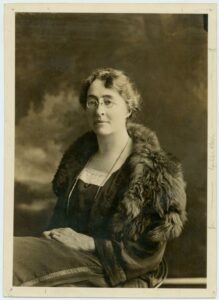
Mary Sheepshanks was a humanist who saw her feminist, pacifist, and cosmopolitan beliefs as being natural expressions of her humanist […]
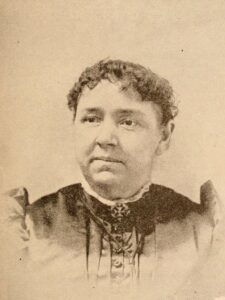
Man for man in larger sense does what heaven fails to do. Sara A. Underwood, quoted by Rufus K. Noyes […]
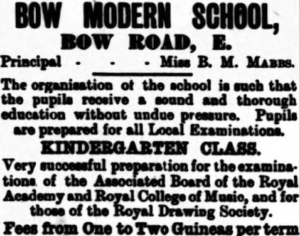
Bessie Mabbs was a teacher, school principal, and active member of the Union of Ethical Societies (now Humanists UK), chairing […]