start typing and results will show

or press esc

Before science fiction

Satirists, utopians, and freethinking poets

Long before anyone coined the term, writers were using imaginary voyages to smuggle in dangerous questions.

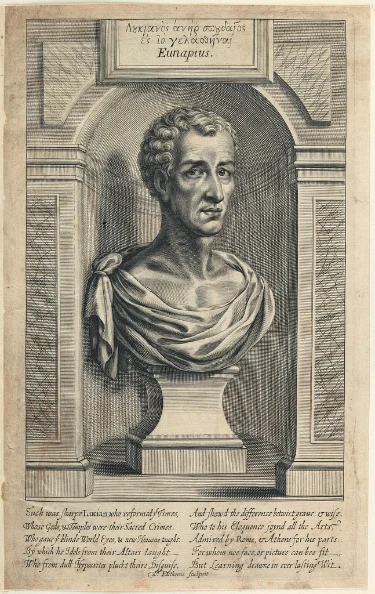
Lucian of Samosata

Lucian of Samosata

c. 125–after 180 CE A True History

Greco-Syrian satirist who invented a Moon voyage

In the 2nd century CE the Greco-Syrian satirist Lucian of Samosata, a relentless mocker of oracles, credulity, and self-serving philosophers, wrote A True History, in which travellers are swept to the Moon and caught up in an interplanetary war. Lucian announced on the first page that every word was a lie. The joke was aimed at the tall tales other men told as truth.
Thomas More

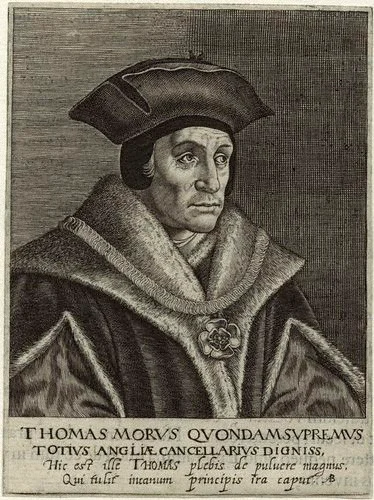
Thomas More

1478–1535 Utopia (1516)

The word ‘utopia’ is a joke, meaning ‘no-place’

Catholic writer Sir Thomas More’s Utopia (1516) took for its title a Greek pun meaning ‘no-place’. More imagined an island commonwealth governed by reason rather than inherited custom. More’s islanders practised religious toleration a century before Europe would seriously entertain the idea.

Francis Bacon

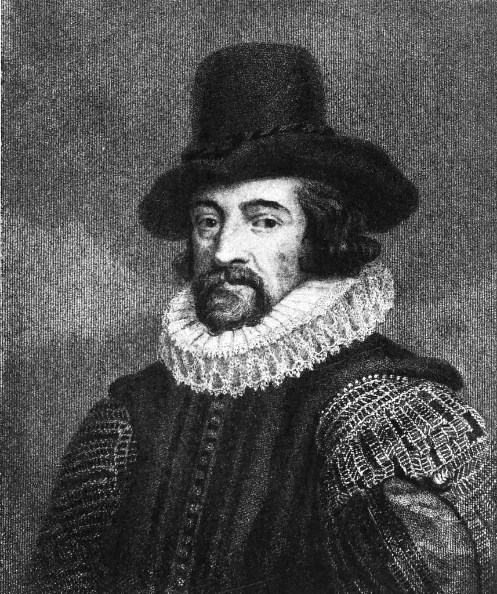
Francis Bacon

1561–1626 New Atlantis (1627)

Salvation by research institute

Sir Francis Bacon’s New Atlantis (1627) is the first English utopia built around science. Its island of Bensalem is run not by priests or kings but by Salomon’s House, a state-funded research institution whose fellows conduct experiments, travel abroad to gather knowledge, and decide which discoveries to publish, all in pursuit of what Bacon had elsewhere called ‘the relief of man’s estate’. The fable was left unfinished at his death, but the fellows of the Royal Society, founded in 1660, acknowledged it as their model. It planted the idea that runs through everything on this site: that the future is something people can investigate, plan, and improve.

Aphra Behn

Aphra Behn

1640–1689 The Emperor of the Moon (1687), A Discovery of New Worlds (1688)

The first professional woman writer looks up

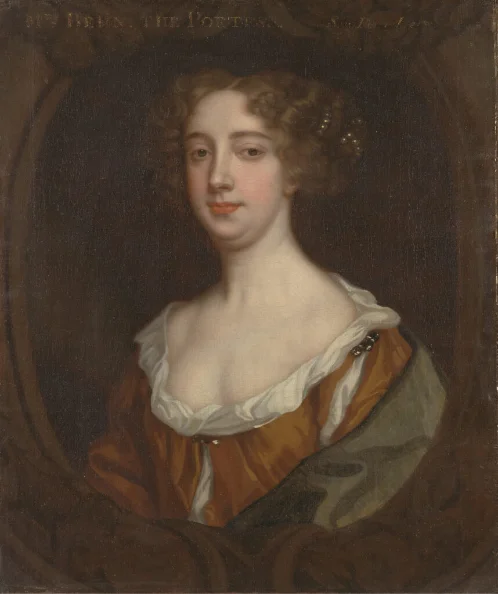
Aphra Behn, the first English woman to earn her living by the pen, wrote about the plurality of worlds for a popular audience while the idea was still dangerous. Her farce The Emperor of the Moon (1687) sends up a doctor so convinced the Moon is inhabited that his daughters’ suitors need only descend in a machine, dressed as lunar royalty, to win his blessing. A year later she translated Fontenelle’s A Discovery of New Worlds (1688), a dialogue arguing that the stars are suns and the planets peopled, and added a preface of her own defending the new astronomy against scripture and insisting that women had as much right to it as men.

Margaret Cavendish

Margaret Cavendish

1623–1673 The Blazing World (1666)

An empire answering to an empress, not a church

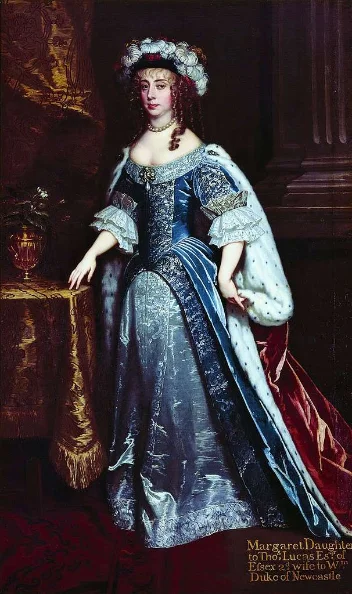
In 1666 Margaret Cavendish, Duchess of Newcastle, published The Blazing World, a fantastical voyage through a parallel cosmos that doubled as natural philosophy and as a woman’s declaration that she could build worlds too. Cavendish was one of very few women of her era to publish science (or ‘natural philosophy’) under her own name, and was widely suspected of irreligion — possibly placing her in the lineage of humanist writers featured on this site.

Voltaire

Voltaire

1694–1778 Micromégas (1752)

A giant from Sirius inspects the Earth

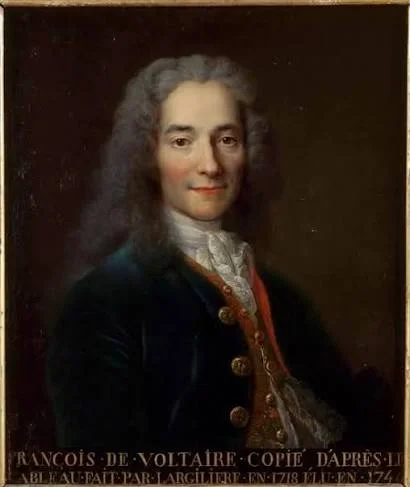
Come the Enlightenment and the age of expansion, writers began to explore questions of colonial violence and race relations through fantastical voyages. In Voltaire’s satirical Micromégas (1752), a giant from a planet of the star Sirius comes to inspect the Earth, where he finds its inhabitants slaughtering one another over patches of mud and points of doctrine.

Erasmus Darwin

Erasmus Darwin

1731–1802 The Temple of Nature (1803)

Evolution as epic poetry, decades before his grandson

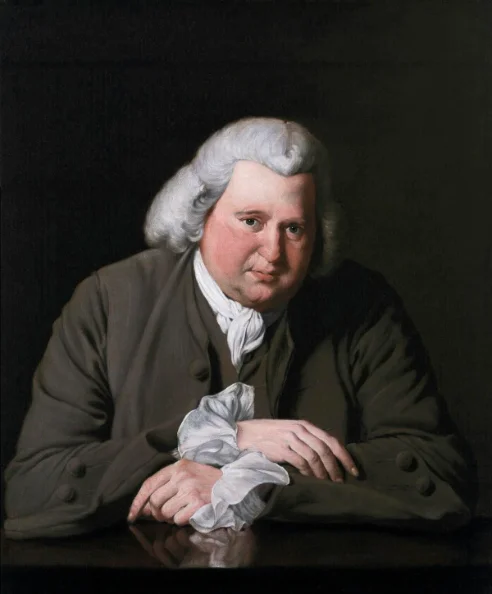
Histories of science fiction tend to skip the poetry, which is a pity. Erasmus Darwin — physician, inventor, Lunar Society luminary, and grandfather of Charles Darwin — wrote sprawling scientific verse culminating in The Temple of Nature (1803), which pictured all life ascending from microscopic origins in the sea, decades before On the Origin of Species.

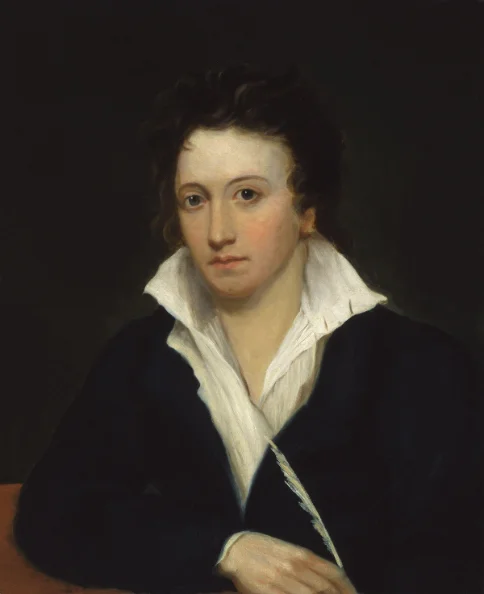
Percy Bysshe Shelley

Percy Bysshe Shelley

1792–1822 Queen Mab (1813), Prometheus Unbound (1820)

Vegetarian and humanist visionary poet

Percy Bysshe Shelley was expelled from Oxford in 1811 for co-writing the pamphlet The Necessity of Atheism. His later work Queen Mab (1813), annotated with footnotes assailing religion, monarchy, and meat-eating alike, was also filled with visions of a transformed future Earth. His poem Prometheus Unbound (1820) returned to similar themes, recounting an ancient myth of the fire-stealer defying gods by giving technology to humanity and freeing humanity from tyranny. His wife, Mary Shelley, was similarly influenced by the myth of Prometheus when she created modern science fiction as we know it with Frankenstein

Made by Heritage Creative