start typing and results will show

or press esc

H. G. Wells

The scientific romance and the rights of man

Wells widened the genre’s scope enormously, and his science fiction cannot be separated from his rationalism, because both had the same teacher.

H. G. Wells: the scientific romances

H. G. Wells: the scientific romances

1866–1946 The Time Machine (1895) to The First Men in the Moon (1901)

Evolution, learned at the source

As a scholarship student at the Normal School of Science in South Kensington, Wells studied biology under Thomas Henry Huxley — ‘Darwin’s bulldog’, the man who coined the word agnostic. Ideas of human evolution, and with it questions about the future of human society, sat at the heart of nearly everything he wrote.

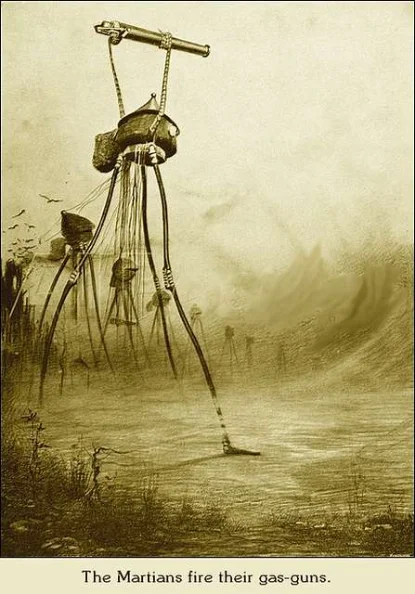
In a remarkable burst between 1895 and 1901 — The Time Machine, The Island of Doctor Moreau, The Invisible Man, The War of the Worlds, The First Men in the Moon — Wells assembled most of the modern genre’s toolkit. The Time Machine examined inequality in British society by imagining a future where the course of evolution has divided humanity into two warring species. The War of the Worlds pointedly compared a Martian invasion of England to the European extermination of the Tasmanians. And just as evolutionary science started to raise serious ethical questions about the treatment of non-human animals, Moreau took a scalpel to the boundary between human and animal that religion had policed for millennia.
The open conspiracy and humanist activism

The open conspiracy and humanist activism

1928–1932 The Open Conspiracy (1928); the Progressive League (1932)

The dreamer who founded a committee

Wells was not only a creator of fictional worlds imagined along scientific principles. He also dreamed of a better world beyond the page, shaped by rationalism and humanist values. His non-fiction work The Open Conspiracy (1928) called on educated people in every walk of life to combine into an open movement for a peaceful, rationally organised world — no gods in it, and no promises about the next world.

Readers took him at his word. In 1932 Wells and the philosopher C. E. M. Joad founded what became the Progressive League, to give the open conspiracy a subscription list and a programme. It worked closely with what is now Humanists UK (at that time known as the Ethical Union and the Rationalist Press Association), and its causes — divorce reform, decriminalising homosexuality, contraception, an end to censorship, disestablishment, and support for national parks — read as a to-do list for the century that followed.

Wells and the rights of man

Wells and the rights of man

1901–1940 A Modern Utopia (1905), The Rights of Man (1940)

From Martian invasions to the Universal Declaration

Alongside campaigning for a more rationally organised world, Wells went on to write works such as A Modern Utopia (1905) and Men Like Gods (1923). These early blueprints of a better world have not aged as well as his earlier science fiction novels. Anticipations (1901) flirted with the eugenic thinking that infected much progressive opinion of the era, and his utopias could be chillingly managerial; later humanists, and to some extent the older Wells, learned from those failures. Wells’ wartime Rights of Man declaration, which he drafted and publicised alongside Lord Sankey, fed directly into the milieu that produced the Universal Declaration of Human Rights in 1948.

Unholy Histories Listen on our podcast Hear more about the humanists who helped shape the Universal Declaration of Human Rights in an episode of Unholy Histories.
Made by Heritage Creative