J. P. Gilmour (1860–1941)
( 31 August 1860 - 10 March 1941 )
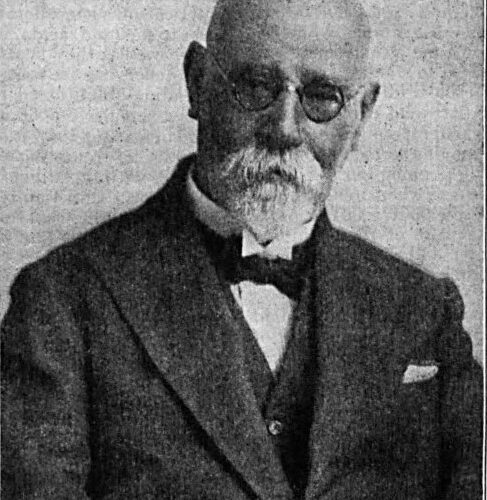
( 31 August 1860 - 10 March 1941 )
‘Although a veteran, he still displayed the ardour of the recruit.’
Charles M. Beadnell, The Literary Guide, May 1941
James Pinkerton Gilmour was a Scottish pharmacist, editor of the Pharmaceutical Journal, and Chairman of the Rationalist Press Association’s Board of Directors, which he joined in 1925. Won to freethought by Darwin, Bishop Colenso, and Charles Bradlaugh’s National Reformer, he gave hundreds of lectures for the cause and was among the very last of those who had written for Bradlaugh. In 1933 he edited Champion of Liberty, the RPA’s volume for the Bradlaugh centenary.
Under his chairmanship, the RPA recruited Albert Einstein as an Honorary Associate in 1934, undeterred by the man who had hosted Einstein on his arrival in England as a refugee, who told them it was not worth asking. Einstein’s letter of acceptance, Gilmour reported, was one of the most cordial the Association had ever received.
His daughter, Annie Gilmour, was an RPA member from 1926 and active in its Glasgow group until her death in 1966.
The obituary below was published in The Literary Guide (now New Humanist) in April 1941. It is followed by a tribute from the RPA’s President, Surgeon Rear-Admiral Charles M. Beadnell, published the following month.
Born August 31, 1860; died March 10, 1941
James Pinkerton Gilmour was born in Glasgow in 1860, and he remained proud of his Scots ancestry throughout a long and busy life. Yet in his early years he soon left his native Scotland behind, since his parents emigrated to Australia when he was but five years old, taking him with them. There his boyhood was spent, and there he obtained his early education, which consisted of six months’ schooling in Brisbane. There also he obtained his first job, assisting in a wool-shed, for which he received 10s. a week. When he was fourteen, however, his mother died and his father took the boy back to Glasgow, where he was sent for a year to a private school, so that his general education might receive the finishing academic touches. In 1877 he entered the telegraph department of the North British Railway Company, where he did well, but two years later he embarked on what was to be his lifetime’s career—pharmacy—when he was apprenticed to Mr. Joseph A. Clarke of London Street, Glasgow.
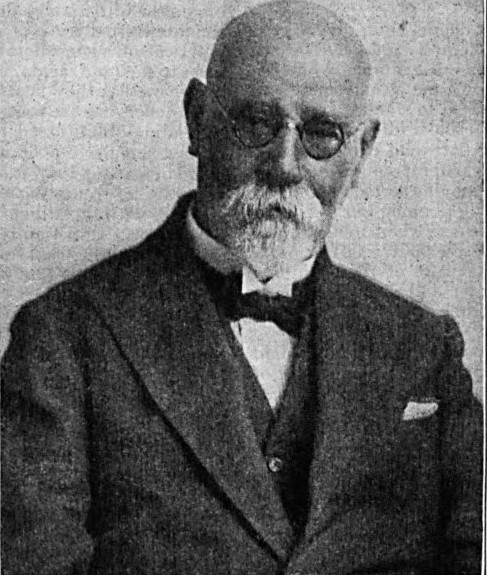
Through these early years, however, the intellectual development of the youth and young man was not being neglected. He did a great deal of promiscuous reading, but, so he was wont to assert in later days, little regulated study until in 1880 he joined the Glasgow Literary and Pharmaceutical Association which, he said, was then more literary than pharmaceutical. Perhaps the event which had the greatest influence on his subsequent career was his marriage in 1888 to Miss Annie Forrester, for he has frequently admitted his great debt to his wife, both in his private life and in those public duties which were to come to him increasingly as the years passed. It was obvious that Mr. Gilmour in his youth was already showing powers of public leadership, for when the pharmaceutical assistants in Scotland formed their own association he took a prominent part in organizing it and frequently contributed to its discussions. At one time he thought of taking up medicine (he was chief dispenser to the Victoria Infirmary from 1895 to 1903), but dropped the idea after due consideration. Scottish pharmacy has reason to be glad that he did so. A new association, called the Glasgow Chemists’ and Druggists’ Assistants’ Association, came into being in 1899, and for some three years Mr. Gilmour was its President. From that time onwards his record in commerce was one long series of successes. He started in business for himself in 1903 and was soon on the Executive Committee of the various bodies which existed to further the interests of pharmaceutical chemists in Scotland, and later throughout the British Isles. In 1908 he was elected Vice-President of the British Pharmaceutical Conference, and in 1916 became editor of the Pharmaceutical Journal, a position which he filled with skill and distinction through the difficult years of the war of 1914–1918 and the succeeding period of reconstruction.
What has been written above might be (with slight alterations of dates and places) an account of the life and career of many a successful business man; but there was something about Mr. Gilmour which marked him off as distinct from the majority of his contemporaries in the world of commerce. That “something” was his lifelong interest in Freethought and Rationalism. He was led in this direction through reading The Origin of Species and Colenso’s Critical Examination of the Pentateuch, and by a chance encounter with the National Reformer when it was flourishing under the editorship of Charles Bradlaugh. The next decided step forward in his intellectual evolution was the joining of the Glasgow Eclectic and Secular Institution in 1879, and under the auspices of this rather unfortunately named body he delivered the first of hundreds of Rationalist lectures which, in ensuing years, he was to give in all parts of Britain. He served this Glasgow association and the National Secular Society in various official positions, contributing widely in the Rationalist Press of the day. The National Reformer, the Secular Review, the Free Review, the Reformer, and the Freethinker all published contributions from his versatile pen, so that when, later on, he was to contribute to the Literary Guide, he was already a practised and able writer with a style of his own.
‘Under the auspices of this rather unfortunately named body he delivered the first of hundreds of Rationalist lectures.’
The Literary Guide, April 1941
In Glasgow he had thus made his mark as a member of the Rationalist Movement, and when he came to London to edit the Pharmaceutical Journal he was able to extend his Rationalist activities considerably. In 1925 he was elected to the Board of Directors of the Rationalist Press Association, and later became Chairman of that Board. Afterwards his activities increased. He edited the Bradlaugh Memorial Volume, Champion of Liberty, which was published on the occasion of the Bradlaugh Centenary Celebrations in 1933, and contributed frequently to the pages both of this journal and of the Rationalist Annual. He represented the R.P.A. on various official occasions, of which the most noteworthy was perhaps the International Freethought Congress of 1938, when he delivered a speech of welcome to the delegates from abroad, and also spoke on “The Reality of a Secular Ethic” at the Sunday morning meeting which was held under the chairmanship of Dr. H. J. Bridges.
It is not easy, standing so near to him in time as we do to-day, to estimate the true worth of the work for Rationalism on which Mr. Gilmour spent so much of his time and energy for many years. It is difficult to imagine that the man whose cheerful smile and gay good humour one remembers so well is now no more, his work and words a matter of history. One thing, however, can be said without fear of contradiction: his labours for the R.P.A. and for the advancement of human reason will not readily be forgotten. Whatever he did, he put his whole heart into his work. And dearest of all the many activities on which he spent long and laborious hours was certainly the cause of Rationalism. That our activities should attract and inspire such men is a source of very real pride to those of us who have to pick up the torch and carry it on to new triumphs in the future.
His many friends and admirers bade Mr. Gilmour a last farewell at the Crematorium at Golders Green on March 15. Mr. Fred. Watts conducted the ceremony, and when the simple rites were concluded it was no procession of mourners that left the Chapel, but rather a group which had saluted a noble soul who had passed away.
May I add to the tributes paid to the late Mr. Gilmour a brief reference to his splendid work for the R.P.A.? Elected to the Board in 1925, he exhibited not only a warm devotion but a rare combination of qualities—business capacity and experience, literary skill, and an intimate knowledge of Rationalist propaganda. These qualities marked him out for the Chairmanship in which he was so busy and so happy until his illness laid him aside. His kindliness and his unfailing sense of humour made him an ideal colleague: each one of us on the Board found in him a friend as well as a leader. Not the least remarkable thing about him was his alertness of mind and freshness, indeed youthfulness, of outlook. It was difficult to remember that he was one of the last—and eventually the very last—of the stalwarts who wrote for the National Reformer and in other ways supported Bradlaugh in his long fight for freedom. Although a veteran, he still displayed the ardour of the recruit; riper in years and in wisdom than the rest of us, yet none was more ready than he to adapt old ways of action to new needs. From its inception the R.P.A. has been fortunate in attracting men who gave themselves without stint to its service, and among these the loyal friend to whom we have just said farewell will long be gratefully remembered.
Charles M. Beadnell
‘In Memoriam: J. P. Gilmour’, The Literary Guide, April 1941, p. 45; Charles M. Beadnell, ‘J. P. Gilmour: A Tribute’, The Literary Guide, May 1941, p. 57. Transcribed from the originals; spelling and punctuation as printed. The full issues can be read in New Humanist’s digital archive, available via Exact Editions. Subscribe at newhumanist.org.uk/subscribe.
They weren’t just trying to sell something to parents, they were helping them to understand how to play with and […]
If any delegate present thinks that the Fabian Society was wise from the hour of its birth, let him forthwith […]
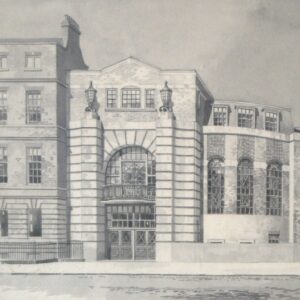
Conway Hall has effected a transformation. From the day of its opening the life of the Society has been full […]
Those who, like myself, are in communication with the advanced thought and thinkers throughout the world know that hundreds —nay, […]