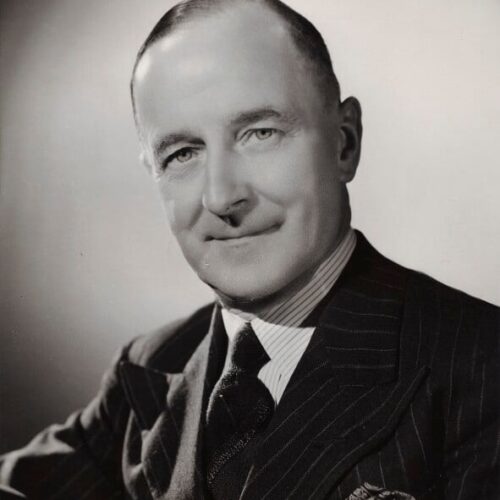
Humanism is on the march. In a world of conflict and frightening menaces we are an integral part of the volume of hope.
Joseph Reeves, ‘Building a Humanist Movement’ in The Humanist, November 1963
Joseph Reeves was a politician and influential humanist, who championed the rationalist voice in Parliament and an active humanism among members of the movement. As an MP, Reeves promoted causes including abortion access, inclusive education, and action on worldwide inequality, as well as forming an early precursor of today’s All-Party Parliamentary Humanist Group.
The following tribute by Hector Hawton, printed in The Humanist in May 1969, following Reeves’ death in March, highlights the extensive contributions he made to politics, to the humanist movement, and to the public acceptance of cremation.
Integrity, loyalty and passion for social justice characterized this indomitable rationalist
The whole Humanist movement, and particularly members of the RPA, will join me in paying tribute to Joseph Reeves, who died suddenly at Eastbourne at the age of eighty-one. Our sympathy goes out to his widow and family. I saw him a few weeks before the fatal heart attack, and it did not seem to me that he looked any older than when I first joined the staff of the RPA some sixteen years ago. I little thought that our next encounter would be in the chapel of Woking crematorium.
Thanks largely to his initiative and foresight we started a series of bold changes that gave the RPA ‘a new look’… The first move was to remodel the Literary Guide and change its name to Humanist.
He was chairman of the RPA until his retirement in 1964. He then became a Vice-President, and was succeeded by Dr David Stewart, though he still remained a director of Pemberton Publishing Company. Thanks largely to his initiative and foresight we started a series of bold changes that gave the RPA ‘a new look’— not unlike what Catholics call aggiornamento. The first move was to remodel the Literary Guide and change its name to Humanist. His contacts at Odhams put us in touch with H. I. Thompson Press, who undertook the publication and distribution of Humanist. Mr Iain Thompson joined the board and his business acumen also greatly helped us to halt the drain on our finances and gradually build them up to the healthy condition they are in today.
In the negotiations for the sale of our old freehold premises in Johnson’s Court, Joseph Reeves played a most valuable part. The move to Drury Lane was part of a wider reorganization, and it was abundantly justified. His experience and tact made him a wise counsellor in dealing with the problems that arose out of the sponsorship by the RPA and EU of the British Humanist Association, and in the protracted but successful efforts by the RPA to attain charitable status.
The poverty that he saw and endured converted him to Socialism. He rejected orthodox religion and joined the Ethical movement, but he became convinced that the only way of changing society was through political action.
He used to tell me of his early struggles when he knew at first-hand that dark side of the Edwardian era ignored by the glittering, upper-class world of The Forsyte Saga. The poverty that he saw and endured converted him to Socialism. He rejected orthodox religion and joined the Ethical movement, but he became convinced that the only way of changing society was through political action.
His political idealism had its roots in Robert Owen and George Jacob Holyoake rather than in Marx. The Labour Party was at its beginnings and he first joined the Independent Labour Party. In 1914 he was engaged in publicity work for Sainsbury’s. As a conscientious objector to the war he refused to take the easier course of pleading ‘religious grounds’ and surprised the Tribunal by quoting Tolstoy. His sincerity impressed them and he was granted exemption.
As a conscientious objector to the war he refused to take the easier course of pleading ‘religious grounds’ and surprised the Tribunal by quoting Tolstoy. His sincerity impressed them and he was granted exemption.
The cooperative movement seemed to him to provide a practical and democratic solution to many of our social problems and he dedicated much of his life to making its ideals a reality. He was a member of the Royal Arsenal Cooperative Society for forty-nine years and served on its committees, sometimes as secretary. It was as a Labour and Cooperative candidate that he was returned to Parliament in 1945, and he remained a member until 1959.
In Parliament he showed his rationalism by introducing a bill to amend the abortion law, and by opposing compulsory RI in state schools. He never concealed his opposition to atomic armaments or his secular standpoint. He never curried favour by compromising his principles, either in Parliament or local politics, where for nearly twenty years he represented Labour on the Deptford Borough Council. His horror of war led him to work for the ideal of world government. As executive vice-president of the World Parliament Association he visited all the European capitals. He enjoyed and benefited from the new horizons that travel opened up. He was a member of Parliamentary Delegations to the West Indies and Finland.
In Parliament he showed his rationalism by introducing a bill to amend the abortion law, and by opposing compulsory RI in state schools. He never concealed his opposition to atomic armaments or his secular standpoint.
Films and journalism were also among his varied interests. As chairman of the Czechoslovak Film Festival in 1946 he went to Prague. He represented the Council of Labour in the Ministry of Information Films Division, 1939-45, and he was manager of the Workers’ Film Association, and editor of its journal.
Finally, a word must be said about his contribution to the growing acceptance of cremation — a cause on which he felt strongly. He was chairman and director of the Cremation Society and President of the International Cremation Federation.
This bare summary gives some idea of the breadth of his interests but only hints at the warm humanity and passion for social justice to which all who knew him can testify. From his youth onwards he was inspired by a vision of the Good Society. He believed that to work for it, in spite of opposition and discouragement, is the only life worth living. There can be no better epitaph than the famous words of Thomas Paine: ‘My country is the world, and to do good is my religion’.
From his youth onwards he was inspired by a vision of the Good Society. He believed that to work for it, in spite of opposition and discouragement, is the only life worth living.
Main image: Joseph Reeves by Bassano Ltd, bromide print, 1947 NPG x84569 © National Portrait Gallery, London
We can only see a short distance ahead, but we can see plenty there that needs to be done. Alan […]
Chrysippus (or Chrysippos) of Soli was a Greek Stoic philosopher. Although Chrysippus believed in fate, divination, and gods, he believed […]
It is in fact a strength, not a weakness, of a secular morality that it must stand upon its own […]
Humanists UK began as the Union of Ethical Societies in 1896, becoming the Ethical Union in 1920, the British Humanist […]