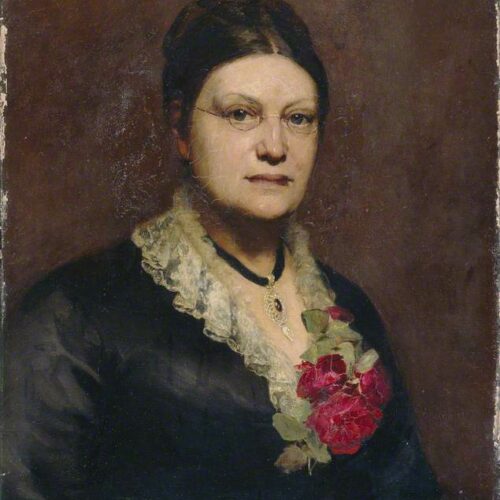
Genius is no respecter of sex, and mental ability is scattered in supreme disregard of conventional arrangements.
Lydia Becker quoted in Words of a Leader: Being Extracts from the Writings of the Late Miss Lydia Becker (1904)
Lydia Becker was a suffragist, a pioneering champion of women’s education in science, and a freethinker whose life was a sustained challenge to the rigid Victorian idea that men and women belonged in separate spheres. Best remembered as a leader of the women’s suffrage movement, she was also a self-taught botanist and correspondent of Charles Darwin who argued, from her own observations of the natural world, that the minds of women were in no way inferior to those of men. Guarded about her own beliefs but plainly sceptical of religious doctrine, Becker placed the scientific method above all else, and her humanist instincts found their fullest expression in her fight for a secular, equal education for girls and women’s right to participate in democracy.
There are times when the story of one life is so interwoven with the story of its time, when the thought and conduct of one individual soul is so typical of the life of its generation, that to tell the story of the one, is to tell that of the other. So it is with the story of the Women’s Suffrage agitation in Great Britain, and the life-story of Miss Becker.
Helen Blackburn, Women’s suffrage: a record of the women’s suffrage movement in the British Isles (1902)
Lydia Ernestine Becker was born on Cooper Street, Manchester, on 24 February 1827, the eldest of 15 children. Educated largely at home, she developed a deep love of botany and astronomy, winning a national gold medal for a collection of dried plants in 1862 and publishing Botany for Novices in 1864. That same enthusiasm led her to write to Charles Darwin, sharing her own botanical observations and sending him a copy of her book, in the hope that he might ‘look kindly on [her] endeavour to make plain by familiar language and illustration the general principles of the subject to which it relates’.
In Manchester, Becker found a city whose many learned societies were closed to women. In response she founded the Manchester Ladies’ Literary Society, whose inaugural meeting was held at the Royal Manchester Institution in 1867 with Becker as President. Despite the ‘literary’ in its name, the society was largely scientific in focus, and it offered women a route into intellectual life. Like much of Becker’s work, it was a direct challenge to the boundaries prescribed for Victorian men and women, and part of a long campaign to prove women’s worthiness for intellectual pursuits in the face of intense opposition from the scientific establishment.
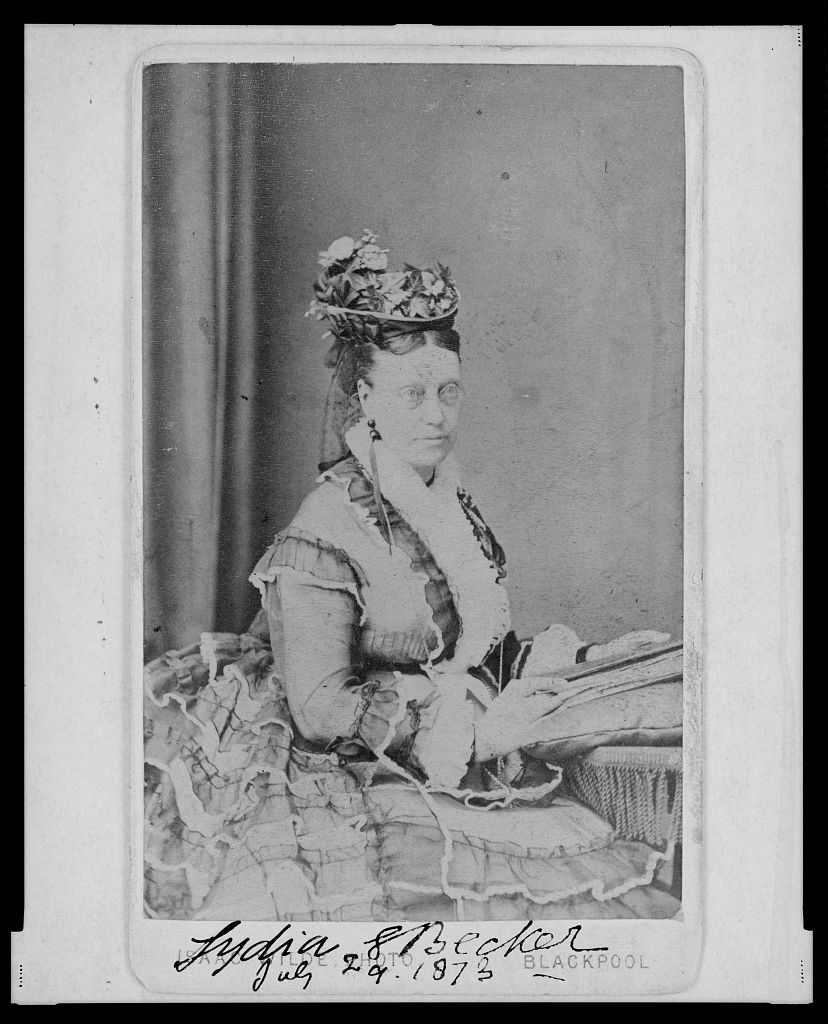
Becker’s interest in the vote was partly awakened by the 1866 suffrage petition, presented by John Stuart Mill and spearheaded by Emily Davies and Elizabeth Garrett. In 1867 she became secretary of the Manchester National Society for Women’s Suffrage, working alongside fellow campaigner Elizabeth Wolstenholme Elmy, and in 1870 she founded and began editing the Women’s Suffrage Journal, which she ran until her death. She also turned her scientific eye directly on the ‘woman question’, and in an 1868 paper to the British Association for the Advancement of Science drew on the plant and animal kingdoms to refute the claim that women were by nature intellectually inferior — an argument then widely used to bar them from higher education.
A freethinker, Becker was deliberately reticent about her own religious views. Asked by her friend Mary Johnson in 1868 whether she was a ‘rationalist’, she replied:
I wonder why you should have troubled about my being a supposed ‘rationalist’? I have not the faintest notion what the word conveys to other people. I do not assent to any proposition which is either not learned by direct consciousness and capable of logical proof. I would not drag away any support from anyone where faith is a real thing.
That outlook shaped her long service on the Manchester School Board, to which she was elected in 1870. Becker fought tirelessly against the assumption that girls’ education should prepare them only for domestic life, championing their access to science and helping to introduce innovations including evening schools and scholarship schemes. Her opposition to compulsory religious instruction, however, proved controversial: after she requested the removal of scriptural mottoes from a school’s walls in 1873, outraged clerics rounded on her and opponents exploited the episode in the press, damaging her standing at the following election. She had, nonetheless, helped to force the question of religion in schools into open public debate, and remained on the School Board until her death.
Becker died of diphtheria in Geneva on 18 July 1890, and was widely mourned as the acknowledged leader of the suffrage movement.
Miss Becker’s life has its crown; for her work has made it easier to continue her efforts to base the lives of women on truth, justice, and freedom. There cannot be a more perfect measure of success, nor a stronger claim on our gratitude.
Millicent Garrett Fawcett, Women’s Suffrage Journal, Memorial Number, August 1890
In her lifelong insistence on equality, in grounding her arguments in observation and reason rather than doctrine, and in defending a secular and equal education against entrenched opposition, Lydia Becker lived out values that many humanists would recognise as their own. In acknowledgment of her passionate interest in science and belief in women’s intellectual equality, The University of Manchester named their Lydia Becker Institute of Immunology and Inflammation after her.
Linda Walker, ‘Becker, Lydia Ernestine (1827–1890), suffragist leader’ | Oxford Dictionary of National Biography
Joan E. Parker, ‘Lydia Becker’s “School for Science”: a challenge to domesticity’, Women’s History Review, 10:4 (2001)
At this nervous moment… when we have uncertainties about almost everything, it’s particularly necessary that we pool our determination, so […]
I have no view but public good; certainly no desire to injure any one, but a passionate desire to do […]
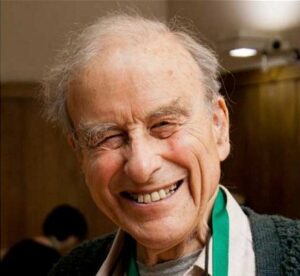
Harry Stopes-Roe was one of the most tireless and dedicated humanist campaigners of the 20th century. Son of the influential […]
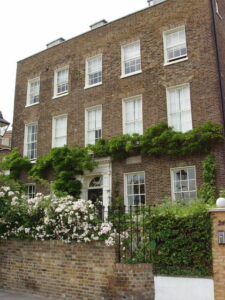
Not to be confused with Kelmscott Manor, Kelmscott House was the London home of designer and socialist William Morris from […]