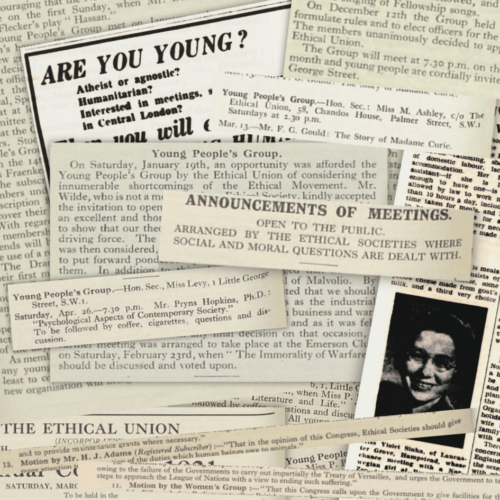
To provide Young People with opportunities for the discussion of religious, political, educational, professional, moral, personal, and social problems… To use the experience of each for the good of all.
From the Constitution of the Young People’s Group of the Ethical Union, December 1925
The Young People’s Group of the Ethical Union was founded on 15 November 1923. It would be one of a number of groups for young people and students within the Ethical (later humanist) movement, all precursors of today’s Young Humanists. These included a London area Young People’s Group (founded in the early 1950s, and revived in the mid 1960s), the New Generation Group (formed in 1955), the South Place Young Humanists (established around 1959), and the Young Humanists Amnesty Group (formed around 1964), all of which sought to bring young humanists together and give them a voice within the wider movement.
The Young People’s Group of the Ethical Union was active into the 1940s, and during World War II held some meetings in partnership with the Women’s Group of the Ethical Movement. A report of one such meeting in the Ethical Societies’ Chronicle noted that a series of dramatic readings were
followed by a social meeting, including light refreshments. Afterwards the Young People’s Group arranged some games and amusing competitions and stories and community singing, which we all enjoyed; it was good to spend a pleasant afternoon in a friendly atmosphere, where war troubles could be forgotten for an hour or so.
The voice of the Young People’s Group was also regularly heard at the Annual Congress of the Ethical Union (now Humanists UK). Motions put forward by the group included a proposal in 1929 to urge the government to raise the compulsory school age to 16, and in 1931 that: ‘This Congress views with grave concern the sufferings of minorities in Europe, owing to the failure of the Governments to carry out impartially the Treaty of Versailles, and urges the Government to take immediate steps to approach the League of Nations with a view to ending such suffering’.
Across its two decade existence, the main activities of the group included lectures, discussions, rambles, dinners, and a poetry reading circle. Some of its members were directly involved in other humanist efforts, including the Student Ethical Movement (established c. 1927), and the New Generation Group, formed in 1952 by Violet Sinha in connection with the Hampstead Ethical Society.
In his 1934 history, The Ethical Movement in Great Britain, Gustav Spiller gave the following account of the formation and early years of the Young People’s Group—
The Young People’s Group of the Ethical Union was founded on 15th November 1923, when about thirty young people were present. After about two years of experimenting, the Group invited Mr. H. Snell to be its President and Miss N. Freeman its Vice-President, in order to benefit by their mature counsel. This was a happy decision, and the Group has ever since published cheerful Annual Reports. “Youthful ardour and aged wisdom” formed an irresistible combination. Miss Freeman, most especially, has regularly attended the Group meetings and has given of her best without obtruding herself. The Group meets at the Offices of the Ethical Union.
On 12th December 1925, a Constitution was adopted which comprised the following three Objects: —
(i) To provide Young People with opportunities for the discussion of religious, political, educational, professional, moral, personal, and social problems.
(2) To use the experience of each for the good of all, and to develop in its members a high standard of capacity and character.
(3) To provide social intercourse and healthy recreation for members and friends of the Group.
About seven years later, on 23rd September 1932, these Objects were amended as shown here: —
(a) To discuss religious, political, economic, moral and social problems from an Ethical standpoint and to encourage co-operation, where possible, with other organisations working for the good of humanity.
(b) To cultivate an appreciation for all that is good in Nature and the Arts, and through fellowship in the Group to gain mutual strength and inspiration.
The Annual Report covering the period 1st October 1930 to 30th September 1931, is so typical of the several Annual Reports preceding it and affords such a comprehensive view of the Group’s life, that all but its concluding portion is here cited: —
This season has proved interesting and successful, and our financial position remains sound. The season opened with a delightful little Social Gathering, at which many members and friends were present, and at which six new members were enrolled. The average attendance at our meetings was 24, and our membership at the end of September was 27.
For the great variety of interesting and enjoyable subjects discussed we are most grateful to the following speakers : Mr. Veryard, Personal Impressions of Indian Life; Mr. Katz, B.Sc., ‘The Quest of Certainty’; Mr. Minnion, ‘Beethoven’; Mr. Spiller, ‘The Nature of Human Nature’; Mr. Harvey-James, ‘The American Transcendentalists’; Miss R. Bush, ‘The Conquest of Happiness’; Mr. F. Humphries, ‘The Meaning and Value of Pictures’.
A new departure has been the formation of a Poetry Reading Circle. A small group of members met once a month to read poems of their own choosing and to discuss these and poetry in general. This proved a success, and the Circle met regularly from November to March. We are greatly indebted to Mr. Stocker for his kindly services in the initial formation of this Circle.
The Book Club continues in a sound financial condition, and is much used and appreciated. Several new volumes have been added by purchase, and some presented by Mr. R. A. Price and Miss White.
Social Activities— (a) Many of our members, through the courtesy of the Women’s Group, attended and thoroughly enjoyed an Indian Tea on December 13th 1930 and a Chinese Dinner on February 14th 1931. (b) Two Rambles were arranged by members of the Group during the season, and at these some members of other Groups also attended: One, from Cuffley to Cheshunt was arranged by Miss Bush. The other, from Ashstead to Headley was conducted by Miss Barker. Fine weather prevailed on each occasion, in spite of the number of wet week-ends.
Annual Congress— The Group was represented at this, and a motion tabled by the Young People was carried without discussion. One member reported the proceedings for The Ethical Societies’ Chronicle, and others officiated as stewards.
Members of the Group did excellent and effective work in the same capacity at the Horace Seal Memorial Lectures in October 1930 and May 1931, given by Professor Laski and Professor Wallas respectively.
The Group is indebted to the Ethical Union for defraying the cost of printing our programmes.
Altogether the members may congratulate themselves on a very happy and successful season; and should, by this success, be stimulated to further efforts and new activities on behalf of the Group.”
(Written after September 1932.)
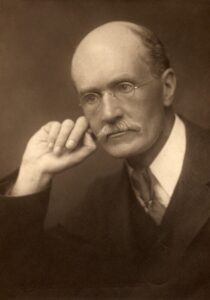
But in the more civilised communities, as in ancient Greece, there has always been a minority who, through some speculative […]
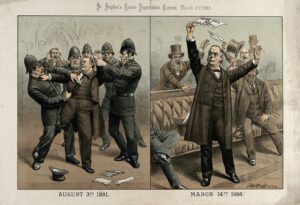
The House of Commons refused to allow his affirmation, so Bradlaugh applied to take the oath but was again refused. […]
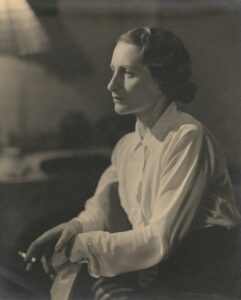
I think that one of the most hopeful signs at the present day, and one for which this Movement can […]
He was one of the few of whom it can be said that he had a gift for friendship… There […]