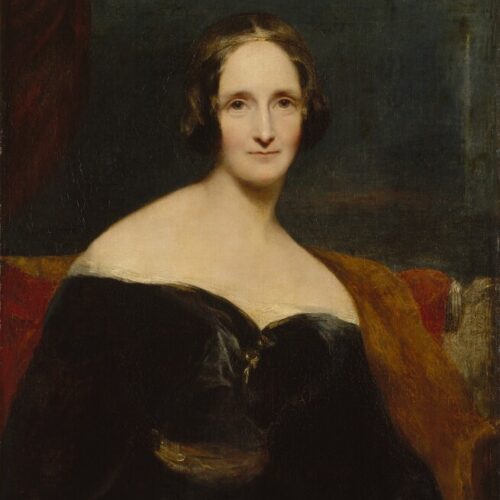
The daughter of Mary Wollstonecraft and William Godwin, and the wife of Percy Bysshe Shelley, Mary Shelley was raised without religion in the most famous freethinking household in England. Shelley wrote Frankenstein at just 18 and, in doing so, produced the founding myth of modern science fiction.
Mary Wollstonecraft Godwin was born in London on 30 August 1797. Her mother died eleven days later, and she grew up under Godwin’s exacting, bookish care, educated at home in a house visited by Coleridge, Hazlitt, and Lamb. In 1814, aged 16, she eloped to the Continent with Percy Shelley, then married to Harriet Westbrook. The couple married in 1816 after Harriet’s death, and Mary lost three of her four children in infancy before Percy himself drowned off the Italian coast in 1822.
Frankenstein; or, The Modern Prometheus began as a ghost-story competition at the Villa Diodati on Lake Geneva in the summer of 1816, with Byron and Polidori for company. Published anonymously in 1818, it was received as a shocking book, and part of the shock was theological. Victor Frankenstein usurps a power that belonged to God in the Christian scheme, but the novel’s real interest is elsewhere: in the creature’s education, his reading of Paradise Lost and Plutarch, his moral formation by experience rather than by design, and his abandonment. The book is a study in responsibility, and it locates that responsibility entirely in human beings.
Widowed at 24, Mary Shelley returned to England and supported herself and her surviving son by writing. The Last Man (1826) imagines a plague that empties the earth of people by the end of the 21st century, a story in which no providence intervenes and the narrator is left alone with the ruins of human culture. She wrote further novels, travel books, and a large body of biographical work, and she edited and annotated Percy’s poems, quietly ensuring his survival as a poet. She died in London on 1 February 1851.
Shelley’s own beliefs were less demonstrative than her husband’s or her father’s, and she was wary of the notoriety that had followed both. But she was raised outside the church and stayed outside it, and her fiction returns again and again to human beings who must make their own way in a universe that does not answer them.
A work of humanist science fiction, Frankenstein has been reinterpreted in every generation since as a story about science, about parenthood, about outsiders; in each version it remains an examination of what causes a person to be bad or good, and moreover, what it means to be responsible for one another.
Main image: Mary Shelley by Richard Rothwell, oil on canvas, circa 1831-1840 NPG 1235 © National Portrait Gallery, London

One might say that since retirement I have been reworking my paradigm. In that reworking I have reached conclusions, but […]
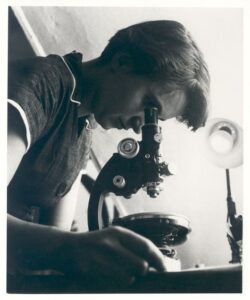
I agree that faith is essential to success in life (success of any sort) but I do not accept your […]
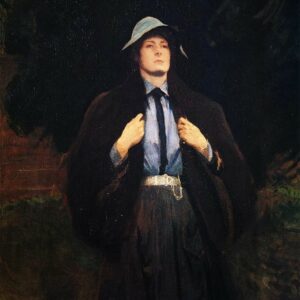
I for one don’t believe in looking regretfully back into the past or forward with illusive hopes into the future, […]
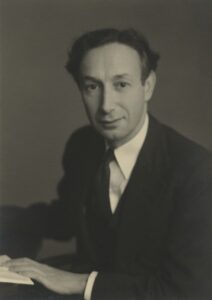
In common with other humanists, I believe that the only possible basis for a sound morality is mutual tolerance and […]