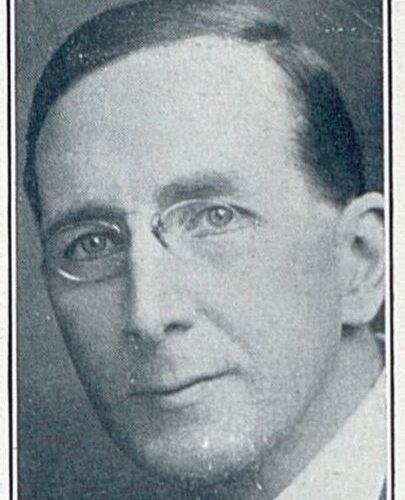
I have often enough been burdened, disgusted, and outraged with life, but never have I been bored with it. There has always been something to be discovered round the next bend of the road, and the type of pessimism that can find nothing in the universe but a chronic vacuum is something from which I have been blissfully free.
Adam Gowans Whyte
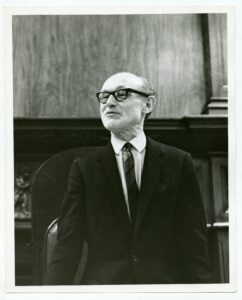
Adam Gowans Whyte was a Glasgow-born writer, translator, and a founding Director of the Rationalist Press Association. The tributes and account of the cremation republished below first appeared in The Literary Guide (now New Humanist) in September 1950.
It is with profound regret that we have to record the death of Adam Gowans Whyte, which occurred suddenly on July 31, the day before his seventy-fifth birthday. Only a few days before he died he had attended a committee meeting of the R.P.A. Board, and beyond complaining of what he thought were but symptoms of an oncoming cold, he seemed well and was in his usual good spirits. The news that reached us so soon afterwards, that he had collapsed while shaving, came therefore as a most painful shock.
It is impossible to exaggerate the loss the Rationalist Movement has sustained by his death. He was unquestionably one of its greatest personalities and leaders, and his services to the cause of Rationalism were immense. Coming to London in 1898, he met the late C. A. Watts, and it was the friendship and co-operation of these two men, and a few others, that led to the formation of the R.P.A. This friendship and co-operation with the late editor o f this journal, we are happy to say, Whyte afterwards extended to its present editor.
Indeed, apart from his wisdom and knowledge, it was his kindly nature, his bright and genial personality, and his warm friendship, that were so much a joy and inspiration to those of us who were privileged to know him and to work with him.
Readers of The Literary Guide will all be familiar with the outstanding literary abilities and qualities of Adam Gowans Whyte. He was one of its most brilliant contributors, and throughout the many years of his association with the Rationalist Movement no issue of the Guide appeared without something from his pen, either signed or unsigned. He will be remembered chiefly, perhaps, by his monthly feature “The Open Window,” which he wrote under the name of “Protonius.” The contribution which appears in the Present issue was written shortly before his death. He was an uncompromising Rationalist and the avowed enemy of all religious superstition and humbug. He was never so happy as when he was fighting these evil things. His favourite weapon was that of ridicule, and readers of the Guide who so much enjoyed his regular monthly tilts at clerics and clericalism will know with what masterly skill and with what deadly effect he wielded this weapon. But there was never any trace of malice in anything he wrote. Indeed, apart from his wisdom and knowledge, it was his kindly nature, his bright and genial personality, and his warm friendship, that were so much a joy and inspiration to those of us who were privileged to know him and to work with him.
With the passing of Adam Gowans Whyte—so sudden, so unexpected, yet in the way that he himself wished—the last of the original band of Founders of the R.P.A. has gone from among us.
For more than half a century he had been one of the outstanding figures of the Rationalist Movement. His name appears as a signatory to the Memorandum of Association drawn up in 1899.
For more than half a century he had been one of the outstanding figures of the Rationalist Movement. His name appears as a signatory to the Memorandum of Association drawn up in 1899. He was a member of the first Board of Directors, and he remained a Director until the day of his death. There was hardly a function which was not enlivened by his wit and wisdom, while he was responsible for a number of books, and for a far greater number of articles, in which his great gifts as a writer—his clear grasp of essentials, his love of the plain word, his scorn for “padding” and woolliness of expression, his effective use of humour, the crystal quality of his phrasing — gave worthy expression to what he styled (it is the title of one of his most popular books) The Religion of the Open Mind.
“A.G.W.” was a Scot—more than his name revealed the fact; he had held varied and highly responsible posts in business and the field of political organization; he had a wide and deep knowledge of modern science and, withal, an intense appreciation and understanding of literature.
“A.G.W.” was a Scot—more than his name revealed the fact; he had held varied and highly responsible posts in business and the field of political organization; he had a wide and deep knowledge of modern science and, withal, an intense appreciation and understanding of literature. These things were plain enough in his conversation, but it was only seldom that he referred to his early days in Glasgow, when he was struggling to make a living and at the same time working out a philosophy that stood him in good stead through a life that had perhaps more than its share of ups and downs.
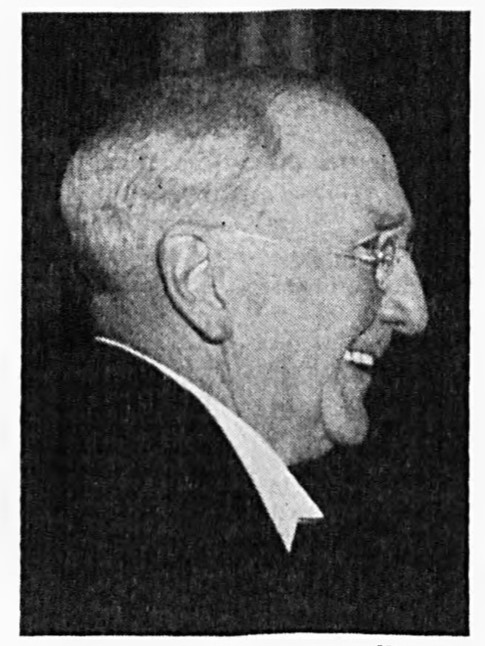
If we want to know something of his own personal evolution we may turn to Personal Pie, the largely autobiographical book that he wrote just before the last war under- the pen-name “Protonius.”
He was the seventh of nine children, and his father, who was a dentist in a considerable way of business, and a Congregationalist in religion, was a writer of more than ordinary ability, and was still more distinguished as a water-colour painter; he was also a music lover, and tried to get all his children to “play.” Young Adam inherited his father’s literary gifts, but he had been denied an ear for music. “From the daily hour of practice imposed upon me (not always effectively),” he wrote, “I gained my first intimations of eternity.”
None could say that he did not receive a thorough grounding in what he ere long came to question and controvert with a critical grace that could be deadly. Looking back, he saw himself as always a kind of passive resister in relation to the Church. He strongly disliked long sermons, but in listening to them he acquired such a knowledge of the Bible that few other than Rationalists seem to possess nowadays. The present-day ignorance of the Bible, he used to remark, is appalling; and he well realized that a principal difficulty confronting the Rationalist Movement is not the fighting ability of the Churches, but the general apathy, the almost universal indifference to religious questions that prevails.
Of the sciences Geology appealed to him most. “It was on a foundation of rock,” he wrote, “that I began the construction of my philosophy.” Geology led him inevitably to Evolution; it was what he called a revelation.
Even as a young man he was not particularly concerned with the niceties of Biblical Criticism, High or Low. Always he was far more interested in Science than in Theology, and of the sciences Geology appealed to him most. “It was on a foundation of rock,” he wrote, “that I began the construction of my philosophy.” Geology led him inevitably to Evolution; it was what he called a revelation. Some of his best writing has to do with the evolutionary theme, and he was particularly successful—in his World’s Wonder Stories, for instance—in explaining the idea of Evolution to the young. The Natural History of Evil presents evil as an inevitable by-product of the process by which the human has arisen from the animal; and his latest book, finished only a month or so ago, has for its subject the development of Mind from Matter. Karl Pearson, Lloyd Morgan, Herbert Spencer, and T. H. Huxley all contributed to his education in Science, and he was fortunate in having “sat under” Lord Kelvin.
In course of time, when after a spell of newspaper work in Glasgow he had removed to London, he made a name for himself as a scientific and technical journalist, more particularly in the then infant industry of electrical development.
In his book, The All-Electric Age, he very considerably advanced the popular understanding of what might be gained in terms of human health find happiness through the extension of electricity in business and the home; and in the electrical field he met a class of business men whose qualities he was quick to appreciate.
In his book, The All-Electric Age, he very considerably advanced the popular understanding of what might be gained in terms of human health find happiness through the extension of electricity in business and the home.
Often he discussed with me the books that he had been reading, or that he had read long ago; the last that he referred to, only two days before his death, was Walter Bagehot’s Physics and Politics. A fine book, so he rated it, written by a master’s hand, clear and plain for all who read to understand. That was how he himself wrote; and how we have lamented together that there seem to be no Clodds today, no Dennis Hirds, no T. H. Huxleys, no Samuel Laings, no Herbert Spencers even.
“It would please me,” he wrote towards the end of Personal Pie, “and cheer me like a bright fire in the winter twilight, to be assured that something I have written might be read ten, twenty, or a hundred years after my extinction.” Literary fame is a chancy thing, and it is not for us to anticipate the judgment of posterity. But this may be said, that his bravely humorous attitude towards problems that have driven other men into intensest depression and despair, his unfaltering service to Truth, his profound and unalterable belief in the power of Science to re-make the world in the interests of a happier race—these things will be remembered by all who were privileged to know him and to have his friendship.
His bravely humorous attitude towards problems that have driven other men into intensest depression and despair, his unfaltering service to Truth, his profound and unalterable belief in the power of Science to re-make the world in the interests of a happier race—these things will be remembered by all who were privileged to know him and to have his friendship.
Let him have the last word. “I have often enough been burdened, disgusted, and outraged with life, but never have I been bored with it. There has always been something to be discovered round the next bend of the road, and the type of pessimism that can find nothing in the universe but a chronic vacuum is something from which I have been blissfully free.”
Royston Pike.
Adam Gowans Whyte was cremated at Golders Green on Thursday, August 3. In the course of a very moving address Mr. C. Bradlaugh Bonner paid the following tribute to his memory:—
We meet here today to bid a last farewell and pay our tribute of esteem and affection to our dearly-loved friend Adam Gowans Whyte. The moment of separation which seemed far off has come upon us swiftly and abruptly; it is now and here.
The moment of separation which seemed far off has come upon us swiftly and abruptly; it is now and here.
A week ago that moment seemed as remote as it had long appeared to us who then met him; he was as bright, vigorous, resilient, and keen as a rapier. And now “he has outsoared the shadow of our night. Envy and calumny and hate and pain… can touch him not… From the contagion of the world’s slow stain he is secure.”
The gap he leaves behind none can fill; Time alone may smooth it over.
His clear penetrating mind, his orderly compact thinking, his steadfastness, his happy humour and his kind sociable friendliness—his gift for friendship; it will be long before we forget these.
His clear penetrating mind, his orderly compact thinking, his steadfastness, his happy humour and his kind sociable friendliness—his gift for friendship; it will be long before we forget these.
Curious in all things, soon irked by artifice and convention, he found an abiding interest in Geology. From Geology he passed to Biology. But his thought was not shaped by science alone. A true Scot, he gained much from poetry, and in those formative years found revelation in two poems which appear to me significative o f the man. In The Jackdaw of Rheims he found not only humour and flow of words, but something more profound. He claimed that “The Jackdaw should be numbered among the liberators of the human mind.” If he read it with zest in his boyhood, he enjoyed it with increasing zest in later years—“even the holy process of repentance was made more ludicrous by a mere jackdaw.”
“As for The Rubaiyat of Omar Khayyam [he wrote], that fragment of ancient meditation transmuted by a modern genius, it came to me as the most beautiful, the wisest, poem ever written.”
Humour, science, philosophy: along these paths went his questing spirit, proving all things and holding to that which he found good.
Humour, science, philosophy: along these paths went his questing spirit, proving all things and holding to that which he found good.
Such then was the man who came, fifty-two years ago, from Glasgow to Johnson’s Court, so often trod by that Bradlaugh who had been one of his childhood’s heroes. Charles Albert Watts, with his keen insight into the capabilities of others, saw in this young man a valuable worker for the cause o f Rationalism, and persuaded him to join the board of the R.P.A. when it was founded in 1899. So it was that Gowans Whyte spoke at the Jubilee o f the Association last year as the one survivor of the original board of directors. To Johnson’s Court, which the Holyoakes and the Watts’s had consecrated to the search for truth, he remained faithful to the end. It was his intellectual home.
His mind was always young and supple. As he said himself, he was “on psychological grounds prepared to dispute the evidence of his birth certificate.” His main grudge against life, was, he declared, “that the deepening twilight is upon us before we have become used to the sunshine… the natural man dreads extinction less than the slow remorseless decay of his faculties, the struggle of his will against the increasing impotence of his body, until the will itself is dead. Happy those who are spared this tragic dissolution and are vouchsafed the ‘sudden death’ against which we are so curiously enjoined to pray.”
His mind was always young and supple. As he said himself, he was “on psychological grounds prepared to dispute the evidence of his birth certificate.”
Dear friend, you have had your wish, and we can call you happy.
But for us who have lost you ‘the circle is broken.
One heart from among us no longer shall thrill
With joy at our gladness, or grief in our ill.’
Conservation… draws us towards not only a scientific but a philosophical and historical approach to the problems of the earth […]
Millicent Mackenzie was a pioneering educationist and suffragist, who – alongside her husband, John Stuart Mackenzie – gave significant support […]
The time has arrived for us humans to stop leaning on ideas for a creator god; we should get down […]
The Conscience has eclipsed the Scriptures; Science has destroyed the belief in Divine Interposition; Democracy and Civism have shown men […]