start typing and results will show

or press esc

The rocket age

Card-carrying humanists at the typewriter

After 1945 the genre’s humanist affinity stopped being a matter of inference and became a matter of membership cards.

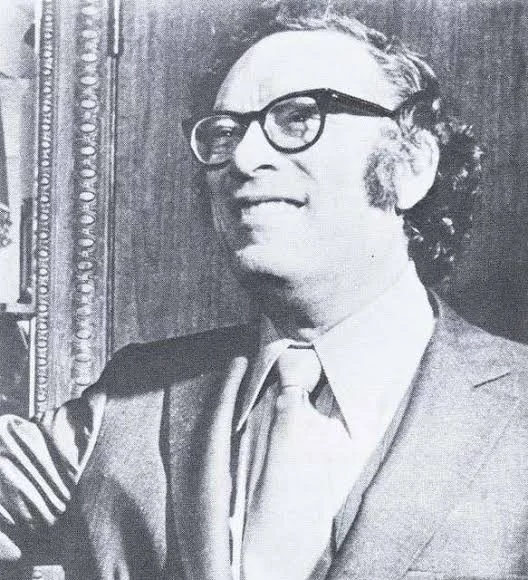
Isaac Asimov

Isaac Asimov

1920–1992 I, Robot (1950), Foundation (1951)

President of the American Humanist Association

Isaac Asimov served as president of the American Humanist Association from 1985 until his death in 1992, having been its Humanist of the Year in 1984. Foundation (1951) and its sequels imagined a galactic civilisation preserved through a thirty-thousand-year dark age by ‘psychohistory’, a statistical science of human behaviour, with a scientific priesthood standing in for the religious kind. I, Robot (1950) collected the stories in which he set out his ‘Three Laws of Robotics’, turning Frankenstein’s problem into a formal ethics of creation, and, by writing them as logic puzzles rather than horror, insisted that a made mind was a moral problem to be reasoned about, not a monster to be feared.
Kurt Vonnegut

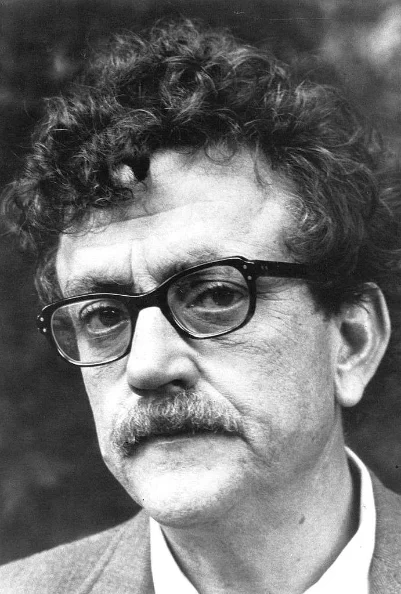
Kurt Vonnegut

1922–2007 Slaughterhouse-Five (1969)

‘Isaac is up in heaven now’

Asimov was succeeded as the AHA’s honorary president by Kurt Vonnegut, whose Slaughterhouse-Five (1969) processed the firebombing of Dresden through a weird, funny, charming story involving aliens and time travel, which sold to audiences a deeply humanist, deeply companionable plea for human decency. His Cat’s Cradle (1963) had already invented a religion, Bokononism, founded on the admission that all of it was lies. Always trying to get a rise or a laugh out of his audiences, Vonnegut liked to tell humanist conferences that at Asimov’s memorial he had brought the house down by announcing that Isaac was ‘up in heaven now’.

Arthur C. Clarke

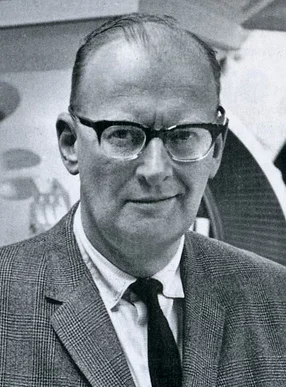
Arthur C. Clarke

1917–2008 2001: A Space Odyssey (1968)

Transcendence without a single supernatural claim

Novelist Arthur C. Clarke was named Humanist Laureate of the International Academy of Humanism and spoke scathingly about organised religion all his life. He co-created with Stanley Kubrick 2001: A Space Odyssey (1968), the film that did more than any other to make science fiction respectable as serious cinema. Its iconic opening scene begins with starving ape-men discovering how to use a bone as a weapon. From there it ultimately tells the story of human evolution and man’s destiny to become a technological creator in wholly naturalistic terms.

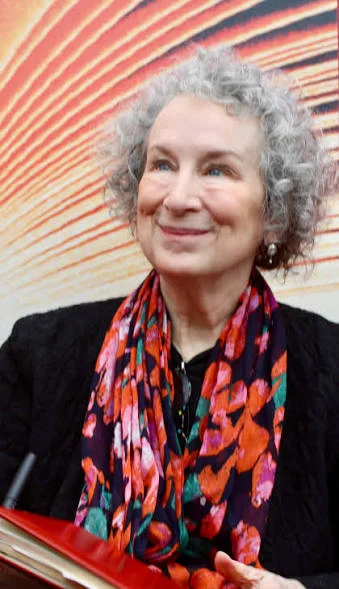
Margaret Atwood

Margaret Atwood

b. 1939 The Handmaid’s Tale (1985)

Nothing humanity had not already done

No history of 20th-century dystopias is complete without Margaret Atwood, whom the American Humanist Association named Humanist of the Year in 1987, two years after The Handmaid’s Tale. In the novel, Atwood draws inspiration from the Iranian revolution in 1979 and the history of New England Puritanism to chart a possible future for the United States in which the nascent Christian Nationalist movement of the 1980s has achieved all of its political aims, and the United States has been refounded as the brutal totalitarian theocracy of Gilead.

Made by Heritage Creative