start typing and results will show

or press esc

Conflict and liberation

Whose interests do our ‘natural’ arrangements serve?

From the late 1960s much of the genre’s most important work came from writers using it as Du Bois and Gilman had: to model society as a field of conflict — over class, sex, race — and to ask whose interests our ‘natural’ arrangements actually serve.

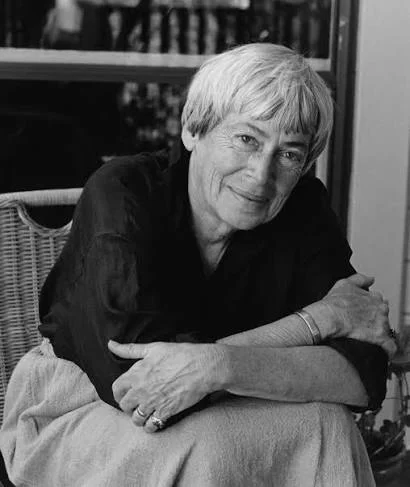
Ursula K. Le Guin

Ursula K. Le Guin

1929–2018 The Left Hand of Darkness (1969), The Dispossessed (1974)

An ambiguous utopia

Ursula K. Le Guin was raised in a secular, academic household as the daughter of anthropologists, shaped more by Taoism than by any church. The Left Hand of Darkness (1969) imagines a world whose people have no fixed sex, and lets a baffled human envoy discover how much of what he calls human nature is local custom. The Dispossessed (1974), subtitled ‘an ambiguous utopia’, places an anarchist moon in orbit around a capitalist planet and declines to let either off the hook. Accepting the National Book Foundation’s medal for lifetime achievement in 2014, she told her audience that capitalism’s power only seems inescapable (as once did the divine right of kings) and that resistance begins with artists who imagined alternatives.
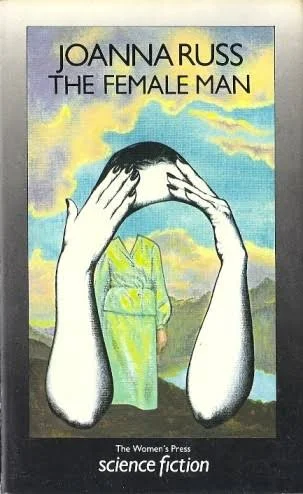
Joanna Russ

Joanna Russ

1937–2011 The Female Man (1975)

One woman, four worlds

Atheist, feminist, and lesbian critic and novelist Joanna Russ pushed the method to its limit in The Female Man (1975), which split one woman into four genetically identical selves across four possible worlds, from a 1930s America where the Depression never ended to an all-female planet, to show how much of what a society expects of a woman is that society’s own invention.

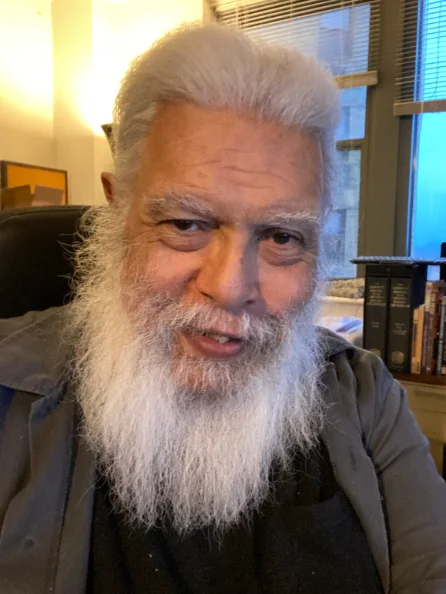
Samuel R. Delany

Samuel R. Delany

b. 1942 Babel-17 (1966), Dhalgren (1975)

Language, desire, and the city, rebuilt

Samuel R. Delany, raised in Harlem and an atheist since childhood, taught the genre to take language and desire as seriously as physics, and wrote about his own life as a gay man, in The Motion of Light in Water (1988), with a candour few writers of any genre had risked. Babel-17 (1966) is about a language that reprograms the minds of its speakers; Dhalgren (1975), a thousand pages set in an American city cut off from the world by an unexplained catastrophe, is a science fiction version of James Joyce’s Ulysses; and Trouble on Triton (1976), subtitled ‘an ambiguous heterotopia’, was written as a direct reply to Le Guin.

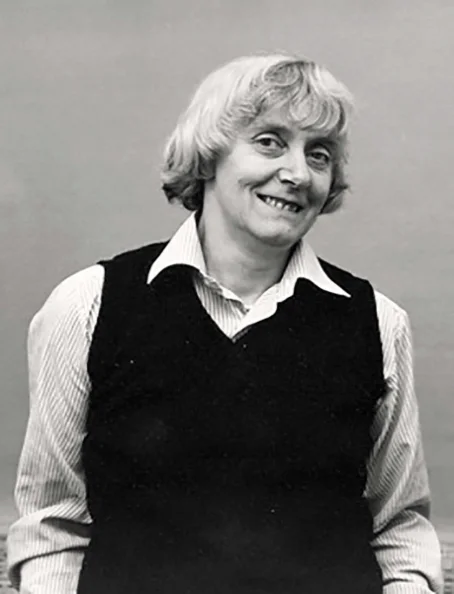
Maureen Duffy

Maureen Duffy

1933–2026 The Microcosm (1966), Gor Saga (1981)

What we owe the things we create

Maureen Duffy was a patron of Humanists UK and a pioneer of gay acceptance in Britain. She came out years before decriminalisation in 1967, was the first lesbian to be interviewed openly as such on British television, and with The Microcosm (1966) became the first British novelist to write openly about lesbian life. She became the first President of the Gay Humanist Group (now LGBT+ Humanists), founded in 1979 after Mary Whitehouse’s blasphemy prosecution of Gay News and her warnings about a ‘homosexual humanist lobby’ that, until then, did not exist. Like many humanists she was an animal welfare activist too, an anti-vivisectionist who campaigned to abolish the fur trade.

That commitment runs through her science fiction. Gor Saga (1981), filmed by the BBC as First Born in 1988, has a scientist breed a child from a gorilla and a human and raise him as a boy, and follows what happens when he learns what he is. Much like Frankenstein, the novel asks what we owe to the things we create, updated for an era when genetic engineering and ‘playing god’ with biology had entered public debate, and it challenges the idea of a gulf between humans and other animals. Outside science fiction she wrote a biography of Aphra Behn and a play about Virginia Woolf. Duffy died in May 2026.

Unholy Histories Listen on our podcast Hear more about the history of humanist LGBT+ activism in Britain, Maureen Duffy, and the Gay and Lesbian Humanist Group in ‘Born of Mary’, an episode of Unholy Histories.
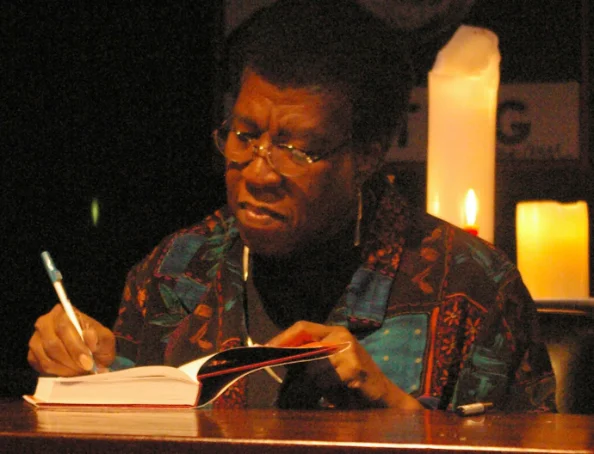
Octavia E. Butler

Octavia E. Butler

1947–2006 Parable of the Sower (1993)

God is Change

Octavia E. Butler, raised in a strict Baptist household she quietly outgrew, became central to the field’s next turn. Her Parable of the Sower (1993) is a dystopia with a constructive theology inside it. Amid a collapsing, drought-stricken California, her heroine founds Earthseed, a ‘religion’ with no supernatural content, whose god is simply Change and whose whole discipline is the human shaping of it. Butler, the first science fiction writer awarded a MacArthur Fellowship, was asking whether the forms of religion can be filled with responsibility instead of revelation — a question humanists had been circling for two centuries before her.

Made by Heritage Creative