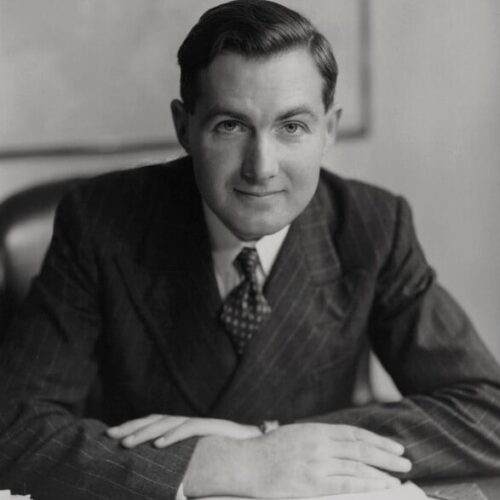
Differences of opinion, strongly held, there will be and they will be passionately argued… But in a democratic socialist party there is no monopoly of revealed truth. Each of us knows that he has something to learn from the others.
James Callaghan, leader’s speech, Blackpool, 1976
James Callaghan was Prime Minister of the United Kingdom from 1976 to 1979, and the only British politician to have held all four major government offices: Chancellor of the Exchequer, Home Secretary, Foreign Secretary, and Prime Minister. Though deeply influenced by his Baptist upbringing, Callaghan broke with religion as a teenager, overtaken by the political ideals which would remain his primary motivation. He is one of a number of non-religious UK Prime Ministers, including his Labour predecessors Ramsay MacDonald and Clement Attlee, the Liberal David Lloyd George, and the Conservative Neville Chamberlain.
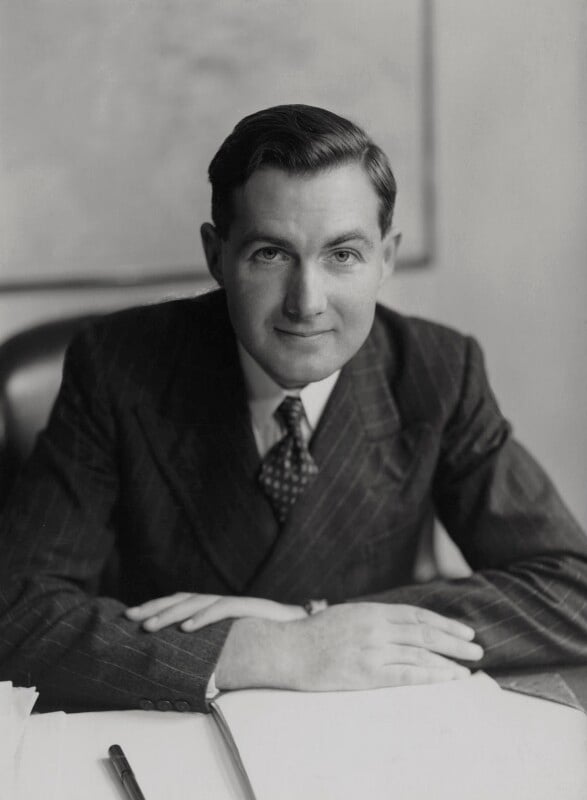
James Callaghan was born in Portsmouth on 27 March 1912. His father died when Callaghan was just nine years old, and he grew up with experience of poverty, and of charity. Unable to afford university, he instead began his career with the Inland Revenue, in Maidstone, Kent, and quickly became a trade union official. Following three years in the Royal Navy during the Second World War, he entered Parliament in 1945 as MP for Cardiff South, taking his seat in Clement Attlee’s Labour government. Before his retirement in 1987, Callaghan would be Chancellor of the Exchequer (1964–1967), Home Secretary (1967–1970), Foreign Secretary (1974–1976), and Prime Minister (1976–1979). On his retirement from the Commons in 1987, he was made Baron Callaghan of Cardiff.
Callaghan was raised in the Baptist church, which he often found sombre and harsh. His biographer, Kenneth O. Morgan wrote that ‘like other products of late Victorian and Edwardian religion’, he ‘grew up with a Calvinist sense of guilt, inadequacy, inner torment, and an almost neurotic sense of tragedy which he found deeply unsettling’. But he also witnessed the strength of nonconformist community, and was on the receiving end of charity from the church in Portsmouth.
Though he retained the influence of nonconformism throughout his life, Callaghan ultimately replaced religion with politics, and ceased to be a churchgoer. He recalled in his autobiography:
I wanted to tell everyone about my discovery of socialism and must have been a very trying young man. This new experience that I was living through seemed much more real and true than the fundamentalist religion in which I had been brought up, and I impetuously dashed off a letter of resignation to the Secretary of the Maidstone Baptist Chapel. This created something of a stir. It was apparently acceptable for someone unostentatiously to stop going to church services and gradually drift away, but it was practically unheard of formally to resign membership. So it was arranged that one of the Senior Deacons should have a conversation with me. He was a wise man who argued that although he disagreed with my new-found socialist beliefs, there need be no conflict between them and Church membership. Many tenets of the Christian faith were reconcilable with socialism. He rather surprised me by adding that I should not believe that every Christian subscribed to the kind of fundamental beliefs in which I had been brought up, and I need not fear that I would be behaving hypocritically if I remained a Church member. So I stayed, but from then on, my activities in the Labour Party and Trade Union Movement increasingly had the first charge on my energies, although I never forget the immense debt I owe to a Christian upbringing, nor have I ever escaped its influence.
James Callaghan, Time and Chance (1987)
Despite his drift from religion, in Maidstone he nevertheless taught in the chapel’s Sunday school, where he met his future wife, Audrey Moulton. But by adulthood he seemed to have given up religious worship altogether, and those who knew him took him for an agnostic.
Despite his drift from organised religion, biographers trace his cautious, conservative instincts at the Home Office to his trade union roots and Baptist upbringing. As Home Secretary, Callaghan features in the periodicals of humanist magazines as a source of disappointent.
The rationalist press had little to say about Callaghan’s beliefs, but a good deal about his record as Home Secretary, and most of it was critical. In 1969 he rejected the recommendation of Barbara Wootton’s committee that penalties for possessing cannabis be reduced, telling the Commons that the committee had been ‘over influenced’ by a lobby in favour of legalisation. Hector Hawton, editor of The Humanist (today’s New Humanist), argued that the decision ran ‘counter to the sensible rule that the punishment should fit the crime’. A year later Hawton took him to task again, after Callaghan told the House that he would always support police who seized books, films, or pictures, even if they were later judged not to be obscene. That support for state censorship, Hawton wrote, was ‘almost an open invitation’ to the modern successors of the Society for the Suppression of Vice.
As Prime Minister, Callaghan launched a ‘Great Debate’ on education in October 1976. New Humanist welcomed the resulting Green Paper’s aim of giving children ‘the ability to question and to argue rationally’, but regretted that it said nothing about teaching beliefs beyond religion, at a time when the British Humanist Association (today’s Humanists UK) was calling for education about religion and belief to be ‘objective, fair and balanced’.
Callaghan’s long years as a Cardiff MP drew in a generation of young Welsh Labour activists, among them two who would become prominent humanists. At the 1964 general election, when Labour was relying on Callaghan to become its Chancellor and poured resources into holding his seat, the students who volunteered for his campaign included Rhodri Morgan and Neil Kinnock, along with their future wives, Julie Morgan and Glenys Kinnock, all of whom became patrons of Humanists UK and major figures in Welsh and UK politics in their own right, helping to carry the broad, non-sectarian Welsh culture they had learned in Callaghan’s Cardiff into Wales’ devolution era.
James Callaghan died on 26 March 2005 at the age of 92, and was cremated. His death was marked in the traditional way for British Prime Ministers: a memorial service for him and Audrey was held in Westminster Abbey in July 2005, and the Abbey dedicated a memorial stone to him in 2015.
Paying tribute to him, Rhodri Morgan recalled:
‘I will remember him with great affection because I joined the Labour Party in Jim’s constituency. That was where I first met my wife Julie – at a Christmas social in 1963.’
Rhodri Morgan, quoted in WalesOnline, March 2005
Neil Kinnock, whom Callaghan brought into his Shadow Cabinet as education spokesman in 1979, remembered that ‘in common with Michael Foot, he always had time for the young people’.
Callaghan remains significant as one of a number of Prime Ministers and influential leaders whose non-religion has often been overlooked or downplayed in considerations of their life. Though undoubtedly shaped by his Baptist youth, Callaghan, as Kenneth O. Morgan wrote, ‘transcended the narrow religious constraints of his upbringing’, adopting an approach rooted in tolerance, and rejecting religious bigotry.
Callaghan: A Life by Kenneth O. Morgan (1997)
Time and chance by James Callaghan (1988)
From New Humanist
The full issues of The Humanist and New Humanist can be read in New Humanist’s digital archive, available via Exact Editions. Subscribe at newhumanist.org.uk/subscribe.
Prior’s Field School was founded in 1902 by Julia Arnold Huxley. Born in 1862, Julia grew up in an intellectual […]
Jennie Lee (also known as Baroness Lee of Asheridge) was a Scottish politician and journalist, known for her upfront orating […]
I lost religion in a breath; Heaven fled from me on the wings of Reason… Doris Lessing, Under My Skin: […]
Universal rights are exactly that, universal, and one should not suddenly acquire different rights after a certain number of birthdays. […]