This walk explores Nottingham’s history of radical thought and the fight for freedom of expression. Discover the stories of figures like Susannah Wright, who defied imprisonment to promote a free press, and Thomas Major Mosley, a miner who spent decades debating rationalism in the city’s public square. The route highlights the places where freethinkers, abolitionists, secularists, and humanists have advocated for reason and human rights across 200 years.
This page accompanies our printable Nottingham walk, with more about each stop and links to everyone and everything mentioned along the way.
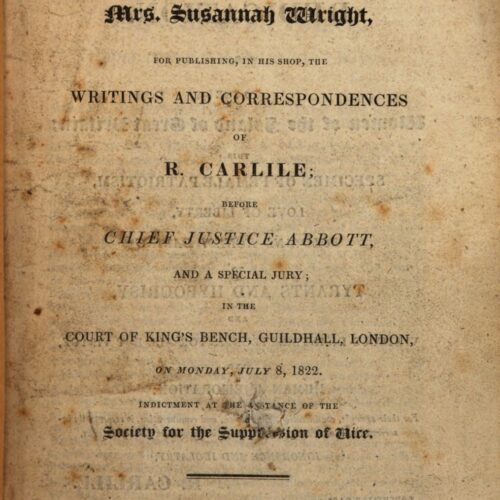
Goose Gate was the site of a radical bookshop opened in 1826 by the Nottingham-born lace worker Susannah Wright. Wright had earlier been imprisoned in London for selling texts deemed blasphemous. In a self-penned defence lasting nearly four hours, conducted with a babe in arms, she argued for the fundamental right to bring religion ‘to the touchstone of free discussion’.
Her opening of a shop in Nottingham was met with extreme backlash, and Wright kept a pistol under the counter for her protection, but she stood her ground. Her success was proven when she later moved to larger premises, also on Goose Gate.
Find out more: Susannah Wright’s diamond · Richard Carlile · Blasphemy Trials
This plaque to Susannah Wright was placed as part of the Our Rebel Writers trail, an independent art project promoting Nottinghamshire’s rebel writers. Wright’s efforts for freedom of the press and freedom of belief form a key part of the story of humanism in the UK, placing her within a rich tradition of working for free discussion and the right to non-belief.
Drury Hill was once home to the Secular Institute, a meeting place for Nottingham’s secularists. Today the word has come to mean the separation of church and state, but when ‘secularist’ was coined by the activist and freethinker George Jacob Holyoake in 1851, he was seeking a positive alternative to words like ‘atheist’ and ‘infidel’, and describing a philosophy focused on promoting human happiness in this world, synonymous with humanism today.
Nottingham had a secular society from the 1850s, which organised lectures, held debates, and gave its members the chance to meet like-minded people.
Find out more: Secularism
This building was formerly the Assembly Rooms, one of the venues used by Nottingham secularists in the 19th century. One series of lectures organised by the Nottingham Secular Society welcomed the prominent speaker Harriet Law, who spoke here across three evenings in June 1862. The Nottingham Journal reported that her subjects were ‘Difficulties of Christianity’, ‘The Doctrine of Providence… Opposed to Reason and Experience’, and ‘The Degradation of Women and Children’, summarising her argument that ‘reason, experience, and science are gradually dispelling the idea of the doctrine of providence’.
Such topics, including the use of religious ideas to oppress women and the importance of reason and evidence, were common among secularist lecturers of the time.
Find out more: Harriet Law: Socialist, Feminist, Atheist
The Council House was built on the site of the Exchange Hall, where the leading abolitionist and formerly enslaved man Frederick Douglass spoke in March 1847. As he often did, Douglass used his speech to castigate those back home in America who professed religion while holding slaves. In this, he represents another strand of the humanist tradition: people outside the organised movement who nonetheless expressed sceptical ideas and challenged what they saw as religious hypocrisy.
Find out more: African American Humanism
Had you come here on a Friday in the 1950s, you would probably have met the indefatigable Thomas Major Mosley, a former miner and prominent debater. A member for decades of the Cosmopolitan Debating Society (founded in 1898), Mosley took to the square every week into his old age, typically taking ‘rationalism’ as his subject. Famed for his encyclopaedic memory and his ability to get along with those he completely disagreed with, he continued Nottingham’s legacy of championing free discussion.
On his death in 1970, Mosley was given a humanist funeral conducted by J. W. Challand, secretary of the Nottingham Humanist Group.
Find out more: Find a local humanist group
Take the walk: Download the printable Nottingham walk (PDF), or see all of our walking tours.
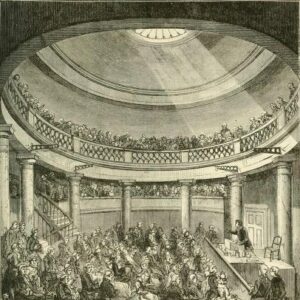
In the absence of a better—the palladium of what liberty we have… the birthplace of mind, and the focus of […]
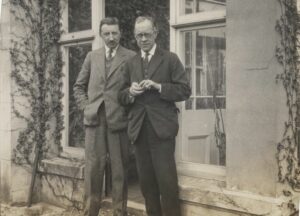
I have never believed in any formal religion, but I have experienced an emotion that seemed to me religious. In […]
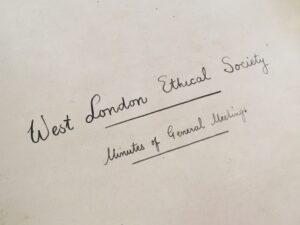
The good life… rests for its justification on no external authority, and on no system of supernatural rewards or punishments, […]
Nina Spiller was a lifelong worker for women’s rights, who played an active role in the humanist movement for more […]