To know him added a zest to existence, and was rich compensation for much that depresses the idealist.
Percy Vaughan was a lawyer, rationalist, and campaigner for humanist causes including the repeal of blasphemy laws. He was killed during the First World War. The tributes reproduced below were published in the Literary Guide, November 1917.
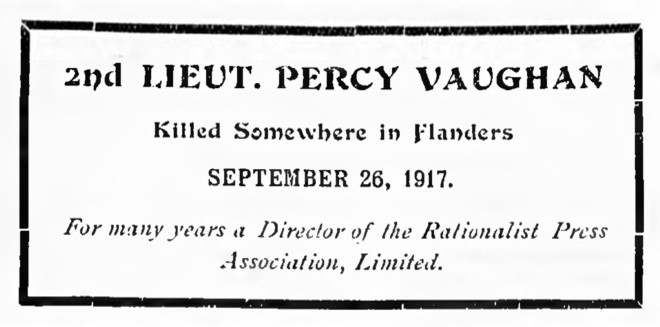
It was in October, 1902— just fifteen years ago— that Mr. Percy Vaughan, then a mere boy, called at the offices of this journal in quest of information concerning Rationalism. He had been spending his holiday at Barmouth, and many of the evenings being wet — a climatic condition not unknown to that part of the world — he had searched the bookstalls at the railway station in the hope of finding some stimulating and satisfying books to occupy his mind while hotel-bound. He alighted upon the early issues of the R.P. A. Cheap Reprints, and with his characteristic literary intuition knew that he had found gold. From that day onward his interest in Rationalism steadily increased, and up to the moment of his tragic death on September 26 it was one of his chief interests in life, if not indeed his primary one.
* * *
When we first met Mr. Vaughan he was engrossed in legal studies, having just been called to the Bar. His chambers being near the offices of the R. P. A., there were opportunities for frequent intercourse, and seldom a week passed without our new recruit favouring us with a visit. He was an omnivorous reader, with a genius for eliminating the dross, and at times he surprised and even startled us by his extensive literary knowledge, having regard to his youthful years. It was not long before we proposed that he should allow us to nominate him as a Director of the Rationalist Press Association. At first his extreme modesty prompted him to decline the proffered honour, but he ultimately gave his consent, and was unanimously elected. He soon won the confidence and esteem of the Board by his exceptional abilities, and for many years before his death he had been one of the chief literary advisers of the Association. It will be very difficult to fill his place.
* * *
Mr. Vaughan was engaged on war duties almost from the beginning of hostilities. In September, 1914, he was helping in hospital work in France, and returned to England about the close of the year. In the following March he joined the Anti-aircraft Corps at Clapton, and shortly after volunteered for overseas service. He served in the A. A. Corps in France from August to September, being badly injured in the latter month through being thrown from a motor gun lorry. He had to undergo several operations, and was really ill till January, 1916. On his recovery he returned to anti-aircraft work at Hyde Park and Highbury. In February of this year he joined the R. G. A. Cadet Corps for training, and at the end of May was gazetted Second Lieutenant in the R. G. A. He left for Flanders on July 16.
* * *
Mr. Vaughan was responsible for two small volumes — Early Shelley Pamphlets and a reprint of the original edition of Shelley’s Necessity of Atheism. Before the War he was a regular contributor to these columns, much of his work being unsigned. On another page we publish the last review he wrote. It has been in type for nearly two years, having been crowded out entirely through lack of space. In conjunction with Mr. McCabe, Mr. Vaughan edited the series of volumes comprising the Inquirers’ Library. He also rendered valuable service as a member of the Committee formed to secure the repeal of the Blasphemy Laws.
* * *
We believe that Mr. Vaughan would have achieved high distinction in the legal profession. As a speaker he was incisive, original, and eloquent. At several R. P. A. Dinners he proposed the toast of “The Chairman,” the last occasion being when Professor Gilbert Murray presided. We were so much impressed by the excellence of the speech that we besought him to favour us with a verbatim report of it. He had a wonderful memory, and we knew from experience that he never prepared such addresses in advance. With considerable diffidence he acceded to our request, and if those of our readers who file this journal care to turn to the issue dated June, 1914, they will find the speech in full. Our judgment concerning it was endorsed by our friends throughout the country, many of whom wrote thanking us for giving it publicity in these columns.
* * *
We last saw Mr. Vaughan four days before he sailed for France. We lunched together at a familiar haunt in Fleet Street. He was in wonderful health, and keenly alert to get to business. He loathed war, but he hated more the military despotism of Germany, and believed that there would be no real peace, no lasting progress, while the Hohenzollerns dominated the world. He was aware that the post he had chosen was a dangerous one, but he knew not fear, and was prepared for the worst. Somehow we felt that he was fated to pass through the ordeal, scarred may be, but not broken, and the bald intimation that he was instantaneously killed by a shell shattering his skull came to us as a rude shock from which we did not soon recover.
* * *
When the War and all its horrors have passed away, and we take stock of those who have survived, we shall miss no one more than the lion-hearted, noble-souled Percy Vaughan. He ranked among his friends many of the literary notabilities of London, who will treasure the recollection of his delightful companionship, his pungent wit, his unconquerable optimism. To know him added a zest to existence, and was rich compensation for much that depresses the idealist.
On September 26 Second Lieutenant Percy Vaughan, Royal Garrison Artillery, was killed at the Front. The bare fact is that his skull was torn off and death instantaneous. Many members of the R. P. A. must have known him personally, and all who did will feel a sorrow in proportion to their intimacy with him.
I first met him years ago at an annual banquet of the R. P. A. He presided at one of the tables. His wife, Dr. Marion Vaughan, sat on his right and I sat on his left. We at once became friends. It would have been impossible not to yield to the persuasive charm of his individuality, and equally impossible not to realize that here was a man in whom a wide and powerful intellectual curiosity worked apparently quite unhampered by any prejudices. Yet he had had the conventional education— Rugby first, and then Corpus Christi, Oxford, where he graduated. Also he was a barrister; but he seemed entirely to have escaped the perils incident to a legal training.
Here was a man in whom a wide and powerful intellectual curiosity worked apparently quite unhampered by any prejudices. Yet he had had the conventional education… Also he was a barrister; but he seemed entirely to have escaped the perils incident to a legal training.
He joined the forces soon after the outbreak of war, and was severely wounded just two years before his death. Last year I met him by chance in Long Acre. He spoke of injury to his arm, and he certainly looked ill. The course of his convalescence was by no means smooth. He did, however, finally make a recovery. Then he got a Commission.
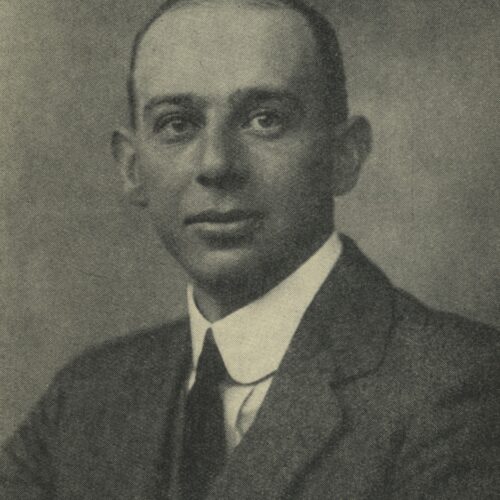
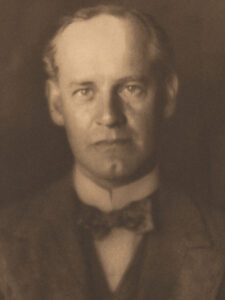
Percy Vaughan was a North-countryman, but he combined the characteristics of the North and the South. He had the impregnable moral temper of the North and the gentle manner of the South. His voice was soft; his remarkably appealing eyes were soft; his lips impressionable and sensuous. Slim, and of medium height, with a tendency to baldness, he had a rather fragile look. With that, he was absolutely fearless of the consequences of a logical position. Such a quality drew me to him, as it must draw all Rationalists. When he had come to a conclusion, nothing else mattered. He was a considerable reader, and had a library which naturally reflected the multifariousness of his tastes. He would talk as keenly about imaginative literature as about philosophy, and as keenly about music and art as about literature. In short, he was an amateur of life and of the whole of life. I have not met many such men, for too often the rigour of what Sir Thomas Browne called “right reason” is apt to impair the bloom of other and diverse qualities in a man.
I am quite sure that no hero and martyr had a more biting, a more sardonic, a more passionate sense of the gigantic and incredible sheer idiocy of war than Percy Vaughan had. And I am quite sure that none combined with that sentiment a more winning, practical, human loving-kindness than his.
I never discussed the subject of war with Percy Vaughan, but what he thought of the moral bases of the present war is plain from his action, and what he thought of the institution of war I can guess. Thousands and hundreds of thousands of Englishmen have freely left the securities of a profession and the amenities of home and the consolations of philosophy and art for the battlefield, as he did. It has been proved that the world is thickly populated with heroes and martyrs. But I am quite sure that no hero and martyr had a more biting, a more sardonic, a more passionate sense of the gigantic and incredible sheer idiocy of war than Percy Vaughan had. And I am quite sure that none combined with that sentiment a more winning, practical, human loving-kindness than his.
Arnold Bennett.
II.
The death of Percy Vaughan is for those of us who were his intimates one of the most wounding of the bereavements wrought by the holocaust of the War. Every loss of a young life is lamentable, and all have their mourners; but this is one which inflicts on the friend, as distinct from the kinsman, a deeper stab, a keener suffering. He was one of the rarer spirits, alike on the intellectual and on the moral side. As kind as he was wise, he cannot easily have had an enemy, for it was not in him to hate, however strictly he judged. I have never known a more entirely candid seeker for truth. He was one of the rather rare lawyers in whom the pursuit of their calling never engenders any laxity of concern for perfect justice, perfect rightness of thought. Incapable of debating for mere victory, lie never withheld a due assent; and just as little could he withhold a due criticism. He would judge the work of his dearest friends with the most perfect intellectual detachment, counting on their receiving his judgment with the same single-minded concern for truth, always yielding a light which was without heat, save the warmth of a constant and transparent goodwill. To my mind, he was the ideal of a Rationalist, as lovable as he was accomplished and sane.
He was one of the rarer spirits, alike on the intellectual and on the moral side. As kind as he was wise… To my mind, he was the ideal of a Rationalist, as lovable as he was accomplished and sane.
The manner of his death is the proof of his moral idealism. After the accident in which, during his earlier period of service on anti-aircraft work in France, he had his left arm smashed, we who loved him thought him saved, for it seemed as if he could never do combatant service after such a disablement. But he was not the one to keep out of a national service which he thought he could render. It was with a shock of surprise that I learned, in answer to a letter, that he had gone in and been accepted for military training. And now comes the blow of its ending.
To lose such a friend is to understand, if one did not understand before, the craving of many to find proof of another life, to seek a renewal of intercourse with the dead, to forecast a reunion. When such a precious light goes out, life is so much darker. For him, such thoughts were part of the burden of life, which he faced so imperturbably; knowing but the ultimate solace that it is all one in the end whether there is a beyond or whether our little life is rounded with a sleep.
J. M. R.
Essentially and delightfully human, with zest for many kinds of experience, those privileged to know him as a loyal friend inevitably loved and held him in honour.
III.
A correspondent sends to the Times the following tribute to Percy Vaughan: “His life, unobtrusively noble, was an inspiration, a comradely light to many a wandering spirit. A sincere and intrepid thinker, a swift, voracious reader, he had an instinct for what is vital and fine alike in literature, in music, in art, and, pre-eminently, in life. His strong, generous mind, no less than his heart, abounded in sympathy and imaginative understanding; hence, perhaps, his reverence for beauty in whatever guise it came. Suffering — especially of the helpless, such as women and children — moved him supremely, and in all the ways he could he sought to assuage the sorrow of the world. Essentially and delightfully human, with zest for many kinds of experience, those privileged to know him as a loyal friend inevitably loved and held him in honour.”
Good will, that curious product of consciousness, of leisure and energy to spare and share. That thing we put out […]
What is this ban on abortion? It is a sexual taboo, it is the terror that women should experiment and […]
…the only efficient, the only decent prayer, is Action. John Galsworthy, ‘Philosophy of Life’ in Glimpses and Reflections (1937) Best […]
Socialism emerged, in the early decades of the nineteenth century, as a humanist ideal of universal emancipation – the ideal […]