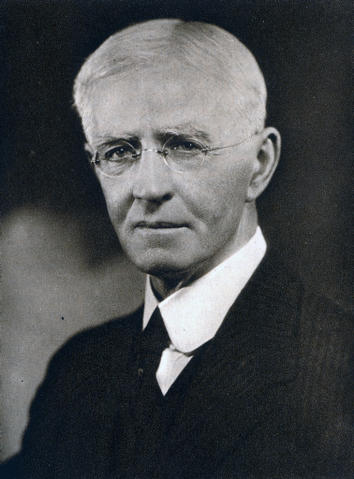
We have lost Sir Peter Chalmers Mitchell, the maker of the modern Zoo, great humanist as well as great scientist. He was a man of reason, and some say rationalism is dreary; his gentle wit was ample disproof of that.
The Observer, 8 July 1945
Sir Peter Chalmers Mitchell was a Scottish zoologist, author, and public intellectual, best known for his time as Secretary of the Zoological Society of London, and for the creation of the open-air Whipsnade Zoological Park. A prolific communicator who believed science belonged to the public, he also served as the scientific correspondent for The Times and the biological editor for the eleventh edition of the Encyclopaedia Britannica.
The tribute below was published in The Literary Guide (now New Humanist) in August 1945, recognising Mitchell’s longtime association with the Rationalist Press Association.
We greatly regret to record the death, on July 2, of Sir Peter Chalmers Mitchell, C.B.E., D.Sc., F.R.S., F.Z.S., an Honorary Associate of the Rationalist Press Association. He died as the result of a taxi-cab accident, and while in hospital he exonerated the driver of the car from all blame.
Sir Peter, who was born in 1864 at Dunfermline, was best known to the public as Secretary of the Zoological Society from 1903 to 1934, during which period many radical improvements were made in the equipment and attractions of London’s Zoo, and also in the services which it rendered to biological research. He was a copious writer on scientific and cognate subjects, and displayed an unusual faculty for presenting biological knowledge in simple language. His Childhood of Animals is an outstanding example of combination of intimate knowledge, keen observation, and lucid exposition; the contents were based on a series of lectures at the Royal Institution. In My Fill of Days, published in 1937, he gave a full and frank account of his life. Brought up in a strict Presbyterian atmosphere, he was early in revolt against pious discipline. When he was asked as a child what would happen to him in heaven if he did not join in the singing he replied “straight from the depths of my subconscious resentments; ‘But I don’t want to go to heaven.’” He became a convinced and uncompromising Rationalist. His attitude to Christianity may be indicated by a sentence from the article on “The Twilight of Civilization” which he contributed to The Rationalist Annual of 1940: “I doubt… if any dead civilization had reached any theory so irrational as the Christian thesis that a timeless Creator and upholder of the whole universe had at one moment of time made a unique revelation of his existence, and had sent his Only Begotten Son to relieve mankind of the burden of sin and misery which he had allowed to fall on it.” Although Sir Peter never missed an appropriate opportunity of declaring his religious heresy and was as courageous in expressing his independent views on religion as on politics or science, most references to him in the newspaper Press follow the usual course of ignoring his Rationalism. The R.P.A. was grateful to him for the aid he rendered on many occasions, and honours his memory as that of a stalwart champion of truth as he saw it.
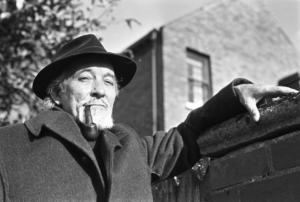
This conference is resolved to strive for the achievement of peace, justice and tolerance in Ireland, and holds that outmoded […]
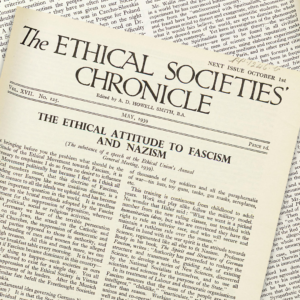
From The Ethical Societies’ Chronicle, Vol. XVII. No. 125. May 1939 The Ethical Attitude to Fascism and Nazism (The substance […]
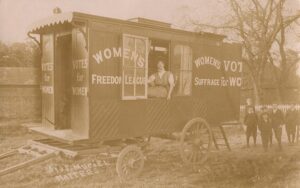
Dare to be free. Slogan of the Women’s Freedom League The Women’s Freedom League (WFL) was a militant suffrage organisation, […]
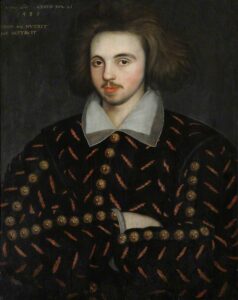
I count religion but a childish toy,And hold there is no sin but ignorance. Christopher Marlowe, The Jew of Malta, […]