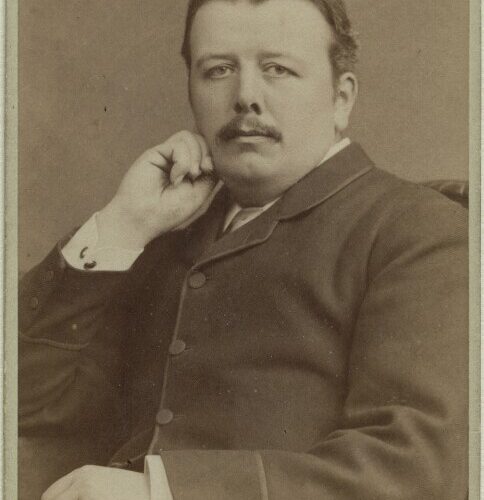
Edwin Ray Lankester was a zoologist and protégé of T. H. Huxley, as well as a longtime member and Honorary Associate of the Rationalist Press Association.
The tribute below was written by fellow zoologist and rationalist P. Chalmers Mitchell, and published in The Literary Guide (now New Humanist) in October 1929.
SIR E. RAY LANKESTER
BORN 1847; DIED 1929
By SIR P. CHALMERS MITCHELL
BY the death of Sir Edwin Ray Lankester zoology and biology lose one of their oldest and most honoured followers. To the accuracy and painstaking of the man of science he added the breadth of view of the philosopher and the sympathy of the born teacher; and all his gifts were lighted by a personality which could not fail to endear him to those — and they were the general public as well as the specialists—whom he sought to instruct.
To the accuracy and painstaking of the man of science he added the breadth of view of the philosopher and the sympathy of the born teacher
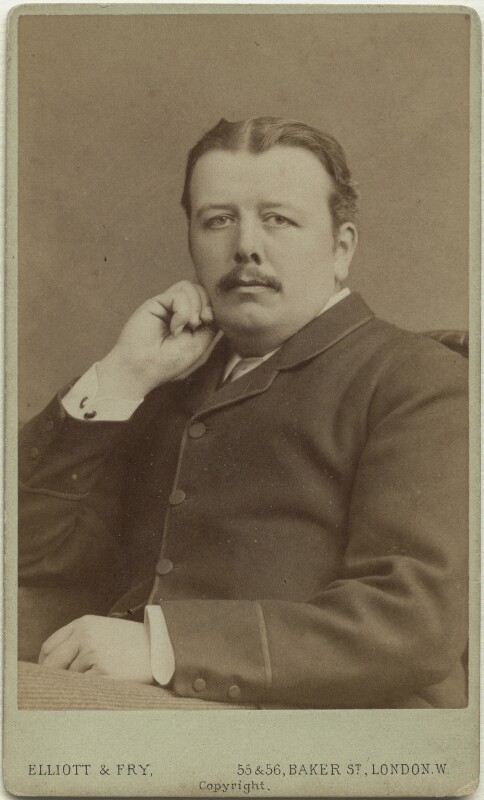
Edwin Ray Lankester, K.C.B., F.R.S., M.A., and D.Sc. (Oxon), LL.D. (St. Andrews), D.Sc. Leeds), Honorary Fellow of Exeter College and Honorary Student of Christ Church, Oxford; member of the Institut de France; foreign, corresponding, or honorary member of most of the scientific and learned societies and academies of the world; was born at 22 Old Burlington Street, London, in 1847, the eldest son of Dr. Edwin Lankester, Coroner for Central Middlesex, a well-known physician of scientific tastes, an F.R.S., secretary of the Ray Society, president of the Microscopical Society, and joint editor of the Quarterly Journal of Microscopical Science. His mother was a sister of the distinguished Parliamentary barrister, Samuel Pope, and was a brilliant woman and accomplished writer. At the age of eleven Ray Lankester went to St. Paul’s School, where he took many classical prizes and won cups for sculling and the long jump. At the age of seventeen he went to Downing College, Cambridge, with a scholarship, but in his second year migrated to Oxford, and gained a junior studentship at Christ Church. He graduated at Oxford with first-class honours in Natural Science, gained the Burdett-Coutts scholarship in geology and the Radcliffe Travelling Fellowship in 1870, then worked at zoology in Naples, and became Fellow and Lecturer at Exeter College in 1872.
Huxley’s Tribute
In 1874 he was appointed Professor of Zoology at University College, London. He was warmly welcomed to London by Huxley and many other leading scientific men who had known him from boyhood, and were delighted at the way his early promise was being fulfilled. He speedily became widely distinguished by the success of his lectures and by the results of his own investigations and those of his pupils. He was elected to the Royal Society in 1875, and was awarded a Royal Medal in 1885. Huxley, who was then President of the Society, spoke of “his labours in the field of animal morphology (especially invertebrate anatomy and embryology) and of palaeontology.” He added that Lankester had been “active in many directions and had everywhere left his mark, not only as an energetic teacher and accurate worker and as a philosophical thinker, but as one who, in times when the example was more than ever valuable, had always been careful to remember that speculation should be the servant and not the master of the biologist.”
Lankester had been “active in many directions and had everywhere left his mark, not only as an energetic teacher and accurate worker and as a philosophical thinker, but as one who, in times when the example was more than ever valuable, had always been careful to remember that speculation should be the servant and not the master of the biologist.”
In 1882, after a good deal of pressure had been brought to bear on him, Lord Rosebery, then Secretary for Scotland, selected Lankester for the lucrative professorship of Natural History in the University of Edinburgh, vacant by the death of Sir Charles Wyville Thomson. After accepting the appointment, however, Sir Ray found that a proposed rearrangement of the duties of the chair and alteration of the curriculum would probably not only reduce the professor’s emoluments, but lessen his ability to provide proper laboratory accommodation. He resigned at once, within a fortnight of the announcement of his appointment, and was reinstated in his London chair, where, although the income was small, the opportunity for work was great. In 1890 he was appointed Linacre Professor of Comparative Anatomy at Oxford; in 1892 the principal trustees appointed him Director of the British Museum (Natural History)and Keeper of Zoology, from which posts he was retired in 1907 at the age of sixty, the year in which he was President of the British Association. On his retirement he was created a K.C.B., and received a Civil List pension in addition to the official pension of £300 per annum, which was the maximum that could be granted to him under the Civil Service regulations.
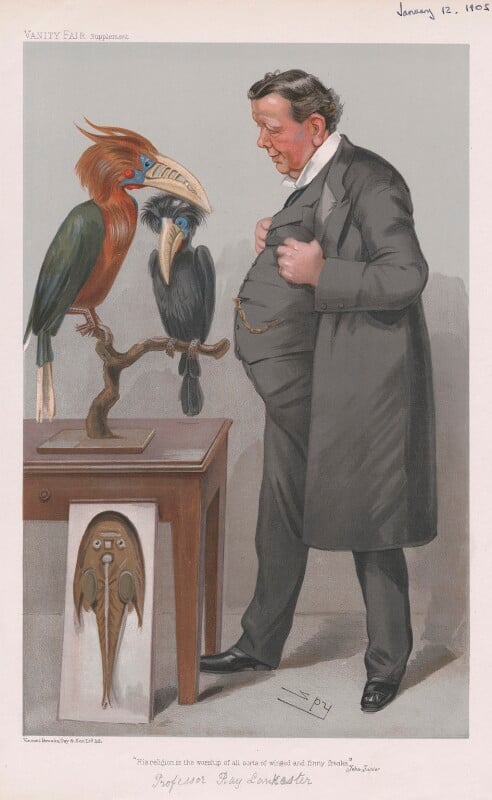
Lankester was, in the first place, a professional zoologist, who held successively a number of important posts, adding distinction to each of them, and leaving each of them a better organized and more potent instrument for the advancement and diffusion of natural knowledge. No man was better equipped for his life-work. He had a commanding personality, a fine intellect assiduously trained, an untiring curiosity about Nature, the patience to acquire knowledge, and an extraordinary power of co-ordinating and arranging discrete facts. He wrote well, spoke well, and was an accomplished artist with chalk, pencil, or brush. He was a skilful dissector, an excellent microscopist, an ardent observer of living creatures, and very ingenious in a museum. No zoologist of modern times has had a wider interest in the general problems of his subject, or so detailed a knowledge of so many branches of it. He took a deep pleasure in expounding the elements of zoology to beginners or to those who had only a general interest in the subject, and there was no branch of it too specialized for him to follow it and encourage the researcher with criticism, praise, and help. It may be said safely that of all the students, assistants, and colleagues with whom Lankester came in contact no genuine worker failed to get sympathy and intelligent assistance from him.
He had a commanding personality, a fine intellect assiduously trained, an untiring curiosity about Nature, the patience to acquire knowledge, and an extraordinary power of co-ordinating and arranging discrete facts.
Lankester was a prolific author and writer on subjects of a more general kind, sometimes zoological, sometimes on wider problems of science. His little volume on Comparative Longevity, published in 1871, and later his works on Degeneration (1880), Spolia Maris (1889), The Advancement of Science (Collected Essays, 1889), Extinct Animals (1903, based on a Christmas course at the Royal Institution), The Kingdom of Man (1907, the Romanes Lecture and kindred essays), From an Easy Chair (1908), Science from an Easy Chair (1910), and Great Things and Small (1923), had all a wide popularity with the general and scientific public, and were marked by a luminous directness of exposition and a masterly ordering of his arguments.
Belief in Darwin
Lankester was a convinced advocate of the Darwinian theory of Natural Selection in its widest application to man, animals, and plants. At first, like Darwin himself and most other writers on the subject, he was disposed to accept without comment or special stress the proposition that the inheritance of acquired characters was a factor in evolution, but broke many a lance in controversy with those persons, like the late Duke of Argyll, who tried to oppose an immediate teleology to the theory of adaptation by selection. When the theories of Weismann led to a closer scrutiny of the grounds for belief in Lamarckian factors, Lankester ranged himself with the school called Neo-Darwinian, and played a great part in its success. He followed closely the experimental work and theoretical ideas which were the result of the rediscovery of Mendel’s experiments in hybridizing varieties of cultivated plants, but did not agree with the vast estimate of its importance claimed for it. He took an extremely active interest in the application of bacteriology and protozoology to preventive medicine, and as a member of a Royal Society committee was largely responsible for the energy with which the investigations into sleeping sickness and other tropical diseases were conducted. He was the most intimate English friend of Metchnikoff, and a constant visitor to the Pasteur Institute in Paris. It delighted him specially that an investigator who was not a medical man but a zoologist should have contributed so largely to the advancement of medical knowledge and medical theory, and he was a leading exponent of Metchnikoff s discoveries and ideas in this country.
In this country zoologists almost without exception looked on him as their friend and leader, and the occasional differences that he had with individuals were rapidly dissolved by his transparent sincerity and complete freedom from personal bias. He was specially kind to new and young workers, and he was amazingly tolerant of individual peculiarities of method or of opinion.
Philosophical Views
Lankester was not a metaphysician, and his philosophical position was probably never very clearly thought out for himself or stated to others. He was not a convinced monist, but seemed in rather a vague fashion to accept the existence of some kind of antinomy between sentient, conscious man, the possible master of his destinies, and the unconscious brute forces of the universe. His theory of higher education, of statesmanship, and of practical morality and wisdom was belief in the possibility and duty of man’s slow mastery of inanimate nature by comprehension and subjugation of it. He was in no sense a mystic, and waged ruthless war against every kind of esoteric doctrine.
As Friend and Leader
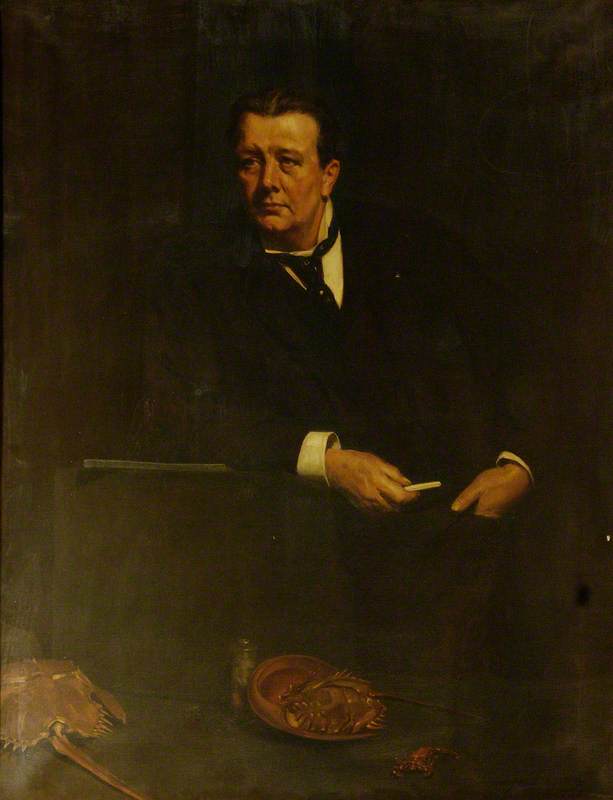
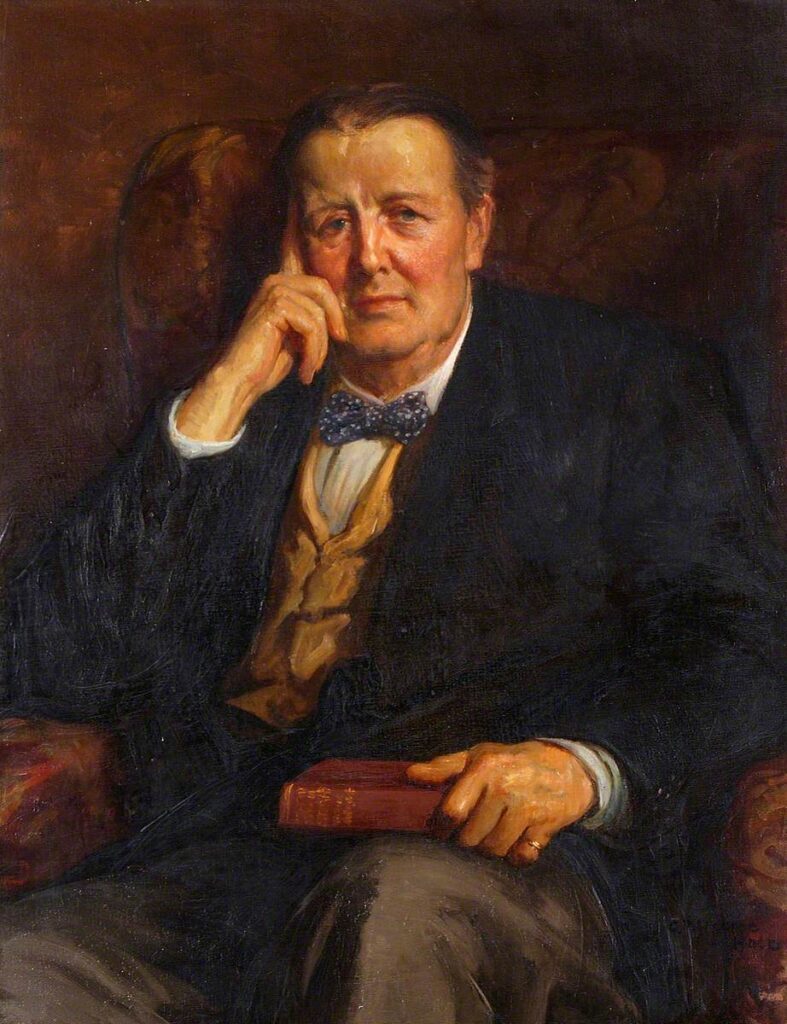
No appreciation of Lankester could be complete without some mention of the personal charm that endeared him to a very wide circle of friends. We have recorded his intimate personal friendship with Metchnikoff, but there were few famous European or American zoologists with whom he was not on terms of the warmest personal friendship. Names that come to the memory at once are Haeckel, Gegenbaur, Weismann, and Wiedersheim; Pasteur, De Lacaze Duthiers, Perrier, Anton Dohrn, Hubrecht, Giglioli, Agassiz, Brooks, Cope, and Osborn. In this country zoologists almost without exception looked on him as their friend and leader, and the occasional differences that he had with individuals were rapidly dissolved by his transparent sincerity and complete freedom from personal bias. He was specially kind to new and young workers, and he was amazingly tolerant of individual peculiarities of method or of opinion. In general society, at his clubs (particularly the Bath, Arts, and Savile), and with his intimate personal friends there was no trace of the arduous controversialist or the imposing professor. He was gentle, simple, and affectionate, full of humour and anecdote, listening patiently to the troubles or to the pleasures of others, always sympathetic and charming. There was no more delightful companion at dinner, in the country, at a picture exhibition—it may be recalled that Sir William Orpen’s portrait of him was one of the outstanding works shown at the Royal Academy this year— or in a French cathedral, as guest or as host. He was fond of golf and of cards, but still fonder of a country ramble or of a talk by the fireside. His death will come as a real sorrow to a very large number of different kinds of people.
He was fond of golf and of cards, but still fonder of a country ramble or of a talk by the fireside. His death will come as a real sorrow to a very large number of different kinds of people.
Lankester was never married. Although he was robust in appearance and able to endure much physical and mental strain, his health was rather delicate. He had several severe illnesses, and latterly suffered much from indigestion, chronic bronchitis, and depression of spirits.
Main image: Sir (Edwin) Ray Lankester by Elliott & Fry, albumen carte-de-visite, 1880s NPG x19880 © National Portrait Gallery, London
If living does not give value, wisdom and meaning to life, then there is no sense in living at all. […]

The hard anger she felt at the cruelty she encountered was always rooted in a deep tenderness for vulnerable humanity. […]
It is in service to others, it is as members of the community, that our existence lies. Hermann Bondi, Humanism […]
We must face the fact that, though the free intelligence and the spirit of community are at once the goal […]