start typing and results will show

or press esc

The screen

Mushroom clouds, thinking machines, and a five-year mission

Cinema and television gave these questions a mass audience. The films that endured tend to be the ones that used spectacle to examine human nature.

The bomb

The bomb

1951–1984 The Day the Earth Stood Still, Godzilla, Dr. Strangelove, Threads

We made this

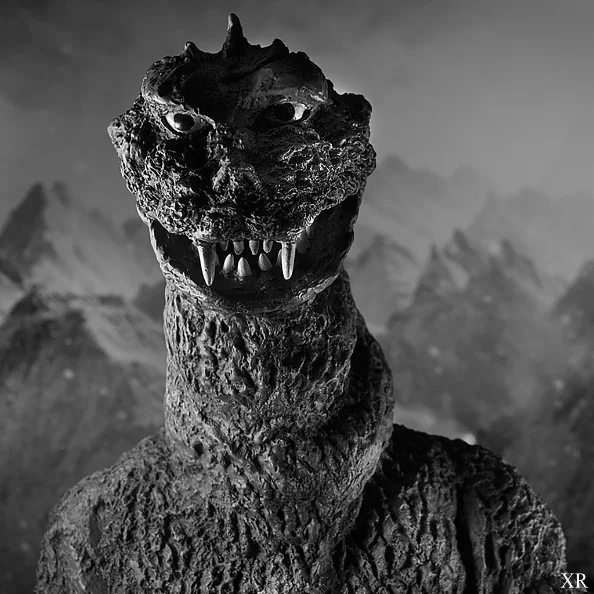
The bomb came first. Robert Wise’s The Day the Earth Stood Still (1951) sent an alien to warn humanity that its violence had become a cosmic liability. In Japan, Ishirō Honda’s Godzilla (1954), made months after the Lucky Dragon 5 fishing boat was showered with fallout from an American hydrogen bomb test, turned nuclear memory into a modern myth for the nation that had experienced it. Stanley Kubrick’s Dr. Strangelove (1964) made the case that the people in charge of the bomb were the funniest thing about it. Britain’s own Threads (1984), directed by Mick Jackson from a script by Barry Hines, followed a nuclear strike on Sheffield with documentary pitilessness; four decades on it has lost none of its power to horrify, and it remains a touchstone for moral seriousness in British television. None of these works offers salvation from above.
The artificial mind

The artificial mind

1982–2014 Blade Runner, Gattaca, Her, Ex Machina

Frankenstein’s question, new casings

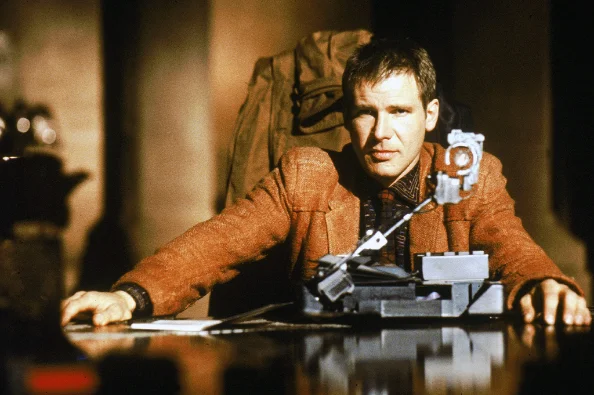
The artificial mind came next. Ridley Scott’s Blade Runner (1982), from Philip K. Dick’s novel Do Androids Dream of Electric Sheep?, gives its manufactured ‘replicants’ more capacity for wonder and grief than their makers, and lets a dying artificial man deliver what may be modern cinema’s most quoted meditation on mortality. Andrew Niccol’s Gattaca (1997) asks whether genetic knowledge will liberate us or become a new astrology. Spike Jonze’s Her (2013) and Alex Garland’s Ex Machina (2014) arrived in time for the age of machine learning, asking what we owe the minds we build to serve us, and what our treatment of them reveals about how we already treat those defined as lesser.

Star Trek

Star Trek

1966– Gene Roddenberry

No chaplain on the bridge

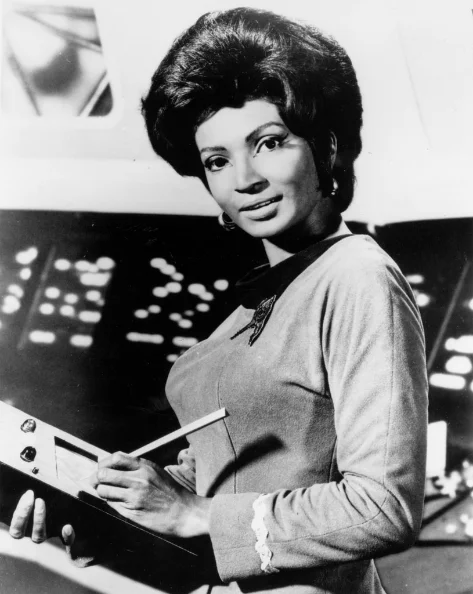
One piece of popular science fiction functions quite openly as a humanist manifesto, and it is the one that inspired this tour. The American Humanist Association honoured Gene Roddenberry with its Humanist Arts Award in 1991, and he built his convictions into Star Trek’s bones. The bridge crew, assembled at the height of the Cold War, put a Russian navigator, a black communications officer, and an alien rationalist side by side. Earth’s future is post-scarcity, post-racist, and post-war, and it has been achieved by nothing more miraculous than growing up. The 1968 episode ‘Plato’s Stepchildren’, often cited as the first interracial kiss on American television, was broadcast into living rooms in the middle of the civil rights era. Later Star Trek series gave Roddenberry’s vision its philosopher in Captain Jean-Luc Picard (portrayed by Humanists UK patron Sir Patrick Stewart), whose speeches on liberty of conscience, the rights of artificial persons, and the corrupting fear of the other were, in effect, humanist homilies delivered to audiences of millions.

Superhero comics and films

Superhero comics and films

1938–2018 The X-Men, Black Panther

Mutation as allegory

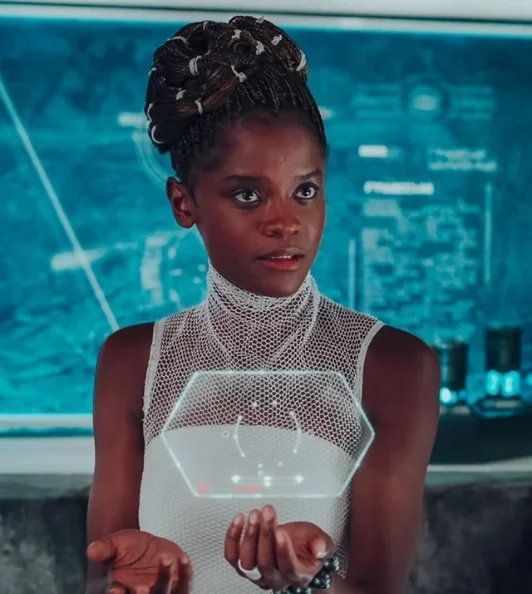
As science fiction blew up on screen, comics ran a parallel course, until the two converged in the early 21st century. The superhero genre was largely the invention of Jewish creators imagining champions against fascism. Jerry Siegel and Joe Shuster made America’s greatest hero an alien immigrant: Superman. Joe Simon and Jack Kirby created an all-American scientific supersoldier in Captain America, who was punching Hitler in the pages of comic books over a year before America entered the war. Stan Lee and Kirby’s X-Men took a set of scientific ideas (human evolution, radiation, mutation) and turned them into a running allegory of prejudice that generations of marginalised groups, not least Marvel Comics’ LGBT, Jewish, and African-American readers, could recognise as their own. Lee and Kirby also gave their Black Panther a utopian homeland in the futuristic African nation of Wakanda, realised on film by Ryan Coogler in 2018, bringing the tradition Du Bois had begun with ‘The Comet’ to blockbuster audiences.

Made by Heritage Creative