start typing and results will show

or press esc

Secular heavens and warning lights

The genre’s most explicit utopia, and its warning tradition

Recent decades have produced the genre’s most explicit humanist utopia alongside a thriving warning tradition.

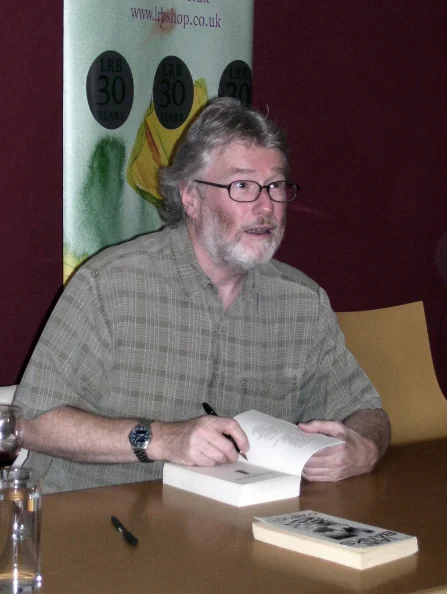
Iain M. Banks

Iain M. Banks

1954–2013 The Culture novels (1987–2012)

A secular heaven, honestly audited

Outspoken Scottish novelist and humanist Iain M. Banks was a high-profile patron of Humanist Society Scotland. Across nine novels in his Culture series (from Consider Phlebas, 1987), Banks daringly explored a post-scarcity civilisation of humans and benevolent machine Minds with no gods, no money, and no coercion. Being a good sceptic, he then spent most of each book at the Culture’s borders, testing its confidence against societies unlike itself and asking whether a civilisation that good has any business interfering in ones that aren’t. Grief at his death became the cover story of New Humanist magazine in the winter of 2013.
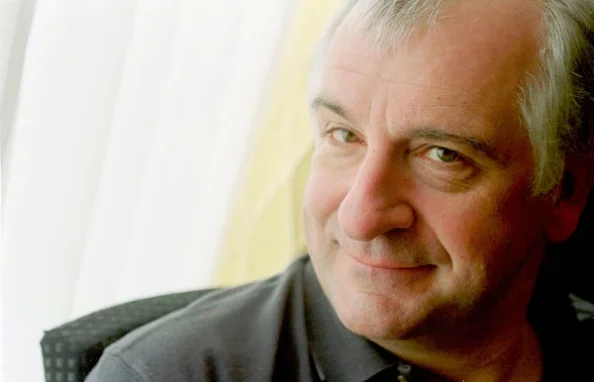
Douglas Adams

Douglas Adams

1952–2001 The Hitchhiker’s Guide to the Galaxy (from 1978)

Wit, curiosity, and a decent cup of tea

Douglas Adams, humanist and self-described ‘radical atheist’, made cosmic meaninglessness the funniest subject in British comedy in The Hitchhiker’s Guide to the Galaxy (from 1978), where an indifferent universe is met with wit, curiosity, and a decent cup of tea. In the 1970s, he was a major creative force behind the British television sci-fi series Doctor Who during that programme’s most popular era.

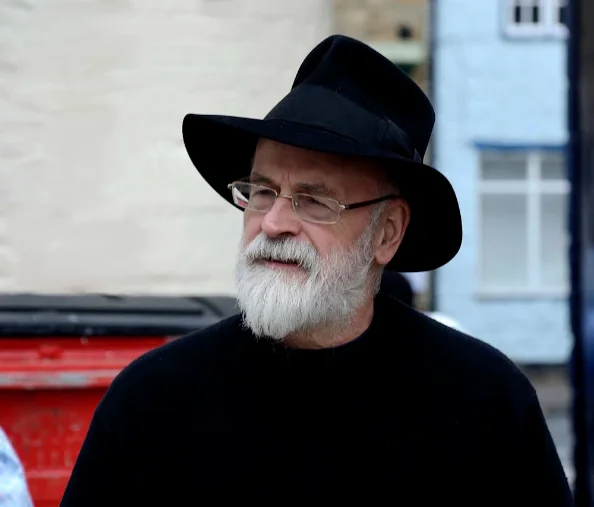
Terry Pratchett

Terry Pratchett

1948–2015 Discworld

Moral philosophy, smuggled

Terry Pratchett, a patron of Humanists UK, filled comic fantasy with more moral philosophy than the label suggested. His Discworld series’ most enduring character was Death himself, a kindly and scrupulous figure who takes an interest in cats and finds humans baffling, while Small Gods (1992) was a pointed account of how religions decay into institutions. Diagnosed with a rare form of Alzheimer’s in 2007, Pratchett announced it publicly, gave the 2010 Richard Dimbleby Lecture on assisted dying under the title ‘Shaking Hands with Death’, fronted the 2011 BBC documentary Choosing to Die, and campaigned alongside Humanists UK and Dignity in Dying for a compassionate assisted dying law until his death in 2015.

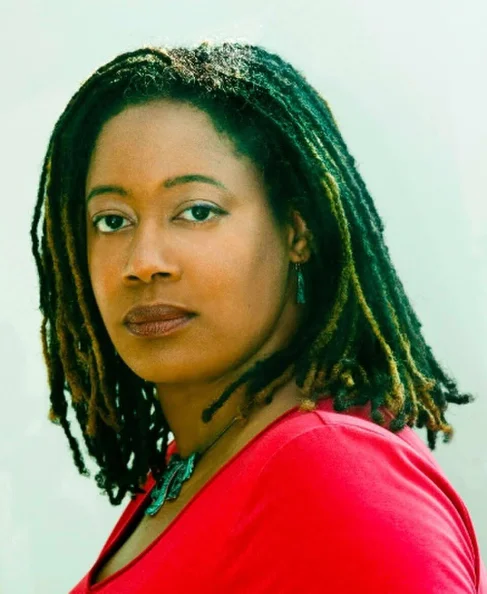
N. K. Jemisin

N. K. Jemisin

b. 1972 Broken Earth trilogy (2015–2017)

Three Hugos in a row

N. K. Jemisin, the first author to win the Hugo Award for Best Novel three years running, for the Broken Earth trilogy (2015–17), renewed the Du Bois tradition for the climate era. Her world is a single supercontinent racked by periodic catastrophes called Fifth Seasons, and the people who can quell earthquakes, the orogenes, are feared, enslaved, and bred for their usefulness by the civilisation that depends on them. The oppressions are geological, institutional, and entirely human-made, and so is the catastrophe.

Warning lights

Warning lights

2011– Black Mirror, The Handmaid’s Tale, Arrival

‘The Machine Stops’, serialised

And on television, the warning tradition carried on. It began with Rod Serling’s The Twilight Zone (1959–64), which used science fiction and fantasy to smuggle past the network censors the moral arguments about conformity, bigotry, and nuclear panic that no realist drama would then have been allowed to make. Charlie Brooker’s Black Mirror (2011–) is its direct descendant — Forster’s ‘The Machine Stops’ serialised into an anthology show for the smartphone age. The Handmaid’s Tale (2017–) found a vast new audience for Margaret Atwood’s novel at a moment when theocratic politics had stopped feeling safely fictional. And Denis Villeneuve’s Arrival (2016), adapted from Ted Chiang’s story ‘Story of Your Life’, is a first-contact film whose real subject is how a finite, mortal life can be embraced whole.

Made by Heritage Creative