Throughout history there have been non-religious people who lived by reason, compassion, and the belief that this is the one life we have — what we now call ‘humanism’. Not everyone on this tour was a humanist, but all promoted values at the heart of humanism today: inclusive education, freedom of belief, and freedom of expression. Their echoes are everywhere in modern Belfast.
This page accompanies the printable Belfast walk. For the wider story, see our page on humanism in Northern Ireland.
City Hall stands where the White Linen Hall formerly stood, once at the centre of Belfast’s world-renowned linen industry. In the 18th century, the money from this trade created a middle class which agitated for free speech and equality. Enlightenment ideas such as human rights, rationalism, and tolerance in the writings of John Locke and Thomas Paine were widely read, and the examples of the American and French Revolutions were inspirational, especially for those (like Catholics and Presbyterians) who were excluded by the dominance of the landed aristocracy and Established Church.
City Hall replaced the White Linen Hall in 1906, and over the years has been a gathering place for protest, celebration, and vigil, with humanists and freethinkers well represented across all three.
Find out more: No great magic? The afterlife of Thomas Paine
Founded in 1788 as the Belfast Reading Society, the Linen Hall Library is the city’s oldest. The present building was built in 1864 and was originally a linen warehouse. The Nobel laureate Seamus Heaney once said that ‘the very words “the Linen Hall Library” represent not just books, but better hopes for the way we live.’
In his history of the library, John Killen described ‘a large proportion of the citizenry of Belfast’ in the late 18th century as ‘enterprising, self-reliant, enlightened, philanthropic and self-improving’. This was certainly true of the founders of the Reading Society, known from 1792 as the Belfast Society for Promoting Knowledge. On the wall above the door is commemorated Thomas Russell, one of the first librarians, a United Irishman and a rationalist.
Find out more: Linen Hall Library
The Belfast Entries were a hotbed of radical freethinking in the 1790s. Joy’s Entry is named for Francis Joy, who in 1737 founded the oldest surviving English-language newspaper in the world, The Belfast News-Letter. In the 1870s it became one of the earliest papers to run a regular women’s column, written by the Irish journalist Catherine Drew, and in 1776 was the first to publish the American Declaration of Independence outside the US.
Also in Joy’s Entry is a statue of Henry Joy McCracken, unveiled in 2019. Henry was Francis Joy’s grandson, and a founding member of the United Irishmen: a revolutionary society founded in 1791, inspired by the American and French Revolutions, which aimed to unite Irish Catholics, Protestants, and Presbyterians for democratic reform and independence from Britain. Oppression by the authorities led some, like Henry, to become increasingly radical.
Following his execution in 1798, Henry’s sister, Mary Ann McCracken (1770–1866), continued this legacy of seeking equality under the law for all. Her extensive social work was deliberately non-denominational, looking instead towards a more secular future for Northern Ireland, involving all and discriminating against no one: efforts taken up by humanists today.
Rosemary Street may be described as the historical epicentre of freethought in Belfast, from Unitarians through to humanists. The First Presbyterian Church was attended by many of the United Irishmen. Founded in the 17th century, it later took up Unitarian ideas, associated with an open-minded and undogmatic approach to religion and valuing the freedom of the individual to search for the meaning of life. One prominent Unitarian voice was John Scott Porter, minister here for nearly 50 years (1832–1880), who advocated disestablishment of the Church and championed a national system of non-denominational education through the Ulster National Education Association.
From the 19th century, Belfast was home to a number of non-religious and reformist societies, including the Belfast Secular Society, the Belfast Radical Association, and a Fabian group. The Belfast Ethical Society was formed in 1896 and met in the last years of the 19th century in Rosemary Street Minor Hall, adjoining the Second Congregation Church (opened 1708, rebuilt 1789, demolished in the 1960s). Its object was ‘the promotion of right conduct on a purely natural and human basis and… the development of character, independent of theological speculations.’ Ethical societies like Belfast’s were the direct ancestors of today’s humanist groups.
At the corner of North Street and Waring Street is the former Assembly and Exchange Rooms. Built in 1769, it is the oldest public building in Belfast still standing, though it has undergone a number of changes since. Following the United Irishmen’s rebellion of 1798, Henry Joy McCracken was tried here before being hanged at the Market House in High Street.
Immediately opposite is The Northern Whig, built in 1820 as the Commercial Buildings. It was here, in January 1846, that a farewell breakfast was held for the formerly enslaved abolitionist Frederick Douglass, a great fan of Belfast. A freethinker, Douglass was unafraid to criticise those churches and professed Christians who supported, or failed to condemn, slavery.
Nearby Waring Street was for many years the meeting place of the Belfast Humanist Group, who met in the War Memorial Building (9–13 Waring Street), built in 1961 to house charitable organisations. In 1967, during the British Humanist Association’s ‘Humanist Week’, the author John D. Stewart gave a lecture on the group’s behalf titled ‘Let’s Humanise Ulster’. The group met regularly in the building, and campaigned for a variety of social and political reforms, especially in the area of civil rights.
Find out more: African American Humanism · Humanists and civil liberties
John Hewitt (1907–1987) was a librarian, writer, and socialist, who sought to bring together the traditions and belief identities of Northern Ireland through mutual understanding and progressive politics. Hewitt stressed that he had no religion, and advocated tolerance, mutual respect, and openness to marginalised cultural traditions. A historian, activist, and humanist, he was a founding member of the Belfast Peace League and of the Committee for the Encouragement of Music and the Arts, Northern Ireland. Fervently anti-sectarian, he advocated ‘regionalism’, rather than religion or politics, as a means of exploring and establishing a sense of identity.
Find out more: The John Hewitt Cairn, Glens of Antrim
Writer’s Square is the heart of alternative culture in Belfast, and celebrates the city’s rich literary and cultural heritage. A number of Belfast’s leading literary figures were freethinkers, like the humanist writer and teacher John Boyd. With other Belfast writers, including his friend Forrest Reid, Boyd played an active role in the city’s cultural life from the 1940s onwards: as editor of the literary journal Lagan, commissioning programmes for the BBC in Northern Ireland, and as a writer.
To the north is the LGBTQ+ district. Love Equality marches began at Writer’s Square, building to the introduction of marriage equality in Northern Ireland in 2019.
Find out more: LGBT Humanists
St Mary’s, established in 1784, was the first Catholic church in the city, built with funds donated by the Presbyterians of Rosemary Street. This act of generosity and solidarity was echoed in the 1960s, when the cross-community Northern Ireland Civil Rights Association (NICRA) held its meetings in the church hall.
NICRA was founded in 1967 as a non-party, non-denominational group to defend civil liberties, including free speech and free assembly. A public meeting held in the War Memorial Building in November 1966 to highlight civil liberties in Northern Ireland had been chaired by the humanist writer John D. Stewart; its key speakers were Ciaran Mac An Ali and the anti-apartheid campaigner Kader Asmal. Asmal and Stewart went on to play leading roles in the First Conference of Humanists in Ireland, held in 1969.
Find out more: First Conference of Humanists in Ireland
Created as the Belfast Academical Institution and funded by public subscription, the RBAI was founded as a non-denominational college for secondary and higher education. It was opened on 1 February 1814 by the physician William Drennan, a founder of the United Irishmen and a radical social reformer, and is one of the United Irishmen’s lasting legacies. This was the first secular school in Britain and Ireland, and the model for both University College London, the first secular university, and Queen’s University Belfast. The humanist writer Forrest Reid attended from 1888, as did a number of other freethinking Belfast residents.
Efforts for inclusive, non-segregated education have been a keystone of humanist work in Northern Ireland for decades.
Find out more: Bill Barbour, champion of integrated education · Vere Foster
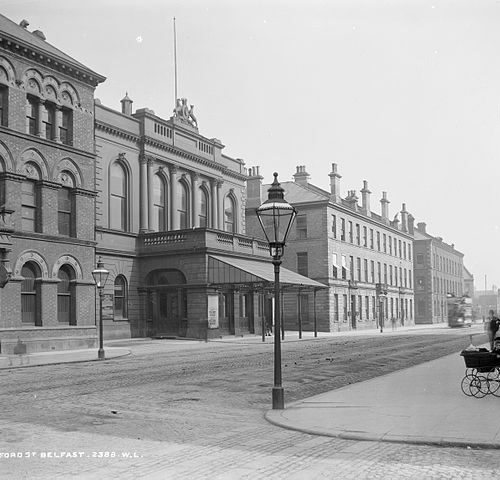
It was at the Ulster Hall, in 1874, that the Irish physicist and professed agnostic John Tyndall gave his address to the British Association for the Advancement of Science, inciting a rigorous debate about the relative places of science and religion in Victorian society. Tyndall argued for absolute freedom of thought and discussion in science.
Like his friend T. H. Huxley, Tyndall was a passionate communicator of science, and an agnostic: a term Huxley had coined in 1869 to describe someone who ‘shall not say he knows or believes that which he has no scientific grounds for professing to know or believe’. ‘There is in the true man of science,’ Tyndall said, ‘a wish stronger than the wish to have his beliefs upheld… the wish to have them true.’
Find out more: Ulster Hall · Tyndall’s Belfast Address (1874)
Here, on 9 October 1968, at the rear gates of City Hall, students from Queen’s University Belfast held a sit-down protest organised by NICRA, highlighting the gap between the growing secular rights enjoyed in England and the religious discrimination in Northern Ireland. When the students returned peacefully to the Students’ Union later that day, a group of them decided that non-violent protest was insufficient and, like some United Irishmen 175 years earlier, that more radical means were needed to force reform. Those who split formed the People’s Democracy, and the day is known by some as the day the Northern Ireland ‘Troubles’ began.
Beyond the Troubles, those working for civil rights and a peaceful secularisation of Northern Ireland have had significant achievements, supported by humanists for over 50 years. Northern Ireland Humanists continues to work for a more tolerant, secular society, where freedom of speech and human rights are protected.
Find out more: Humanism in Northern Ireland · Northern Ireland Humanists
Take the walk: download the printable Belfast walk (PDF), or see all of our walks.
Explore more: Northern Ireland · Belfast Ethical Society · Mary Ann McCracken · John Hewitt · John Hewitt Cairn · John D. Stewart · John Boyd · Forrest Reid · John Tyndall · Thomas Henry Huxley
Main image: Ulster Hall in an empty Bedford Street, c. 1890. National Library of Ireland
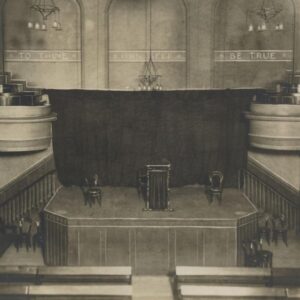
Love is a kind of courage, and, in the hearts of the man and woman who will here wed, there […]
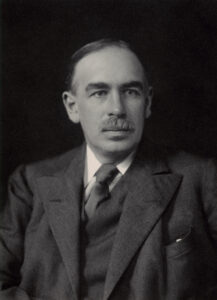
Words ought to be a little wild, for they are the assault of thoughts upon the unthinking. J.M. Keynes in […]
Science should be taught not merely as a subject but should come into all subjects. Its importance in history and […]
Kensal Green, opened in 1833, was London’s first commercial cemetery, and the originator of the city’s ‘Magnificent Seven’. These suburban […]